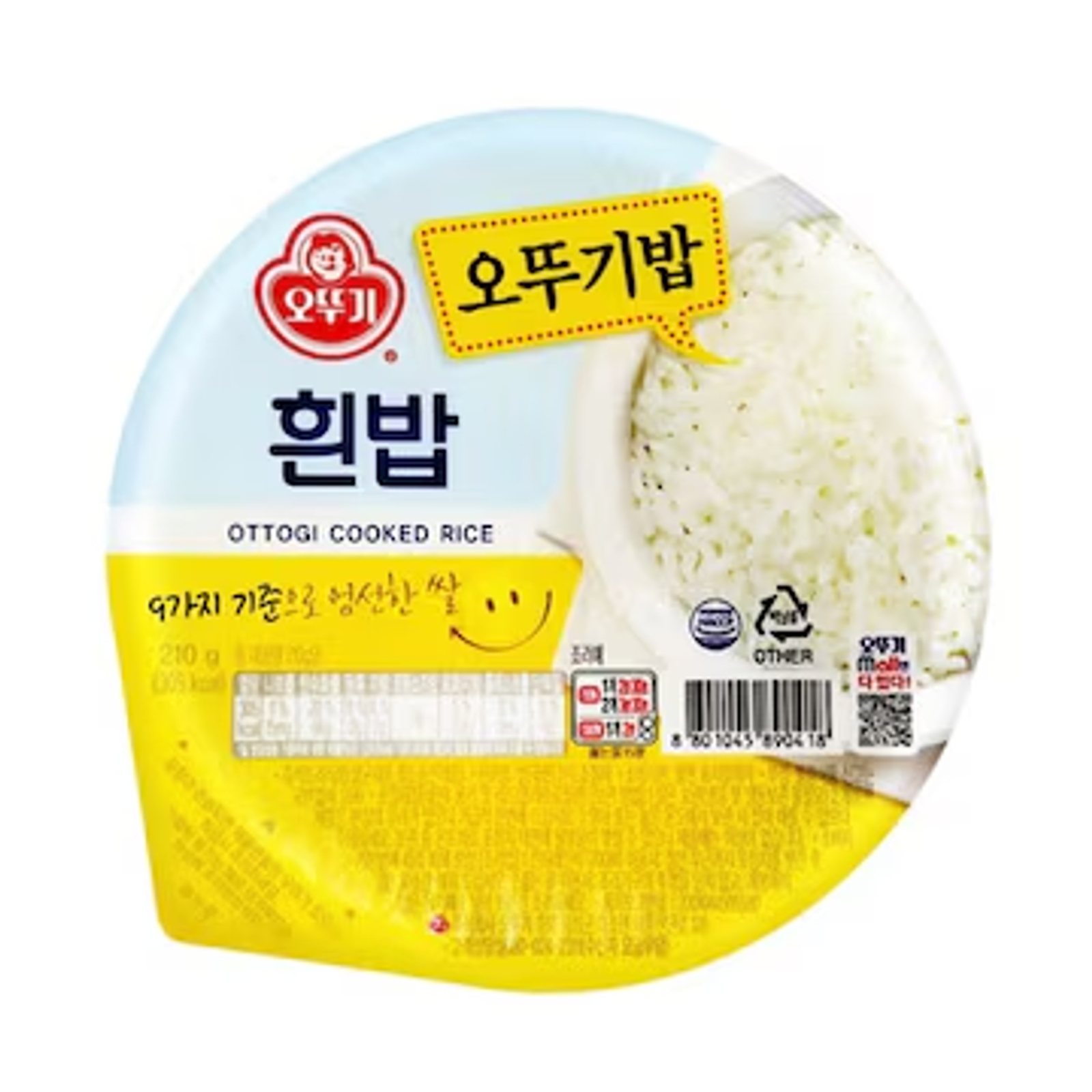
From 1st September 2026, Ottogi — one of South Korea's largest food manufacturers — will charge convenience stores significantly more for its range of pre-cooked rice and rice bowl products. The increases, which reach as high as 29.4% on some items, mark the collapse of one of the last price bastions in a country already worn down by years of elevated inflation. Products that previously retailed for roughly 1,800–2,200 won could soon cost around 2,500 won or more. The company attributes the move to a confluence of rising raw-material, logistics, and packaging costs.
What the numbers actually mean
The headline figure of 29.4% warrants scrutiny. It represents the ceiling — the steepest increase applied to any single product — not the average across the range. The typical rise for the most popular lines is likely to be more modest. Moreover, convenience-store loyalty programmes and in-store promotions could soften the impact for regular shoppers.
Even so, there is little reason for optimism. Because convenience-store operators work on thin margins, they are structurally ill-placed to absorb supplier price increases; the burden will almost certainly flow through in full to consumers at the till.
Why now: the accumulation of cost pressures
Few in the industry claim to be surprised. South Korean domestic rice prices are already more than 10% above year-earlier levels following poor harvests caused by unusual weather in 2024 and 2025. Layered on top are turbulence in global grain markets, a weaker won that has inflated the cost of imported ingredients, and higher energy bills. According to the Korea Agro-Fisheries and Food Trade Corporation (aT), the manufacturing-cost index for processed food rose by approximately 8–12% year-on-year in the second half of 2025. Industry executives describe the cumulative burden as having reached a tipping point.
The risk of a domino effect
CJ CheilJedang, whose "Hetbahn" brand commands the largest share of South Korea's ready-to-eat rice market, had already adjusted prices on some sales channels in 2025. One industry insider notes the self-reinforcing dynamic at play: "When the market leader raises prices, smaller players gain cover to follow suit — and if a smaller player moves first, the leader soon catches up." Ottogi's decision could therefore accelerate a sector-wide repricing.
The principal beneficiaries may be private-label products. GS25, CU, and 7-Eleven — South Korea's three dominant convenience-store chains — all carry their own-brand rice, which could gain price competitiveness as branded goods become more expensive.
The human cost
Reaction on South Korean social media has ranged from anger to resignation, with many users lamenting that even convenience-store rice is now becoming unaffordable. The concern is not merely rhetorical. According to Statistics Korea, single-person households accounted for 35.5% of all households in 2025, and their reliance on convenience stores for daily meals has grown steadily year by year. Among single-person households earning less than 2 million won a month, dependence on convenience-store ready meals is particularly acute — meaning that higher prices translate directly into a reduction in real living standards for some of the country's most financially vulnerable people.
Lessons from abroad
International precedents offer mixed comfort. In Japan, a combination of yen weakness and soaring raw-material costs pushed ready-to-eat rice prices up by an average of 15–20% in 2022–23. The Japanese government responded by introducing a "price visualisation" policy, requiring food companies to publicly disclose the timing and scale of planned price increases — a measure designed to give consumers advance warning and hold firms to account. In the United States, processed food prices climbed an average of 11.4% year-on-year at the peak of the post-pandemic inflation surge in 2022, but consumers subsequently migrated towards cheaper alternatives and retailers' own-brand products, pressuring major manufacturers to partially reverse their increases. A similar substitution effect could yet materialise in South Korea.
The structural trap
Behind each individual price rise lies a more troubling dynamic: a potential vicious circle in which higher costs prompt price increases, which depress consumption, which erode revenues, which in turn intensify cost pressures. Lee Jeong-hee, a professor of economics at Chung-Ang University, has argued that food companies relying solely on passing costs to consumers are undermining their own brand equity over the medium term. "They need to pursue cost reductions through efficiency gains and economies of scale in parallel," he has said.
What comes next
Ottogi's move looks likely to mark the opening salvo of a broader wave of food-price increases in the second half of the year. The South Korean government has convened meetings with food companies and monitored prices, but its legal authority to intervene in private pricing decisions is limited. Economists argue that short-term price controls are a poor substitute for structural remedies: stabilising agricultural supply, streamlining distribution networks, and expanding food-cost subsidies for low-income households.
The price of a single serving of convenience-store rice is, in this sense, more than a commercial footnote. It is a sensitive barometer of living standards in an era defined by small households and persistent inflation. Whether Ottogi's increase proves to be an isolated adjustment or the trigger for further rises will depend on how raw-material markets move — and how much more consumers can absorb — in the months ahead.