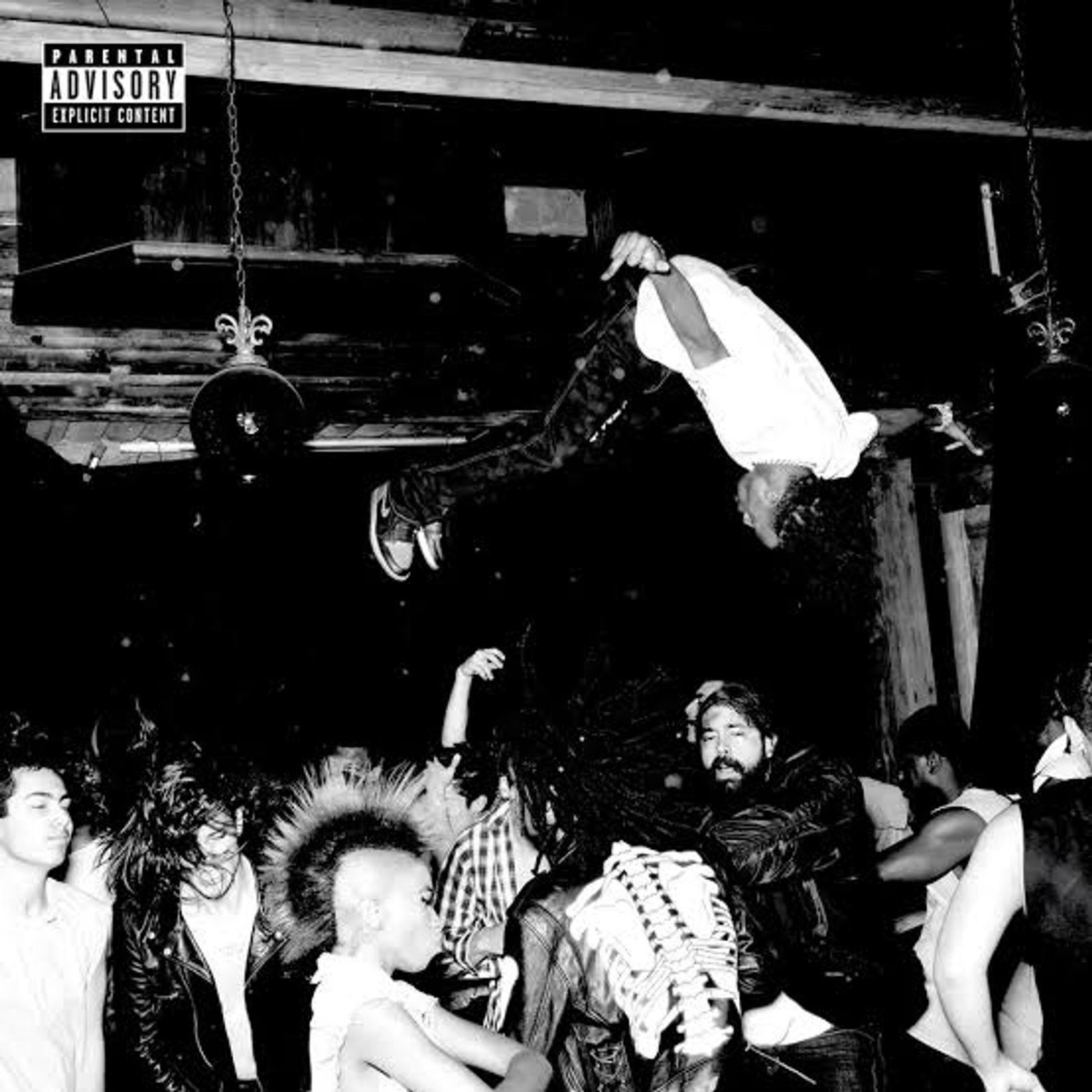
There is a familiar compliment in hip-hop criticism: "no skips." Every track earns its place; nothing outstays its welcome. Playboi Carti's *Die Lit* renders even that standard inadequate. This is an album without a single weak moment — not a verse, not a bar, not a transition. When it arrived in 2018, many listeners found it baffling. With the benefit of hindsight, it is unmistakably a watershed.
The album's defining quality is Carti's treatment of his own voice. Where traditional rappers use lyrics as a vehicle for message and narrative, Carti deploys his vocals as an instrument — a source of rhythm and melody rather than meaning. Texture takes precedence over content; atmosphere over argument. At the time, this divided opinion sharply. In retrospect, it was the opening move of a new grammar that a generation of artists would spend years learning to imitate.
The production is equally without fault. Beats crafted by Pi'erre Bourne, Maaly Raw, Don Cannon and others are restrained rather than ostentatious. The 808 basslines, the carefully calibrated space, the repetitive synthesiser loops — each element is engineered to place Carti's voice at the centre. Nothing overwhelms; nothing is superfluous.
The result is an album that, despite spanning 19 tracks, never loses momentum. The opening *Long Time (Intro)* establishes a dreamlike atmosphere; *R.I.P.* shatters it with a burst of kinetic energy. *Lean 4 Real*, *Shoota*, *Mileage* and *FlatBed Freestyle* follow in seamless succession, making the running time feel not just bearable but compulsive.
What is rarest about *Die Lit* is the strength of its pull as a complete work. In the age of the playlist — when albums are routinely dismembered into individual streams — this is one of a handful of modern hip-hop records that demands to be heard from beginning to end. The sequencing of mood and energy across its tracks is too precise to be accidental; listening to a single song in isolation is a lesser experience than surrendering to the whole.
Carti's influence has only grown clearer since. The rage-influenced sound that came to dominate the early 2020s, the baby-voice vocal aesthetic, the stripped-back minimalist flow — all bear the imprint of *Die Lit*. Much of what now passes for mainstream hip-hop convention was normalised by this record.
One caveat deserves acknowledgement: listeners seeking deep narrative or social commentary will not find it here, nor was it ever on offer. *Die Lit* does not explain emotions; it transmits them. The message of the album is the energy itself — the feeling of a club, a moving car, a pair of headphones on a night-time street. To judge it by the standards of a different kind of record is to misunderstand what it set out to do.
Great albums represent their era. Greater ones reshape it. *Die Lit* belongs firmly in the second category — and it sounds just as flawless today as it did the first time.
★★★★★ (5.0/5.0)
*"A masterpiece without a single weak moment. Die Lit is not only Playboi Carti's finest work — it is a defining artefact of modern trap that set a new standard for the genre."*