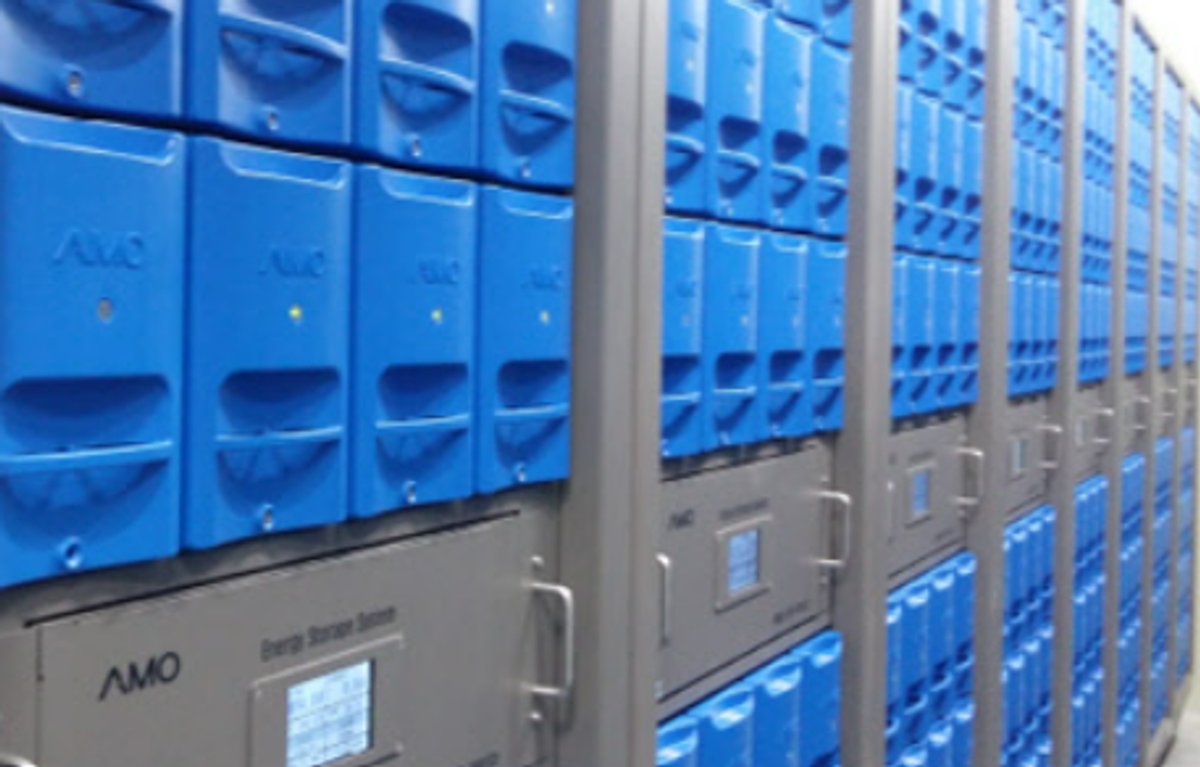
Yuanta Securities published a research note on 21st September initiating coverage of AmoGreenTech (KOSDAQ: 125210), a South Korean materials manufacturer, with a "Not Rated" designation and no target price. The report argues that a meaningful recovery in the company's revenues is possible by 2027, underpinned by three catalysts: Tesla's accelerating deployment of energy storage systems (ESS), supply contracts related to Tesla's Optimus humanoid robot, and a structural shift in telecoms backup-power markets in North America and Japan.
A difficult recent past
AmoGreenTech's recent financial performance has been uninspiring. In the first half of its 2026 fiscal year, revenue fell 5.2% year on year to 66.5bn won, while operating profit dropped 39.3% to 3.5bn won, with almost every division except ESS recording a decline. This represents a renewed setback after the company appeared to have turned a corner: annual operating profit nearly doubled in 2025, rising from 45bn won to 94bn won. Revenue, however, has effectively stagnated since 2023, when it peaked at 147.6bn won, before edging down to 128.6bn won in 2024 and recovering slightly to 130.6bn won in 2025.
The core technology
The company's most strategically important business is high-efficiency magnetic materials, which account for 30–40% of total revenue. AmoGreenTech was the first South Korean firm — and only the third in the world — to develop this class of material, using proprietary nanocrystalline alloy design techniques. Tesla is the division's dominant customer, accounting for roughly two-thirds of its magnetic materials revenue.
The Tesla ESS opportunity
According to Tesla's own investor relations materials, median energy storage deployments are forecast to rise from 56.0GWh in 2026 to 75.0GWh in 2027, 98.9GWh in 2028, and 150.7GWh by 2030. Yuanta notes that the year-on-year increment from 2026 to 2027 is steeper than in preceding years, which it believes will translate directly into higher demand for AmoGreenTech's magnetic materials. Assuming the company maintains its current share of Tesla's ESS supply chain, Yuanta estimates the 2027 uplift from this source alone could be worth 15bn–20bn won in additional revenue.
Optimus: a new growth axis
AmoGreenTech has also been selected as a key supplier of magnetic materials used in the power-conversion units inside chargers for Tesla's Optimus humanoid robot. The company is expected to begin initial deliveries in the second half of 2026, with revenues from the Optimus programme potentially reaching 7bn–8bn won in 2027. The report cautions that this is still an early-stage relationship, and actual volumes will depend on Tesla's production ramp-up schedule.
Telecoms infrastructure: North America and Japan
Beyond Tesla, AmoGreenTech sees opportunity in the market for lithium iron phosphate (LFP) battery backup systems for mobile network towers. American Tower, one of the world's largest telecoms infrastructure companies — with around 150,000 sites globally as of end-2025 — is reportedly planning to extend its LFP emergency-power projects from Africa into the United States. Yuanta believes this could add around 10bn won to AmoGreenTech's revenues.
Japan offers a longer-term but potentially larger opening. Following a series of major power outages and communications failures, Japan's Ministry of Internal Affairs and Communications has indicated it will mandate backup power reserves of at least 24 hours for standard base stations and at least 72 hours for disaster-response hubs and remote locations. Incumbent lead-acid batteries are poorly suited to providing such extended backup due to their weight and bulk, making a switch to lithium-ion alternatives likely. AmoGreenTech is currently in discussions with major Japanese carriers including KDDI and SoftBank, with talks with NTT Docomo also anticipated. The report projects that revenue from Japanese telecoms customers could add a further 10bn won or more annually from 2027 onwards.
Risks worth heeding
Despite the optimistic long-term narrative, investors should weigh several risks carefully. Customer concentration is the most obvious: a large proportion of revenue is tied to a single buyer, Tesla, leaving the company highly exposed to any delays in Tesla's ESS or Optimus production schedules or to changes in sourcing decisions.
Profitability is another concern. Operating margins contracted to just 3.5% in 2024, and the first-half 2026 figures show no sign of a decisive recovery. Whether the current earnings weakness reflects temporary factors or a more structural softening in demand remains unclear.
On the competitive front, AmoGreenTech competes directly against established global leaders in high-efficiency magnetic materials: Japan's Proterial and Germany's VAC. Chinese rivals — including Antai, CATECH, and Qingdao Yunlu — are closing the gap, and any erosion in cost competitiveness or technological lead could make it difficult to defend market share.
Valuation and near-term signposts
AmoGreenTech's shares closed at 6,180 won on 18th September, less than half their 52-week high of 15,860 won. Market capitalisation stands at approximately 102bn won, implying a price-to-book ratio of 1.3 times based on 2025 earnings. Yuanta Securities declined to assign a target price, retaining its "Not Rated" stance.
For the 2027 growth story to materialise, two near-term developments will serve as early indicators: visible progress on initial Optimus deliveries in the second half of 2026, and a meaningful recovery in operating performance over the same period.