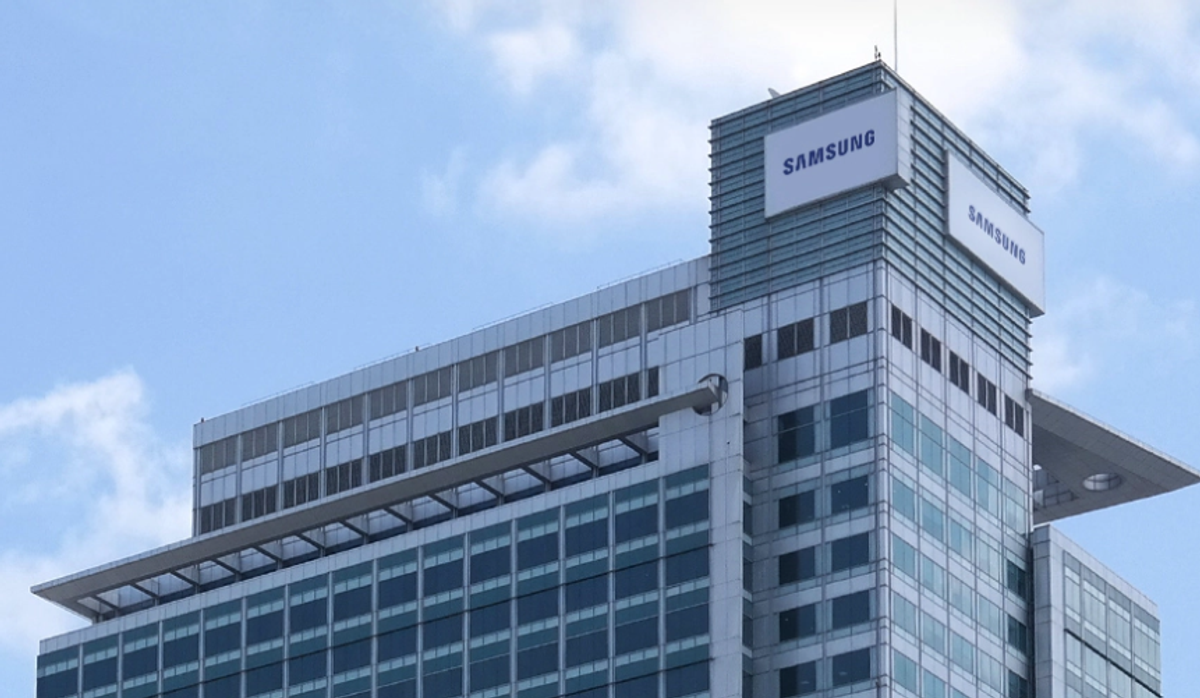
In a research report published on 1st October 2026, Hana Securities projected that Samsung Electronics would post operating profit of 108 trillion won (approximately $76bn) in the third quarter of 2026—a record for any single quarter in the company's history. The brokerage maintained its "Buy" rating and target price of 480,000 won per share.
Hana Securities estimates third-quarter revenue at 196 trillion won, up 127% year-on-year and 14% quarter-on-quarter. The projected operating profit of 108 trillion won would represent a staggering 788% increase from the same period a year earlier and a 21% rise from the previous quarter. Both figures were revised down slightly from earlier estimates, after the brokerage lowered its assumed won-dollar exchange rate from 1,500 to 1,415 won per dollar. The adjustment shaved roughly 10 trillion won off the previous operating profit forecast of 118.8 trillion won.
To appreciate the scale of these projections, consider that Samsung's full-year operating profit was just 43.7 trillion won in 2025 and 32.7 trillion won in 2024. If the forecast proves accurate, Samsung's quarterly earnings alone in the third quarter of 2026 would exceed its entire annual profit from two years prior by a factor of more than three. The driving forces behind this dramatic reversal are a sharp rise in memory chip prices and surging shipments of high-bandwidth memory (HBM) chips, which are essential components in artificial intelligence infrastructure.
Memory leads the way
By business segment, Hana Securities estimates that the memory division will generate operating profit of around 110 trillion won in the third quarter—exceeding the company's consolidated figure, implying losses elsewhere. The brokerage assumes DRAM prices will rise 15% quarter-on-quarter and NAND flash prices 18%, in line with or above previous estimates. While shipments of conventional DRAM are expected to grow only modestly, HBM volumes are projected to compensate, enabling overall bit-growth in line with management guidance. In NAND, strong sales of enterprise solid-state drives (eSSD) are expected to sustain momentum.
In the foundry division—Samsung's contract chip-manufacturing business, which competes with Taiwan's TSMC—Hana Securities expects losses to narrow quarter-on-quarter as utilisation rates improve at its 4-nanometre process nodes. The display panel division is expected to benefit from the seasonal boost associated with new product launches by a major North American customer, widely understood to be Apple. By contrast, the DX division, which encompasses smartphones and consumer electronics, is forecast to swing deeper into loss as input costs rise and marketing expenditure increases.
2027 outlook trimmed but still ambitious
Hana Securities also revised down its 2027 forecasts to reflect the stronger won. It now projects full-year 2027 revenue of 875 trillion won and operating profit of 519 trillion won, representing year-on-year growth of 25% and 41% respectively. Both figures are 7–9% below prior estimates, after the brokerage cut its assumed 2027 exchange rate from 1,458 to 1,340 won per dollar. Assumptions for memory prices and shipment volumes were left unchanged.
One of the more notable elements of the 2027 outlook is a projected increase in HBM's share of DRAM revenue. Hana Securities expects HBM to account for around 15% of Samsung's DRAM sales in 2027, up sharply from below 5% in 2026. In the current year, conventional DRAM prices have surged so strongly that HBM's relative contribution has been diluted. By 2027, the brokerage expects gains in conventional DRAM prices to moderate as long-term supply contracts limit upside, while full-scale shipments of HBM4—the next generation of the technology—to key customers begin in earnest. The brokerage notes that long-term supply agreements and committed HBM volumes provide high earnings visibility, which could justify a valuation premium.
Risks remain
These rosy projections carry meaningful caveats. Exchange-rate uncertainty is the most immediate: as this revision itself illustrates, even a relatively modest strengthening of the won can knock trillions of won off earnings estimates. Should the dollar's weakness persist, further downward revisions are likely.
The foundry division presents a separate set of risks. In 2027, depreciation charges are expected to rise as Samsung's new fabrication plant in Taylor, Texas comes fully on stream, and the pace at which yields on its 2-nanometre process stabilise will significantly affect profitability. The DX division, meanwhile, is now projected to record a loss of 5 trillion won in 2027, wider than the 4.4 trillion won previously assumed.
Valuation gap
Samsung's shares closed at 268,500 won on 30th September 2026, implying upside of roughly 79% to Hana Securities' target price of 480,000 won. The market consensus target is somewhat lower than Hana's, though Samsung's shares have risen sharply since the start of the year. The 52-week high stands at 362,500 won, some 35% above the current price. Samsung's market capitalisation stands at approximately 1,569 trillion won, equivalent to a 27.84% weighting in the KOSPI—South Korea's benchmark stock index—making it by far the country's most influential listed company.
Hana Securities' report reflects a broader optimism among South Korean brokerages towards Samsung. It remains, however, the view of a single institution. Preliminary third-quarter results are expected to be released as early as late October, at which point the trajectory of DRAM prices, HBM contract fulfilment, currency movements, and foundry yield improvements will determine how closely reality matches the forecast.