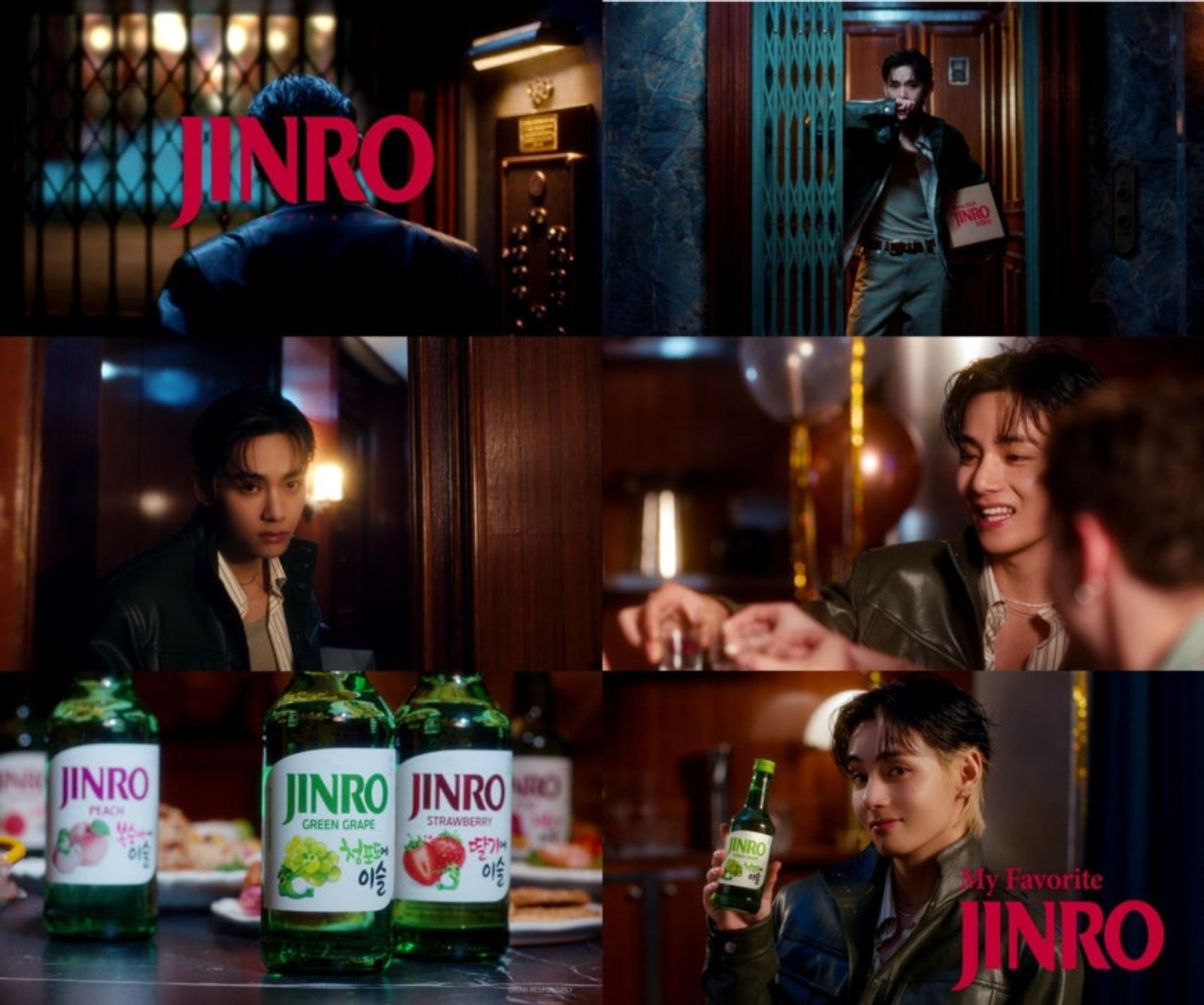
Hite Jinro, South Korea's dominant spirits maker, has appointed Kim Tae-hyung — better known by his stage name V — of the global K-pop phenomenon BTS as the international brand ambassador for its Jinro soju label. The move is being watched closely across the industry, not merely as a celebrity endorsement but as a deliberate attempt to harness the worldwide influence of K-pop as the engine of a serious globalisation strategy.
Jinro already has a remarkable story to tell. The brand has held the title of the world's best-selling spirit by volume for decades, and its export momentum has been building steadily as the global appetite for Korean food and culture grows. According to South Korea's Korea Customs Service trade statistics, exports of domestic soju have grown at an average annual rate of more than 10% since 2020, with particularly strong gains in the United States, Japan, China, and Vietnam. The appointment of V is best understood as an attempt to accelerate that trajectory.
Within BTS, V occupies a singular position. His Instagram following runs to tens of millions, and he has been named to Time magazine's Next Generation Leaders list. His collaborations with global luxury fashion and beauty houses have elevated him beyond the status of a conventional pop idol to something closer to a cultural icon. For Hite Jinro, the calculation is straightforward: V offers unrivalled access to millennial and Generation Z consumers, while simultaneously projecting an image that blends aspiration with approachability — precisely the brand positioning Jinro needs as it pushes into premium overseas markets.
The strategy draws on a well-established pattern in Korean cultural exports. In the early 2000s, the television drama Winter Sonata sparked a craze for Korean products in Japan, including a notable uptick in soju consumption. A decade later, the first wave of K-pop fandom demonstrably lifted Korean food exports across South-East Asia. Academic research supports the intuition behind these trends: a study by the University of Hong Kong's cultural industries institute found that a one-point increase in a country's favourability rating for another nation's popular culture correlates with a 0.6-point rise in preference for that country's food and beverage imports.
Yet the obstacles are not trivial. Alcohol advertising is among the most tightly regulated categories in marketing, and the rules vary sharply by jurisdiction. In the United States, the Federal Trade Commission imposes strict limits on alcohol advertising that could reach minors. Several European countries are tightening restrictions on celebrity-fronted alcohol campaigns. The challenge is particularly acute given BTS's fan base, known as ARMY, which skews young — heavily teenage to early twenties. Striking the right balance between brand excitement and responsible drinking messaging will be one of the thorniest problems Hite Jinro must navigate.
Industry insiders are candid about the limits of star power alone. "Using a Hallyu celebrity for global marketing is effective for short-term awareness," said one Korean spirits industry executive, "but without the real infrastructure — local distribution networks, competitive pricing, and locally adapted products — the effect can fade quickly." The cautionary tale is well known in Korean boardrooms: several K-beauty brands rode Hallyu celebrity campaigns to rapid initial growth, only to cede market share to local competitors once the novelty wore off.
The international precedents are instructive. Suntory of Japan famously leveraged Bill Murray's appearance in Sofia Coppola's Lost in Translation — a film shot around a Suntory whisky campaign — to dramatic effect on American brand recognition. Corona beer from Mexico, by contrast, built its enduring global franchise less through Hollywood endorsement than through consistent association with a local lifestyle and cultural identity. Both cases point to the same conclusion: celebrity can lower the barriers to entry, but lasting success in overseas markets is ultimately determined by product quality and localisation.
Hite Jinro's global ambitions will therefore rest on how it chooses to tell the story that surrounds V's involvement. A strategy built merely on putting a famous face to a bottle will have a limited shelf life. The greater prize lies in positioning Jinro soju as an authentic emblem of Korean culture — one that belongs alongside K-pop and Korean cuisine as part of a coherent, appealing package of Korean modernity. Whether the company can redefine soju not just as a drink but as an experience of Korea itself will be the real test of whether this partnership delivers lasting value.