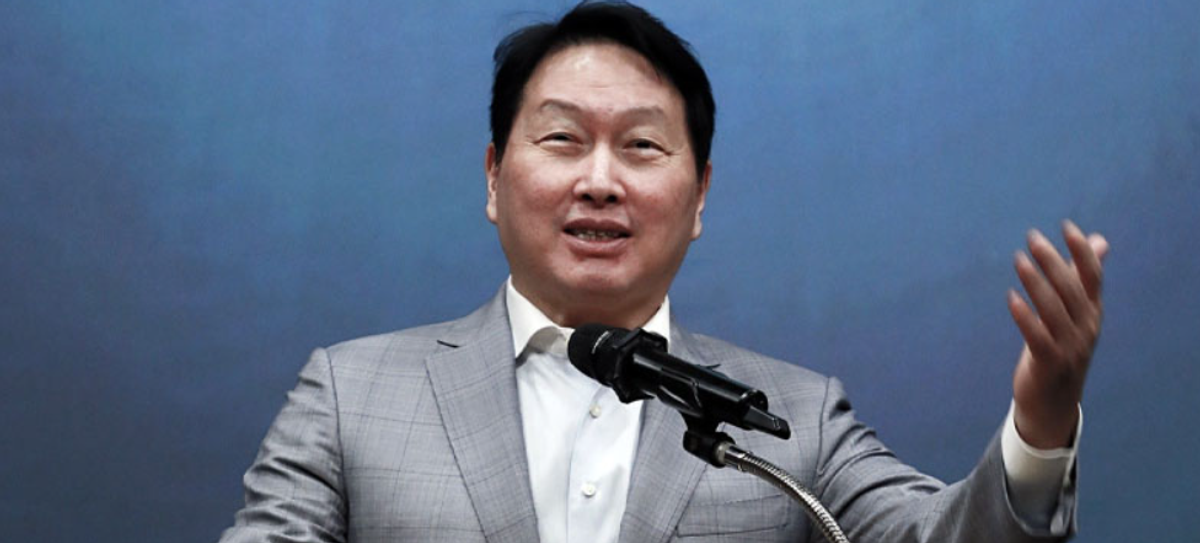
Chey Tae-won, chairman of SK Group — one of South Korea's largest conglomerates — has bought 4.8 billion won (roughly $3.5m) worth of ordinary shares in SK Hynix, the group's semiconductor arm. The company's official explanation is that the purchase demonstrates his "commitment to responsible management." Behind that tidy phrase, however, lies a considerably more complex story.
Why markets pay attention when owners buy their own stock
When a controlling shareholder or chief executive buys shares in their own company, markets treat it as a form of insider buying — an act that functions as a signal, not merely a transaction.
The logic is straightforward. Nobody knows a company's true condition better than those running it: the real story behind the financial statements, the pipeline of forthcoming contracts, the state of technology development. When someone with privileged access to all of that spends their own money buying shares, other investors naturally ask: does this person think the stock is undervalued?
Academic research has repeatedly found that insider buying tends to be followed by returns that outperform the broader market. In South Korea's stock market (the KOSPI), it is not unusual to see a short-term price rebound after a major shareholder discloses an increase in their stake.
Is "responsible management" a sufficient explanation?
Corporate announcements of this kind invariably reach for the same vocabulary: "enhancing shareholder value," "demonstrating commitment to responsible management." These phrases are not wrong, exactly.
From a corporate-governance perspective, there is a genuine logic to a controlling shareholder holding a direct personal stake in a subsidiary. It aligns their financial interests with the company's performance — when the company prospers, so does their personal wealth. In theory, this encourages a focus on long-term value creation rather than short-term earnings manipulation.
But if that were the whole story, it would still leave the most important question unanswered: why now?
Where SK Hynix's share price stands
SK Hynix has been one of the most prominent beneficiaries of the artificial-intelligence boom. As a critical supplier of high-bandwidth memory (HBM) chips used in Nvidia's graphics processors, the company's financial performance has improved markedly since 2024. Yet its share price has suffered repeated sharp corrections, buffeted by anxiety over the semiconductor cycle, the knock-on effects of American export controls on advanced chips to China, and fears of a global economic slowdown.
The result has been an uncomfortable pattern: improving fundamentals, but a share price that has stagnated or fallen. In that environment, a decision by the company's best-informed insider to buy shares carries a secondary implication that is difficult to dismiss — namely, that he considers the current price too low.
The two faces of insider buying
Two interpretations of Mr Chey's purchase can coexist without contradiction.
The first is symbolic. By personally buying shares in a group subsidiary, the chairman sends a message — to the market, to employees and to outside investors — that he believes in the company. There may also be a morale-boosting effect internally, and a confidence-restoring effect externally.
The second is strategic. If the chairman's private assessment is that the stock is trading below its fundamental value, the purchase is simply a rational allocation of personal capital. Far from being mutually exclusive, these two motivations are typically intertwined in most insider buying. The gesture and the calculation reinforce each other.
What investors should actually look for
Treating insider buying as an automatic signal of imminent price gains is a mistake. A chairman's purchase is no guarantee of a rising share price; insiders are fallible. Macroeconomic variables, competitive dynamics and the timing of semiconductor-industry cycles are not within any individual's power to control or predict with certainty.
The more useful exercise is to ask a series of contextual questions. Is the amount meaningful relative to the chairman's total personal wealth? Is this a one-off transaction or part of a sustained pattern of accumulation? Did other senior executives make purchases at the same time? Answers to these questions determine how strong a signal the transaction actually represents.
Four-point-eight billion won is an extraordinary sum by ordinary standards, but for the chairman of one of South Korea's largest conglomerates — a man whose personal assets are estimated in the tens of trillions of won — it is worth asking soberly how much of a sacrifice it truly represents. Symbolism and substance are not the same thing.
Whether Mr Chey's purchase was a piece of theatrical reassurance or a genuine expression of conviction, SK Hynix's share price and earnings will ultimately supply the verdict.