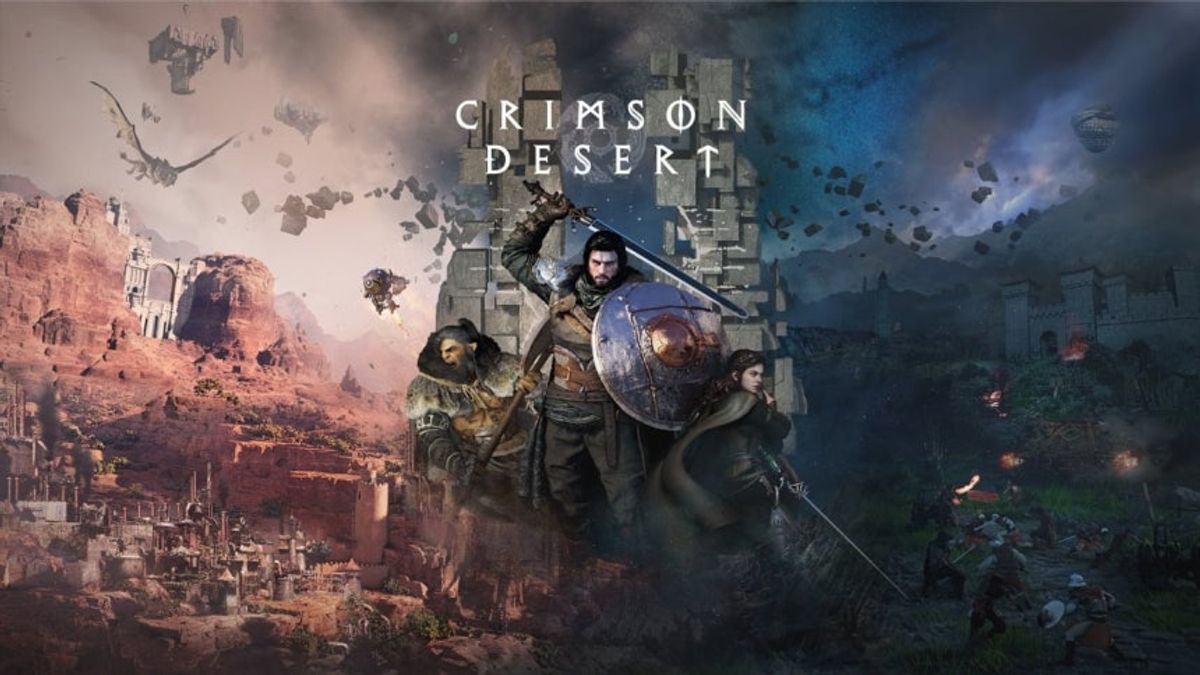
Pearl Abyss's action open-world title Red Desert received a decidedly mixed reception when it launched in domestic and international markets. Yet the game has now been named Best International Game at China's largest gaming awards ceremony, prompting a dramatic reassessment. It is a rare honour: no Korean AAA title has previously claimed such a prestigious accolade at a Chinese gaming event, and the award is reshaping how the Korean games industry thinks about its overseas ambitions.
Why China chose Red Desert
The award, announced in early August 2026, saw Red Desert beat a field of global competitors to claim the top prize for best overseas game. The scale of China's gaming market makes this recognition commercially significant, not merely symbolic. According to market research firm Newzoo, China's gaming market exceeded $50bn in 2025, accounting for roughly 25% of global game revenues — making it the largest in the world by value.
Several factors explain Red Desert's appeal to Chinese players. The game combines an expansive open world, meticulously detailed graphics and a narrative that blends Eastern and Western fantasy sensibilities. Analysts who follow the games industry note that "Chinese gamers, well versed in Japanese RPGs and Western open-world titles, found in Red Desert something that sits between those two poles — a genuinely novel experience." The game's world-building and character design draw on East Asian aesthetics while meeting the technical standards of a global AAA production, a combination that appears to have resonated strongly.
A turbulent journey to market
To understand where Red Desert stands today, it helps to trace how it got there. Pearl Abyss first announced the game in 2019, and what followed was a prolonged development cycle marked by repeated delays and changes of direction. Early trailers generated enormous anticipation worldwide — their cinematic action sequences and visual fidelity set expectations extremely high. When the game eventually shipped, some Western media outlets and gaming communities concluded it had fallen short of the hype, pointing to the density of the open world and the steep learning curve of its combat system.
In Asia, however — particularly in South-East Asia and Japan — the reception was considerably warmer. The Chinese award now reinforces the view that the divergence in regional responses reflects something deeper than mere differences of taste. Cultural coding, it turns out, matters enormously in how games are perceived and valued.
Korean games and geopolitics: the post-hallyu freeze
The award carries additional weight given the fraught history between the Korean and Chinese games industries. In 2017, China imposed sweeping informal restrictions on Korean cultural exports — collectively known as the hallyu ban, or *han-han-ryeong* — in retaliation for South Korea's decision to host a US missile-defence system (THAAD). The ban effectively shut Korean games out of the Chinese market: the Chinese authorities halted the issuance of *pan-ho* licences (the official permits required to commercialise games in China), forcing major Korean developers either to withdraw or to pursue indirect routes to market.
Since 2022, relations between the two countries have gradually thawed. Licence approvals have partially resumed and industry ties are slowly being rebuilt. Seen against this backdrop, the decision by a prominent Chinese gaming awards body to hand its top prize to a Korean title reads as more than an aesthetic judgement. It looks like an industry and diplomatic signal as well. "The Chinese games industry officially recognising the technical capability and brand strength of Korean games can be interpreted as a gesture that opens the door to future collaboration and co-publishing arrangements," said one researcher at a games industry think-tank.
What the award means for Pearl Abyss
For Pearl Abyss, the recognition operates on several levels simultaneously. Most immediately, it provides external validation of the global competitiveness of its flagship new title — the long-gestated successor to Black Desert, which retains a loyal and sizeable user base across Asia, including China. Red Desert now has the opportunity to absorb that existing fanbase and use it as a springboard for broader market expansion.
The financial implications are also considerable. Pearl Abyss has long signalled its intention to reduce its dependence on Black Desert revenues and establish Red Desert as its primary growth engine. A strong reputation in China provides meaningful leverage in negotiations over licences and partnerships with local publishers. It may also lend momentum to localisation strategies such as a mobile version or services tailored to PC gaming cafés — a format that remains deeply embedded in Chinese gaming culture.
Where Korean games stand in the global open-world race
The Best International Game category in which Red Desert triumphed puts Korean titles in direct competition with releases from the world's dominant platform holders — Sony, Microsoft and Nintendo. That a Korean game outpaced the major Western open-world titles released in the same year is a tangible demonstration that Korea's games industry has reached the very top tier of global technical capability.
The parallel with Japan is instructive. Nintendo and Square Enix built global audiences by grounding their games in distinctly Japanese cultural codes while making them accessible to players worldwide. Korean games appear to be charting a similar course. Red Desert does not foreground Korean cultural references explicitly; instead, it layers East Asian sensibility onto a broadly universal fantasy template. This "crossover strategy" — culturally inflected but not culturally exclusive — allows it to appeal simultaneously to audiences across Asia and in the West.
Obstacles ahead
Optimism should nonetheless be tempered. Obtaining a Chinese *pan-ho* licence remains highly uncertain. Chinese regulators apply demanding and opaque criteria to content — scrutinising violence levels, historical representations and other sensitive elements — and foreign games face stricter scrutiny than domestic ones. China's policy disposition towards protecting its home games industry remains firmly in place, meaning that a prestigious award is no guarantee of commercial success.
Industry insiders are emphatic on this point. "This award is a starting point, not a conclusion," said one senior figure in the Korean games industry. "For Red Desert to actually open wallets in China, it will need localised content updates and a dedicated marketing strategy." Expanding the game's content volume, maintaining regular updates, and forging partnerships with Chinese influencers and streamers are identified as essential requirements.
Even so, the award marks a meaningful milestone. The formula that Red Desert has demonstrated — world-class technical execution combined with cultural universality — has now been validated in one of the world's largest gaming markets. After a difficult launch, Pearl Abyss has built something genuine in China: credibility. That quiet but unmistakable signal suggests that Korean games are no longer mere challengers in the global market. They may be becoming standard-setters.