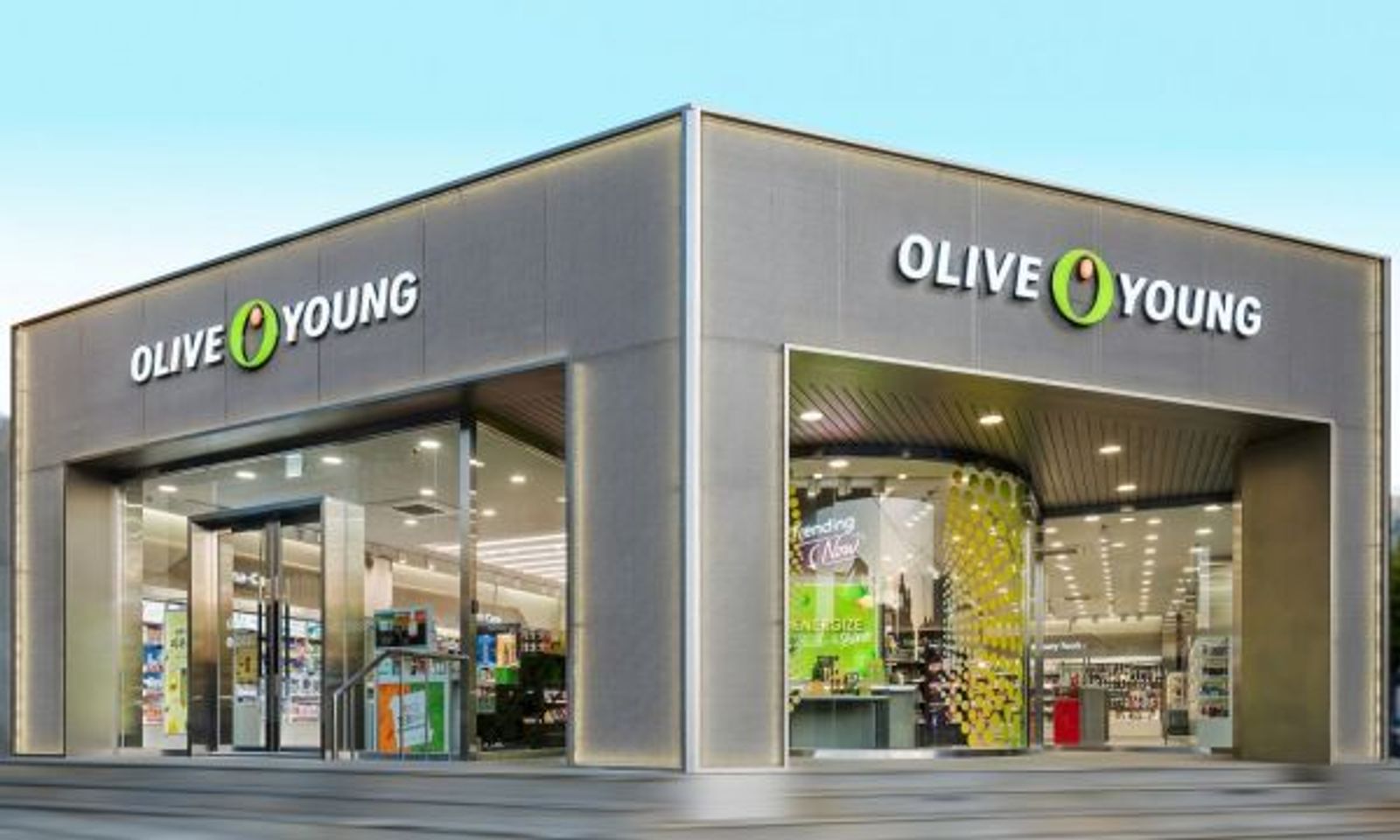
CJ Olive Young, the undisputed leader of South Korea's health-and-beauty (H&B) retail market, has completed the placement of its curated brands inside Sephora stores across South-East Asia and is running a pop-up in Singapore, marking a decisive step in its international expansion. The move signals a structural shift in the K-beauty industry: rather than merely exporting products, Olive Young is now pursuing control over the distribution channels themselves.
The strategic significance of entering Sephora
Sephora, the premium beauty retail chain owned by France's LVMH group, operates more than 3,000 stores in over 35 countries. In South-East Asia, it commands a loyal base of premium beauty consumers across key cities in Singapore, Malaysia, Thailand, the Philippines, and Indonesia. Securing shelf space there is far more than a new sales outlet — it confers the implicit endorsement of a globally validated brand.
The brands Olive Young has placed inside Sephora are understood to be drawn primarily from South Korea's small and mid-sized independent beauty labels, the so-called "indie" brands. Olive Young already exports K-beauty products to more than 150 countries through its own platform, Olive Young Global Mall. But entry into Sephora represents something categorically different: a physical, experiential touchpoint with consumers who can discover and trial products in person.
Why South-East Asia, and why now
According to Euromonitor, the South-East Asian beauty and personal-care market was worth roughly $30 billion in 2023 and is expanding at an annual rate of 6–8%, making it one of the fastest-growing beauty markets in the world. The region's large millennial and Generation Z populations, combined with the rapid spread of beauty trends through social media and short-form video, create a particularly fertile environment for K-beauty.
Data from the Korea International Trade Association show that South Korea's cosmetics exports hit a record $8.5 billion in 2023. The share destined for South-East Asia has been growing steadily, reflecting a deliberate diversification away from what was once an overwhelming dependence on China. The United States and South-East Asia are now the two clearest growth frontiers.
Singapore as a hub: the logic of the pop-up
Olive Young's choice of Singapore as its pop-up base is no accident. The city-state sits at the centre of South-East Asian logistics and finance, commands high consumer purchasing power, and draws tourists from across the region and beyond. The pop-up serves as a test bed: by gathering real-time data on local consumer preferences, Olive Young can refine its expansion strategy before moving into the larger, more complex markets of Malaysia, Indonesia, and Thailand.
A retail industry executive described the approach as "a low-cost, high-efficiency strategy that simultaneously builds brand awareness and captures consumer data — not a promotional gimmick." The pop-up also gives Olive Young a live showcase for two of its core competencies: its private-label products and its ability to curate indie brands, both of which are largely unknown to South-East Asian shoppers.
Collaboration or competition? The nuanced relationship with Sephora
The relationship between Olive Young and Sephora is more complex than a straightforward supplier-retailer arrangement. Sephora is itself a formidable competitor, stocked with global premium brands. Yet surging consumer demand for K-beauty across South-East Asia means that expanding its Korean beauty offering has become a commercial necessity for Sephora as well — a draw that brings shoppers through the door. The result is a symbiotic partnership in which both parties' interests happen to align.
This dynamic is already visible in the United States, where K-beauty indie brands such as rom&nd, CLIO, and TIRTIR have carved out prominent positions in American Sephora stores and generated strong sales. Olive Young is, in effect, transplanting that model into South-East Asia.
Domestic headwinds, global ambitions
At home, Olive Young faces a rather different kind of scrutiny. With a market share exceeding 80% of South Korea's H&B retail sector, it has drawn the attention of the Korea Fair Trade Commission, which has investigated the company over concerns about its treatment of smaller suppliers and the alleged exclusion of rivals. These issues remain unresolved. Against this backdrop, the global push serves a dual purpose: breaking through the ceiling of a saturated domestic market while recasting the company's image as a global distribution platform rather than a domestic monopolist.
A beauty industry analyst warned, however, that the problems do not disappear at the border. "The strategy is to offset regulatory risk at home with growth momentum abroad," he said, "but questions of fairness — in brand selection, fee structures, and terms of trade — will follow Olive Young into international markets just as they have at home."
Lessons from Boots, Watsons, and Matsumoto Kiyoshi
South-East Asia's H&B market is already well-served by established players. Britain's Boots and Hong Kong's Watsons — which alone operates more than 7,000 stores across Asia — have been fixtures in the region for decades. Olive Young's decision to ride Sephora's existing network, rather than planting its own branded stores in competition with these giants, is widely regarded as a pragmatic way to minimise risk.
The cautionary tale here is Japan's Matsumoto Kiyoshi, which struggled badly in South-East Asia after stumbling on localisation. Its difficulties underline the value of working through established local partners and channels rather than attempting to export a domestic retail format wholesale — a lesson Olive Young appears to have absorbed.
Outlook: from product exporter to platform
Olive Young's South-East Asian foray encapsulates a broader evolution in K-beauty. Where the industry once made its name abroad through individual brands, it is now entering a phase where the curation and distribution platform itself becomes the export. The central question for the years ahead is whether Olive Young can establish itself as the gatekeeper of K-beauty in South-East Asia — setting the terms on which Korean brands reach regional consumers — rather than simply acting as an intermediary.
A longer-term scenario in which Olive Young opens its own branded stores in major South-East Asian cities cannot be ruled out, particularly if the Sephora partnership and Singapore pop-up demonstrate strong commercial results. The South Korean government's policy of promoting K-beauty as a flagship export industry, linked to the broader global reach of Korean culture and content, provides an additional institutional tailwind. Whether Olive Young can convert regional momentum into lasting structural influence will be the defining test of its global ambitions.