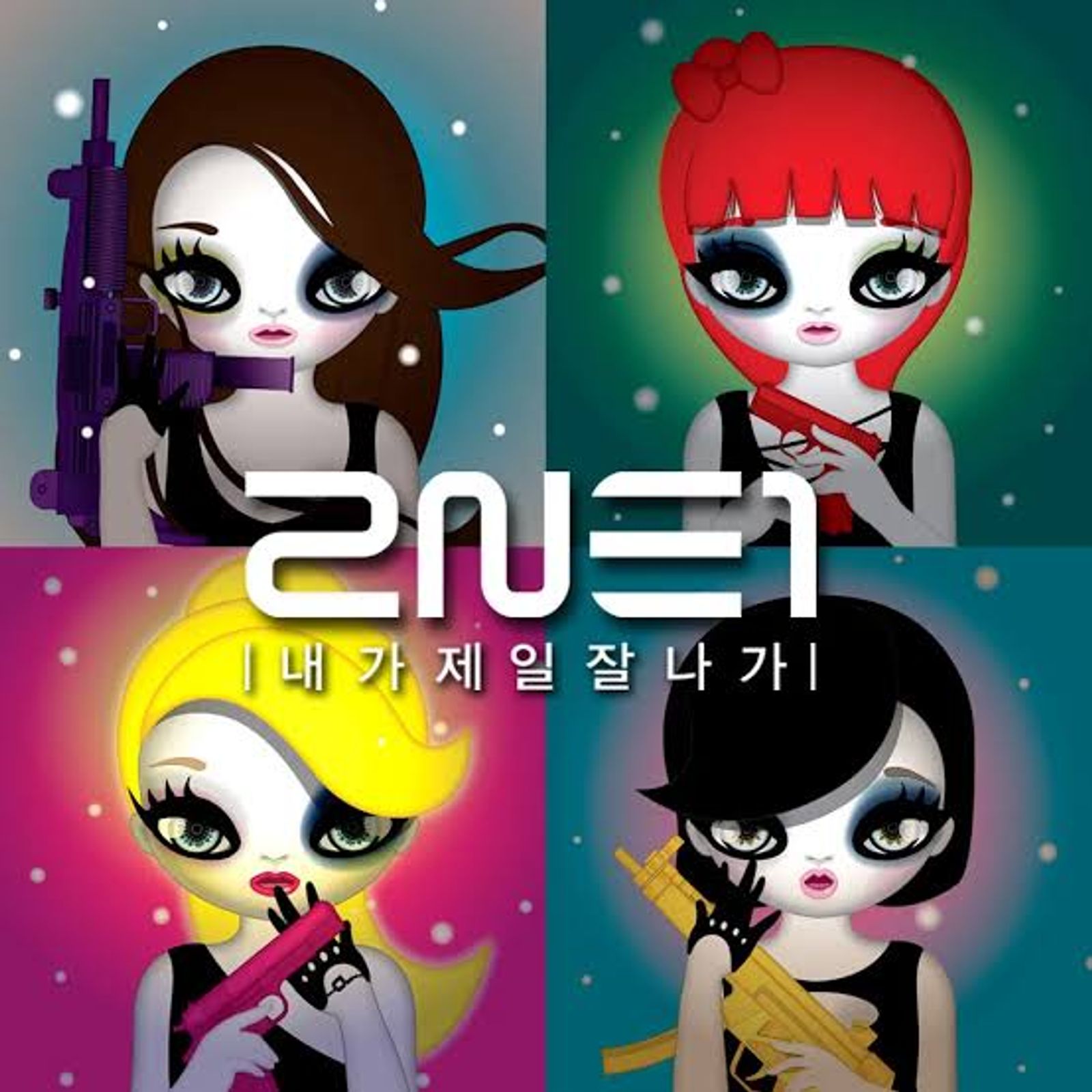
On 17th June 2011, Sandara Park posted a single photograph on the Korean social network me2day: a snapshot from a choreography rehearsal. It was the first signal of a comeback. Three days later, YG Entertainment published jacket artwork on its blog alongside a ten-second audio clip, promising an additional ten seconds each day until the 24th. The strategy was deliberate — release the song in fragments to build anticipation before the whole existed. The result was 2NE1's "I Am the Best" (내가 제일 잘 나가).
A three-week release cadence — and a three-day delay
The track was the third single from 2NE1's second mini-album, following a release schedule that spaced out each song at three-week intervals after the opening single "Lonely" dropped on 12th May. The original release date was 21st June, but internal matters at YG pushed it back to the 24th. The song was written and produced by Teddy Park, 2NE1's principal collaborator. One noteworthy detail concerns the members' own role in that process. In a 2011 interview, CL explained: "We don't write or compose the songs ourselves, but we are present when the music is being made and our opinions and ideas feed into it." Songwriting remained Teddy's domain, but the group contributed creatively during production.
Twice the budget, a few days late
The music video was directed by Seo Hyun-seung, with filming beginning a week before release, running concurrently with vocal recording. YG disclosed on its blog that production costs were approximately double those of any previous 2NE1 video. The larger sets extended post-production, which meant the video could not accompany the audio release; it appeared on YouTube three days later, on the 27th. The visual centrepiece was a glam-punk aesthetic: elaborate pyramid sets, CL dressed as a wrestler, and a finale in which the pyramid is demolished. Within two days of going live, the video had accumulated 1.7m views; within a month, it reached 9m. At the time, 2NE1 were deliberately prioritising music videos over broadcast television appearances as their primary promotional vehicle. On 6th October 2014, the video crossed 100m views on YouTube.
Chart dominance and a new archetype
The audio release went straight to the top of South Korea's major real-time streaming charts. On the Gaon Digital Chart — South Korea's equivalent of a national singles chart — it debuted at number four in its first week before climbing to number one the following week. The group claimed the top spot on SBS's "Inkigayo" programme on 17th July, and at the end of the year took home the Song of the Year award at the Mnet Asian Music Awards.
The mini-album containing the track sold 70,000 copies immediately upon its release on 28th July, and reached number two on the iTunes Electronic Albums chart in the United States, number three in Canada and number eleven in the United Kingdom. A Japanese-language version was made available on the streaming platform Recochoku on 20th July before appearing on a Japanese EP in September. Shortly afterwards, 2NE1 staged their first solo concerts at Seoul's Olympic Hall on 27th and 28th August.
The song's message is unambiguously self-assured: a blunt declaration of supremacy. At the time, 2NE1's image stood apart from the dominant K-pop girl-group template, which typically emphasised either sexual appeal or girlish charm. Cultural critic Ha Jae-geun characterised their approach as a conscious effort "not to be consumed by men through sexual attraction, but to become role models for women." This, he argued, explained the group's unusually strong female fanbase. The track is now routinely cited as a founding text of the "girl crush" concept in K-pop — a posture of cool confidence aimed at female listeners rather than male ones.
A song that outlasted its moment
International recognition came, though not immediately. From August 2014, Microsoft used the track in advertising campaigns for the Surface Pro 3 in the United States, and that same year it reached number one on Billboard's World Digital Songs chart. In December 2014 it received an official American release through Capitol Records — three years after it first appeared in South Korea.
On 16th April 2022, the song was heard again at the Coachella Valley Music and Arts Festival in California. As part of a headline set organised by 88rising, a label focused on Asian artists, 2NE1 performed "I Am the Best" in their first full-group appearance since disbanding — a reunion that drew considerable attention. Separately, CL revealed during a 2021 live session ahead of her solo album release that an original version of the track had featured Justin Bieber. That claim rests on a single statement from CL herself and has not been independently verified.
Verdict
"I Am the Best" was less a pop song than a statement of intent. A music video with twice the usual budget, a meticulously staggered release schedule, and lyrics that refused any pretence of modesty collectively shifted the mood of a South Korean summer. That the same song rang out from a Coachella mainstage more than a decade later is the clearest measure of how long it has lasted.