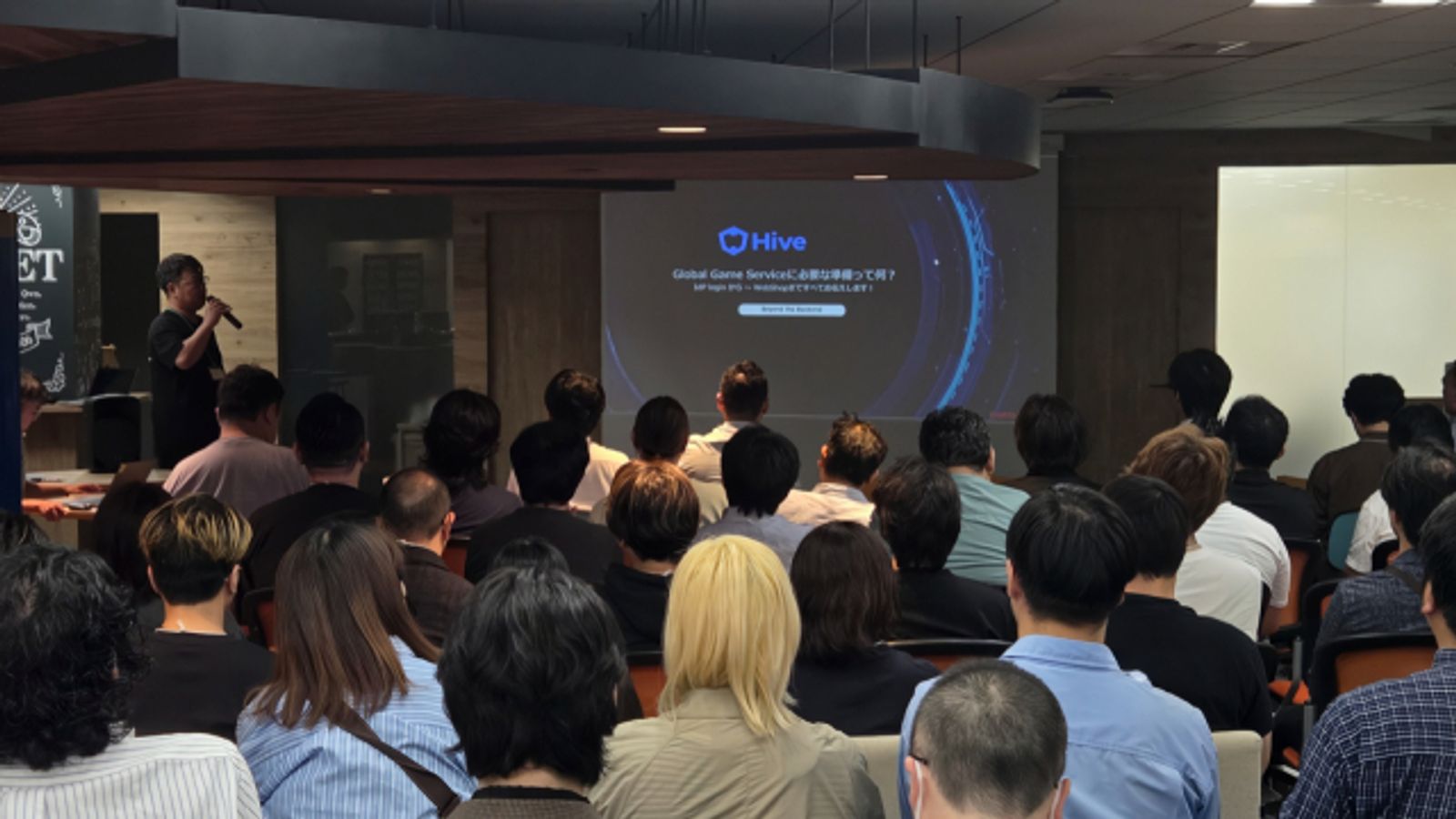
Com2uS Platform, the global distribution and platform subsidiary of South Korea's Com2uS Group, hosted a B2B seminar in Tokyo in October 2025, bringing together Korean and Japanese game developers to share market-entry strategies. The event was more than a networking exercise: it signals a deliberate effort to institutionalise a co-operative ecosystem between the two countries' gaming industries.
The company operates HIVE, a proprietary platform that provides integrated services — authentication, payments, push notifications, and social features — that game developers need to run titles across borders. HIVE has earned particular recognition for its localisation solutions tailored to Asian markets.
Japan is a market Korean developers have long coveted and often struggled to crack. By 2023, Japan's gaming market was worth approximately ¥2 trillion (around 18 trillion won), making it the world's third-largest after the United States and China. Mobile games account for more than half of that total, reflecting vigorous smartphone gaming consumption. Yet Japan is famously hard for foreign entrants. Japanese players show a strong preference for domestic intellectual property, and the country's gaming culture and spending habits are sufficiently distinct that localisation barriers are high.
Many Korean studios have stumbled on precisely these obstacles — misreading local tastes or misjudging marketing strategies. But there are instructive successes. Netmarble's *Seven Deadly Sins: Grand Cross* and Nexon's *Blue Archive* both climbed to the top of Japanese app store charts by meticulously reverse-engineering Japanese players' aesthetic sensibilities and spending behaviour before launch.
The Tokyo seminar addressed those same lessons directly. Discussions reportedly centred on the technical infrastructure, payment systems, user-behaviour analytics, and regulatory compliance that Korean studios need when entering Japan. Crucially, the seminar also covered the reverse journey — how Japanese developers can expand into South Korea and broader Asia — giving the event a bilateral rather than one-directional character.
Industry analysts see this kind of B2B platform event as a good illustration of the growing importance of what they call the "middle layer" in gaming: companies that absorb the technical and administrative complexity of cross-border expansion on behalf of developers. Globally, the value of such intermediaries is well recognised; AppLovin and Unity, for instance, have both commanded high valuations on the strength of their game-operations infrastructure.
The historical backdrop lends further context. In the early 2000s, Korean online games such as *Lineage* and *Ragnarok Online* found large audiences in Japan. In the mobile era, collaboration evolved into co-development agreements, IP licensing deals, and publishing partnerships. More recently, the global success of Korean content — spanning film, television, and music — has created a warmer reception for Korean games in Japan, giving studios a more favourable environment than they have previously enjoyed.
Challenges remain, however. Japan is tightening regulation of gacha mechanics (randomised in-game loot systems), strengthening requirements under its Act on the Protection of Personal Information (APPI), and the weakness of the yen introduces earnings volatility for companies repatriating revenues in stronger currencies. Meanwhile, Japan's mobile gaming market is maturing: retaining existing players is becoming more important — and more difficult — than acquiring new ones.
Com2uS Platform's Tokyo seminar looks less like a one-off event and more like the opening move in a longer campaign to formalise Korea-Japan gaming co-operation. There is growing consensus in the industry that cultural understanding and platform credibility, rather than raw technological capability, are the decisive competitive advantages in Japan. How Com2uS Platform's B2B hub strategy ultimately reshapes the architecture of Korea-Japan gaming collaboration is a question worth watching closely.