Introduction
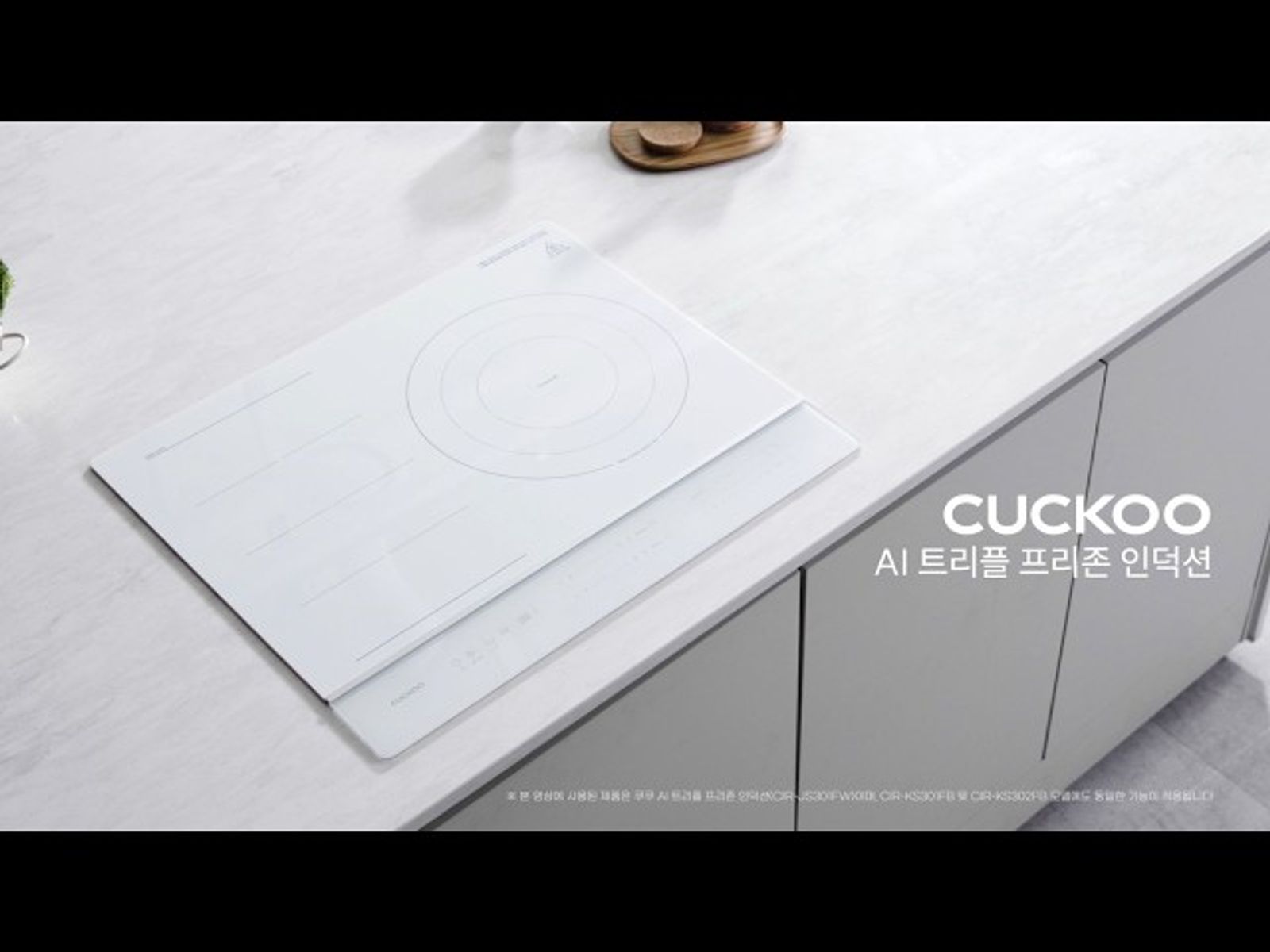
In February, Cuckoo — a South Korean home-appliance maker best known for its rice cookers — added the AI Triple Free-Zone Induction Hob to its premium "Gourmet Collection" kitchen line. The product combines decades of accumulated heating expertise, spanning rice cookers, induction hobs, microwave ovens, and air fryers, with an AI-powered sound-detection system. The formula appears to be working: Cuckoo has topped the electric-hob category of the Korean Customer Satisfaction Index (KCSI), an independent consumer research survey, for two consecutive years.
Specifications
The headline feature is an "AI boil-over prevention" system. An algorithm pre-trained on a dataset of 191,000 boiling-sound recordings analyses audio in real time and adjusts the heat output accordingly — covering everything from water and stock to viscous, bubble-prone dishes such as stews and instant noodles. Anyone who has stepped away from the hob only to return to a spattered mess will appreciate the practical logic.
On raw power, the hob uses a "free-zone" design — eliminating fixed burner boundaries — to deliver up to 3,400W. A booster mode can sustain that peak output for up to 60 minutes. A widened 29cm dual-ring cooking zone handles large pots and woks without difficulty, and an automatic vessel-size recognition function calibrates heat output to the cookware in use. The hob is available in two matte finishes — white and black — a nod to consumers for whom kitchen aesthetics matter.
Strengths and Limitations
The device's chief strength is the ingenuity of its core concept: detecting an invisible hazard through sound alone. While most AI-enabled appliances rely on cameras or object-recognition systems, Cuckoo has trained its algorithm on acoustic data — a sensible fit for an induction hob, which generates no flame and offers few visual cues to the cook. A dataset of more than 191,000 samples also allows for more nuanced responses than a conventional temperature sensor could manage.
There are caveats. Because detection depends on audio, accuracy may suffer in noisy kitchens or when multiple cooking zones are in simultaneous use. And until sound-based AI becomes standard across the induction market, whether the feature justifies the premium price will depend on the individual buyer's cooking habits.
Verdict
Without flashy touchscreens or robotic components, the AI Triple Free-Zone Induction Hob makes its case for intelligence through the most unassuming of inputs: sound. That it has translated a decades-old kitchen frustration — the boiled-over pot — into a measurable uplift in consumer satisfaction scores makes it a noteworthy entry in the increasingly competitive smart-appliance category.
★★★★☆ (4.0 / 5.0)
In a word *"It doesn't need to watch the pot — it just listens."*