The rally is broadening
Korean equities have been recovering from a sharp sell-off, and once again semiconductor heavyweights have led the charge. But this rebound has a different character from the one earlier in the year. The KOSDAQ — South Korea's secondary exchange, home to smaller and mid-cap companies — is rising alongside the main KOSPI index, and gains are spreading beyond chipmakers into other sectors.
That said, semiconductors account for such a large share of the KOSPI's total market capitalisation that they will inevitably dominate whenever the index moves. The more practical strategy, therefore, is to maintain exposure to semiconductors while widening one's sights towards sectors that have been left behind. Shipbuilding stands out as the most compelling candidate.
A textbook divergence between fundamentals and price
What makes Korean shipbuilders interesting is the timing of their decline. They surged well before the semiconductor rally took hold — and then, during the broader market correction, fell more than 30–40% from their highs, making a mockery of the "super-cycle" narrative that had propelled them. Analysts are broadly agreed that this drop reflects market-wide de-rating and profit-taking, not any deterioration in the underlying business. Order indicators remain surprisingly firm, and recent results from the major yards confirm that contract prices have held up well.
In short, shipbuilders have become cheaper not because their earnings have weakened, but because investor attention drifted towards chips and left them behind.
Competitive position: real strengths, real caveats
Measured purely by order volume, China dominates global shipbuilding. Last year it captured 63% of new vessel orders worldwide; South Korea took 21%. Yet the picture shifts when one focuses on high-value ship types. Korean yards retain a credible technological edge in liquefied natural gas (LNG) carriers — a segment that commands significantly higher margins. Industry insiders argue that Chinese-built LNG vessels still lag in quality and that the bulk of China's LNG orders serve its domestic market.
Even so, the gap is narrowing, and intellectual honesty requires acknowledging that. As of May this year, the overall order-share gap between the two countries had narrowed to just three percentage points. A structural vulnerability also persists: the cryogenic cargo-containment technology at the heart of Korean LNG tankers remains entirely dependent on licences from the French firm GTT. Korea's technological lead is real but neither absolute nor permanent.
On top of this comes an important geopolitical variable. Under Section 301 of the US Trade Act, Washington began levying port fees on Chinese-built vessels and ships owned or operated by Chinese carriers from October last year — a tangible measure aimed at curbing China's grip on global shipping and shipbuilding.
If China is to be displaced, who fills the gap? Japan, once the world's largest shipbuilder, has effectively been priced out of the market. Its export order intake recently plunged by more than 30%, and although Tokyo has launched a large fund with a target of doubling output by 2035, sceptics point to ageing facilities and a structurally high cost base. India has set an ambition to become a top-five shipbuilding nation by 2047 and is in early talks with the three main Korean yards, but similar expectations in 2015 and 2017 came to nothing — caution is warranted. That leaves South Korea as the most credible alternative, and the beneficiary most likely to gain from any sustained American pressure on Chinese shipbuilding.
Southeast Asia as weapon, not threat
India and Southeast Asia need not be viewed solely as emerging rivals; for HD Hyundai in particular, they represent a means of clawing back the low-end market segment that China has captured. South Korea's share of commercial vessel order backlogs has shrunk from 31% in 2007 to 20% today, while China's has ballooned from 27% to 62% over the same period — a reversal driven largely by China's lower production costs.
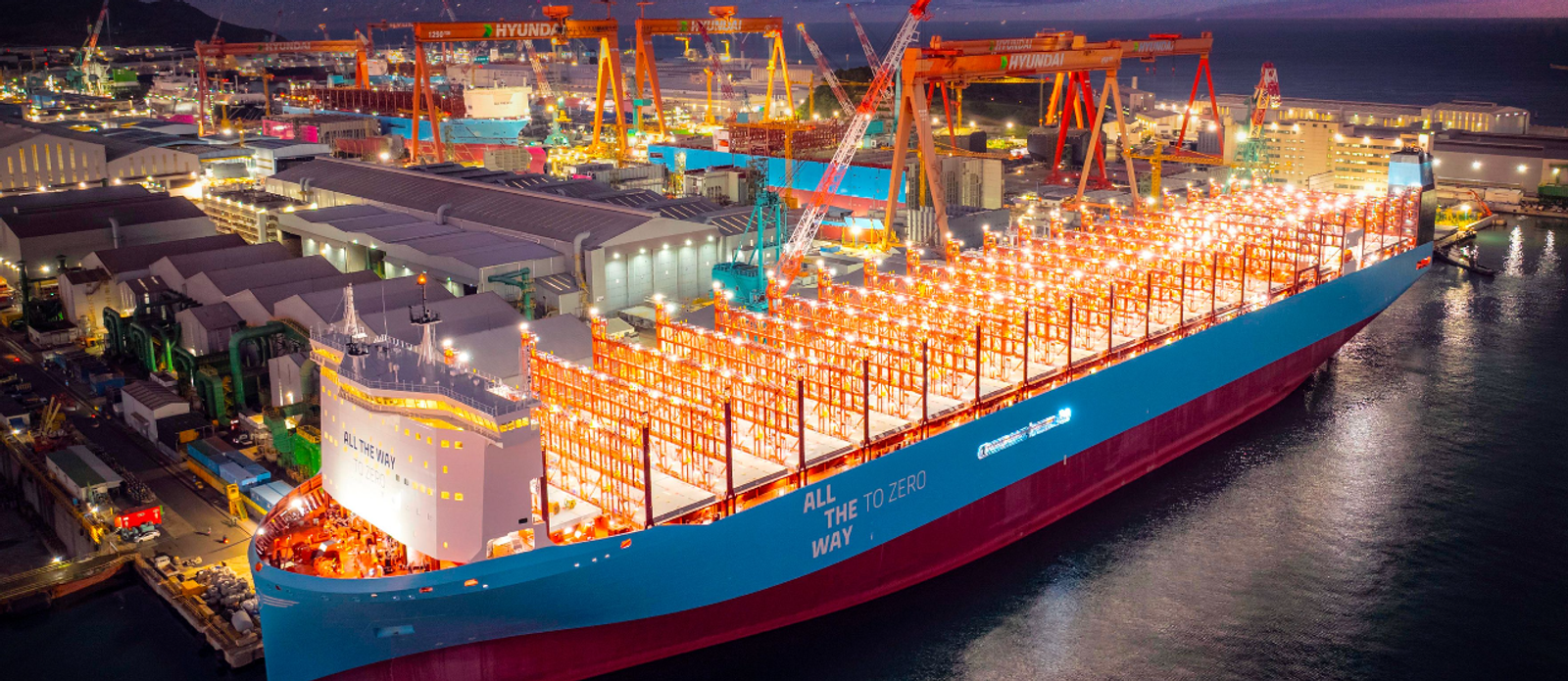
HD Hyundai is tackling this head-on by building low-cost manufacturing hubs in the Philippines and Vietnam. Its Subic Bay shipyard in the Philippines, alongside its Vietnamese facility, forms what the company calls a "Southeast Asian belt" — a strategic platform from which to compete with Chinese yards on price rather than cede the segment entirely. The Philippine yard already offers a cost advantage of 15–20% relative to South Korea and has started winning tanker orders on that basis. Capacity there is planned to triple by 2030, with the workforce more than doubling. A new yard investment worth roughly $4bn is also under consideration in India. The logic is straightforward: instead of abandoning standard vessel types to China, HD Hyundai wants to contest them from a lower-cost base.
Defence and AI: two new demand drivers
Beyond the traditional order-book cycle, shipbuilders are accumulating momentum from two entirely new directions.
The first is defence. The MASGA (Maintenance, Activation, Supply, and Global Availability) project — a proposed US-Korea shipbuilding cooperation framework valued at $150bn — is gathering pace, with each of the three main Korean yards pursuing the American defence market in its own way. HD Hyundai Heavy Industries is in discussions with Huntington Ingalls Industries over follow-on frigate construction; Samsung Heavy Industries is co-developing unmanned surface vessels with Saronic Technologies; and Hanwha Ocean is pursuing joint design work with naval architecture firm Gibbs & Cox. President Trump has also signed a national security memorandum allowing foreign shipbuilders that make substantial investments in US yards to build up to two US Navy vessels domestically. Hanwha, which already owns the Philly Shipyard in Philadelphia, is widely seen as the most direct beneficiary.
The second is artificial intelligence. The offshore plant market, which languished for more than a decade, is recovering as demand grows for LNG facilities and clean-energy infrastructure. A newer opportunity is also emerging: floating data centres. As power consumption by AI data centres soars, the large-scale power-generation engines that Korean yards already produce are finding a potential application at sea. HD Hyundai Heavy Industries secured a data-centre-related power engine order in April, an early signal of what could become a meaningful new revenue stream. Two demand sources that have nothing to do with traditional shipping are opening up simultaneously.
Where to invest
*HD Hyundai Heavy Industries* is the sector's bellwether. It has the largest installed capacity of any Korean yard and a proprietary engine business, which gives it the highest earnings leverage to a sector-wide re-rating. Some brokers cite its engine technology and its expansion into data-centre power systems as sufficient grounds to make it their top pick in the industry.
*Hanwha Ocean* is the name to own if defence is the primary consideration. The Hanwha group already holds Philly Shipyard and has built a portfolio heavily weighted towards defence. As noted above, it stands to benefit most directly from the Trump memorandum permitting overseas construction of US naval vessels. Its share price has recently been pressing towards the symbolic 100,000-won mark.
*Samsung Heavy Industries* offers the most attractive valuation of the three, having attracted less investor attention than its peers and therefore trading at a lower multiple. Its distinguishing strength, however, lies in offshore plant construction, where it has captured roughly 70% of global orders in recent years. If momentum behind floating LNG (FLNG) facilities or offshore data centres accelerates, Samsung Heavy is likely to be the first to benefit.
*HD Korea Shipbuilding & Offshore Engineering* (HD KSOE) is also worth considering. It serves as the intermediate holding company for HD Hyundai's shipbuilding operations and offers exposure not only to the operating yards but also to marine components and solutions businesses. A particular attraction is that the appraised value of HD Hyundai Samho — an unlisted subsidiary — feeds directly into its enterprise value.
What to watch
The events most likely to act as genuine re-rating catalysts are: how quickly MASGA follow-on contracts are formalised; whether the Trump foreign-construction memorandum translates into actual naval orders; and whether HD Hyundai's Southeast Asian and Indian expansion delivers measurable market-share gains.
*Note: South Korean markets will be closed on Monday 18th August for the Liberation Day substitute holiday; trading resumes on Tuesday 19th August.*