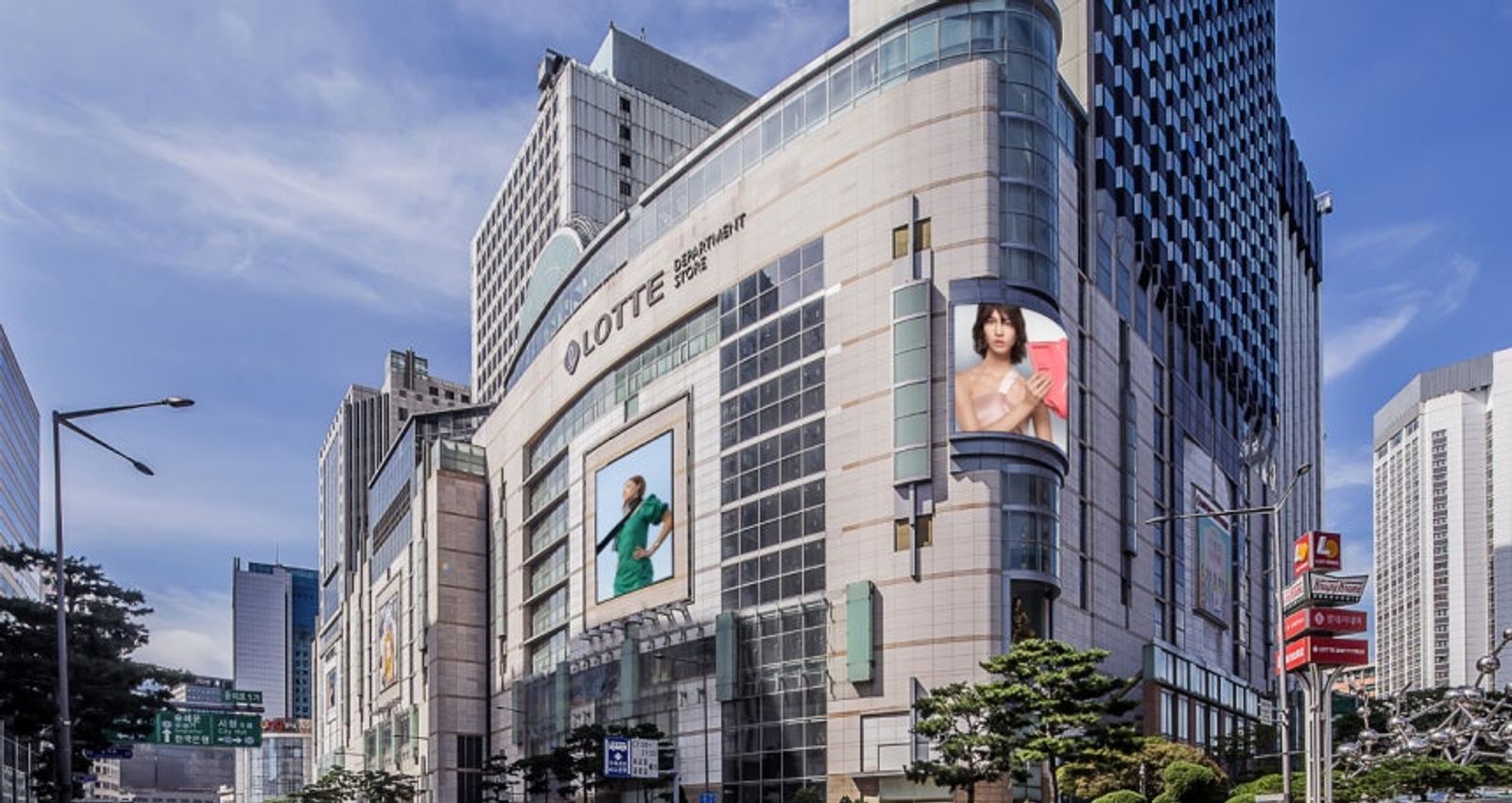
South Korea's major department stores have posted broad-based revenue gains in recent months, and the driving force is increasingly clear: a sharp rise in spending by foreign tourists. As restrictions on Chinese visitors ease and travellers from South-East Asia and the West add to the influx, the country's retail sector is enjoying what the industry calls an "inbound windfall."
Foreign shoppers take centre stage
The three dominant players in South Korean department retail — Lotte, Shinsegae and Hyundai — have each recorded a marked rise in the share of revenues attributable to foreign customers since the second half of 2025. According to industry data, the number of tax-refund transactions at stores in Seoul's Myeongdong and Gangnam districts rose by 30–40% or more year on year. Foreign shoppers are spending particularly heavily on luxury goods, K-beauty and Korean fashion, with their average transaction value running two to three times higher than that of domestic customers — a gap that has proved decisive in driving overall revenue growth.
Data from the Korea Tourism Organisation show that foreign visitor arrivals recovered to 20 million in 2025, with more than 60% of those visitors citing shopping as a primary purpose of their trip. South Korea's department stores have, in effect, become tourist infrastructure as much as retail outlets.
A more diverse mix of nationalities
Foreign spending at South Korean department stores was once dominated overwhelmingly by Chinese tourists. Before the diplomatic freeze triggered by the THAAD missile-defence dispute of 2016–2019, Chinese shoppers accounted for more than 70% of foreign revenue at some stores. That concentration has since given way to a broader mix. Japanese visitors continue to spend on fashion and beauty, driven by enthusiasm for Korean popular culture even as a weak yen erodes their purchasing power. Tourists from South-East Asia — notably Thailand, Vietnam and Indonesia — and from the Middle East have rapidly expanded their share. Western consumers tend to focus less on international luxury labels and more on Korean independent designers and K-beauty products.
"Moving away from dependence on a single nationality and diversifying the consumer portfolio is a positive development from a risk-management perspective," said one industry executive.
Turning shops into destinations
South Korea's department stores are competing aggressively to attract foreign visitors through investments in space design and customer service. Shinsegae's flagship Gangnam store has expanded its multilingual concierge staff and broadened acceptance of digital payment platforms including WeChat Pay and Alipay. Hyundai's Thehyundai Seoul has leveraged a pop-up store strategy to establish itself as a must-visit location for social media, drawing younger foreign tourists in particular. Lotte's main Myeongdong store has introduced a dedicated one-stop tax-refund desk to streamline the shopping experience.
Industry analysts describe these moves as a Korean variant of "retail tourism." A researcher at the Korea Distribution Science Association argued that the transformation of department stores into multi-layered experience venues — combining cultural programming, food and beverage offerings and Korean Wave content — is precisely what makes them magnetic to foreign visitors.
A domestic cloud behind the foreign sunshine
Not everyone views the foreign-spending boom with uncomplicated enthusiasm. South Korea's Consumer Sentiment Index (CSI) has remained persistently below the baseline of 100 throughout 2025, pointing to continued weakness in domestic demand. Critics warn that when overall department store growth is driven primarily by foreign shoppers, it can obscure a structural deterioration in spending by Korean consumers themselves.
"We are observing a contraction in merchandise planning for everyday goods aimed at domestic shoppers, as floor space and marketing budgets are redirected towards product categories favoured by foreign visitors," said a representative of a consumer advocacy group. There are also warnings that a widening gap in service quality between foreign and domestic customers could generate significant ill will.
Lessons from Japan and France
South Korea is not the first country to grapple with this dynamic. Japan experienced a retail boom driven by Chinese tourists — the so-called *bakugai*, or "explosive buying," phenomenon — between 2015 and 2019, only to pivot away from over-reliance on that segment as the profile of Chinese travellers changed and cross-border e-commerce offered an alternative channel. In France, Galeries Lafayette has adopted a floor-by-floor layout that deliberately separates the tourist experience from the domestic shopping environment, allowing it to serve both audiences effectively.
Experts advise South Korean department stores to treat the current foreign-spending surge not as a windfall to be harvested but as an opportunity to invest simultaneously in improving the quality of the experience for Korean shoppers.
What comes next
For as long as Korean popular culture retains its global reach, demand from foreign visitors is unlikely to diminish in the near term. Yet heavy dependence on inbound tourism leaves retailers exposed to factors beyond their control: exchange-rate movements, geopolitical shocks and changes to South Korea's visa regime all represent structural vulnerabilities.
The industry faces a dual challenge: riding the tailwind of foreign spending while attending to unglamorous but essential tasks — integrating online and offline channels, deepening domestic loyalty programmes and developing regionally distinctive merchandise. Whether South Korea's department stores remain passive beneficiaries of a temporary inbound boom or build a model capable of competing sustainably on the global retail stage will depend on the strategic choices they make now.