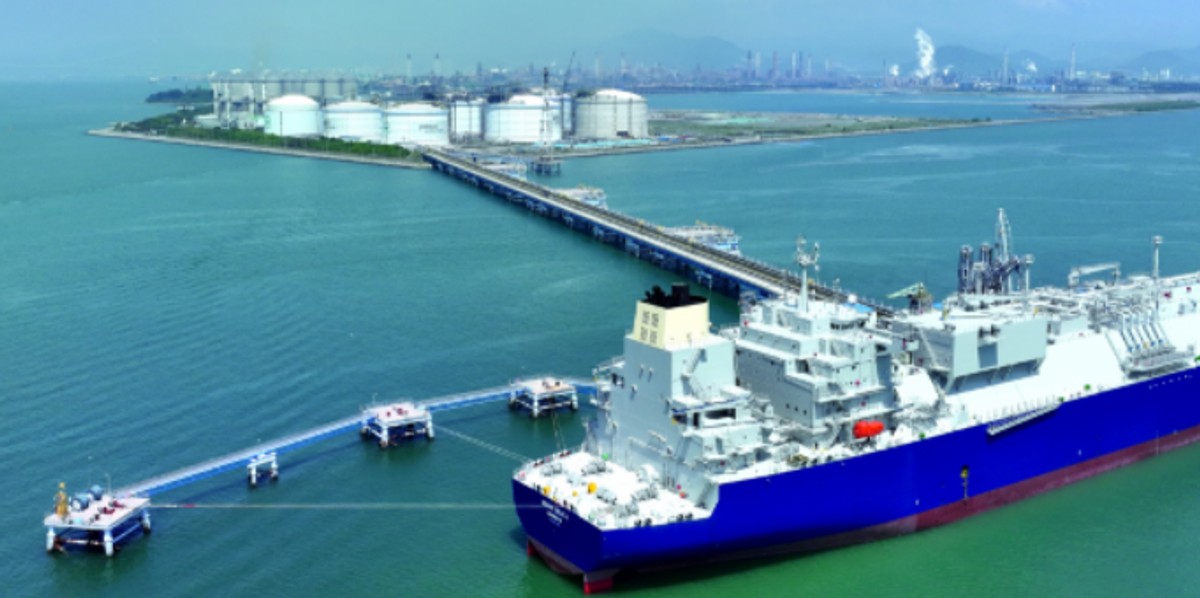
POSCO International signed a binding agreement on 14th September to acquire shale gas assets in the Appalachian region of the United States for $550m (approximately 799bn won). Hana Securities, the South Korean brokerage, responded on 17th September by reaffirming its Buy rating and target price of 105,000 won, calling the deal a turning point in completing the company's LNG value chain.
The assets being acquired are non-operating shale gas interests held by a subsidiary of Chord Energy, situated in the Marcellus Core basin — one of America's largest shale gas producing regions. The portfolio comprises 2,006 wells in total (1,305 producing, 701 under development) with proved reserves of approximately 1.3 trillion cubic feet (Tcf). Daily production is expected to reach 124 million standard cubic feet per day (MMscf/d) by the first half of 2026.
POSCO International will hold the assets in their entirety through its local holding company, POSCO International E&P USA, and a special-purpose vehicle. Financing consists of 532.9bn won in equity and 266.1bn won in loans, alongside a 1tn won debt guarantee covering purchase-price settlement and pipeline contract obligations upon closing. The transaction is expected to close in mid-November.
Low-cost production is the deal's central appeal
The assets' production cost of under $2 per million British thermal units (mmbtu) is the headline attraction. Even amid persistent weakness in US Henry Hub natural gas prices, this cost structure is capable of generating positive margins. The numbers bear this out: the assets produced EBITDA of $80m for full-year 2025 and $70m in the first half of 2026 alone. Because the fields are already in production, their contribution to POSCO International's earnings can be reflected immediately, without the need for additional development.
Hana Securities projects annual operating profit from the assets of roughly 100bn won from 2028 onwards, based on a conservative assumption of long-term gas prices in the high-$3/mmbtu range. Approximately 30% of EBITDA is earmarked for sustaining capital expenditure to maintain production levels; the remainder is expected to be redeployed into further asset acquisitions or returned to the parent company as dividends.
From two continents to three
The acquisition expands POSCO International's upstream portfolio — previously centred on Myanmar and Australia — to a third continent. US LNG carries particular strategic value because it carries no destination restrictions, making it highly flexible for trading purposes. At 126 MMscf/d, annual production translates to roughly one million tonnes of LNG equivalent. Currently, 50% of the gas is sold to nearby consumers, 30% flows to markets in the north-east and Ohio, and the remaining 20% travels through Tennessee to liquefaction terminals on the Gulf of Mexico.
Should the proportion sold as LNG increase, synergies with Centrux — the group's dedicated LNG trading entity, due to begin supplies from 2029 — become plausible. Hana Securities also notes that, if the price spread between Henry Hub and Asian benchmarks such as JKM and TTF re-emerges, the company could generate additional trading profits of around 100bn won per cargo (approximately 70,000 tonnes).
Risks merit attention
Yet investors should not overlook the risks. The trajectory of Henry Hub prices is the single most important variable for profitability. Whilst the weakness in gas prices may have allowed POSCO International to buy the assets at an attractive valuation, any prolonged delay in price recovery would push back the timeline for meeting earnings targets. Hana Securities' own forecast of 100bn won in operating profit from 2028 rests on gas prices reaching the high-$3/mmbtu range — a scenario that is far from guaranteed.
The non-operating nature of the assets also limits POSCO International's control. Production schedules, development decisions, and operational choices rest with the operator, constraining the company's ability to manage outcomes directly. The 1tn won debt guarantee and a projected net debt-to-equity ratio of 78.28% in 2026 add to financial leverage concerns that will require close monitoring.
Competition for American gas assets is also intensifying among Asian energy companies. Japanese majors — Mitsubishi, Mitsui, Tokyo Gas, and JERA — have already secured positions in US gas fields, and Thailand's BKV has also entered the market. As a relative latecomer, POSCO International may find that acquiring additional high-quality assets will prove both competitive and time-consuming.
Valuation
Hana Securities forecasts POSCO International's 2026 operating profit at 1.4667tn won, a 25.86% increase from 1.1653tn won the previous year. Earnings per share are projected at 5,422 won, representing growth of 55.31%. Based on the closing price of 54,800 won on 17th September, the shares trade at a price-to-earnings ratio of 9.42 times. The target price of 105,000 won implies upside of 91.6% from current levels.