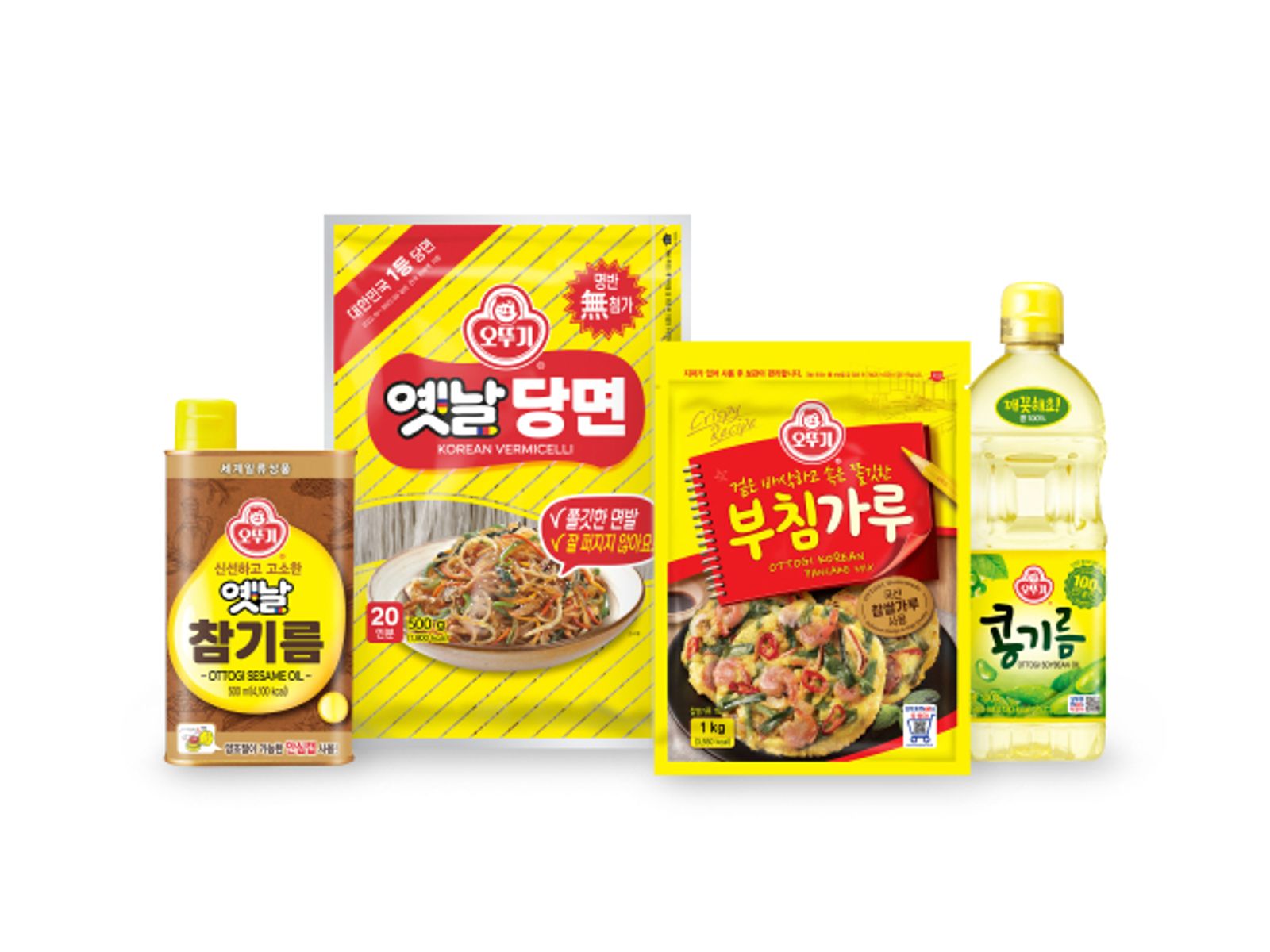
Ottogi, one of South Korea's best-known food manufacturers, has announced that from the 16th of this month it will raise prices on a range of staple products — including curry powder and ketchup — by up to 17%. The move is squeezing household budgets and stoking fears that rivals will follow suit, setting off another round of food-price inflation.
What is going up, and by how much
The increases cover curry, ketchup, and a broad range of sauces and condiments. The exact rise varies by product, but reaches as high as 17% in some cases. Ottogi attributed the decision to relentless cost pressures across the board: raw materials, packaging, and logistics have all become significantly more expensive, the company said, leaving it with no alternative but to adjust its prices.
The significance of the move extends beyond its size. Ottogi commands more than 80% of South Korea's curry market, giving it an effectively monopolistic position. Its grip on the ketchup market is similarly dominant. For consumers, finding affordable substitutes is not easy — which means the impact of any price increase lands with unusual force.
Why costs have risen so sharply
Food-price inflation in South Korea is not a one-off event. According to data from the Ministry of Agriculture, Food and Rural Affairs and the Korea Agro-Fisheries and Food Trade Corporation (aT), global grain prices surged after Russia's invasion of Ukraine and, while they have partially retreated, remain well above pre-war levels. Compounding the pressure are a weaker won against the dollar, higher energy costs that have pushed up freight expenses, and rising domestic wages. Taken together, these forces have fundamentally altered the cost structure facing Korean food companies.
Curry's key ingredient — turmeric — along with a range of other spices are largely sourced from India and South-East Asia. In recent years, erratic weather patterns, reduced harvests, and persistent logistical bottlenecks in those regions have steadily driven up import prices. Tomato paste, the backbone of ketchup, has also seen growing price volatility on international markets.
A familiar and troubling cycle
Industry observers warn that Ottogi's move may amount to more than an isolated corporate decision: it could serve as a signal to the wider food sector. In South Korea, when a market leader raises prices, competitors have historically followed — sometimes quickly. A similar pattern played out in 2022 and 2023, when the prices of instant noodles, flour, and cooking oil rose in quick succession.
Research by the Korea Consumer Agency highlights a persistent asymmetry in how food prices move. Once processed-food prices rise, they tend to fall back only very slowly — even when underlying input costs decline. During the cooking-oil price shock of 2022, for instance, domestic retail prices lagged international commodity prices on the way down by more than six months. For consumers, the message is dispiriting: prices go up fast and come down slowly.
An awkward position for regulators
The government has made price stability a headline priority, but its tools for influencing private-sector pricing decisions are limited. The Korea Fair Trade Commission can penalise collusive price-fixing, but has no legal basis to block a single company from passing on genuine cost increases. In practice, the Ministry of Economy and Finance and the Ministry of Agriculture hold periodic meetings with major food producers to appeal for restraint — a largely symbolic gesture.
The Korea Consumer Federation has called for greater transparency, demanding that food companies disclose their cost structures rather than simply presenting consumers with a fait accompli. The industry pushes back, arguing that profit margins have already been squeezed to the limit and that further price freezes would threaten the long-term viability of businesses.
A global phenomenon
South Korea is far from alone in grappling with food-price inflation. According to the UK's Office for National Statistics, British food prices rose by more than 19% year-on-year at their peak in 2023 — the highest rate in four decades. Across Europe, food multinationals faced accusations of "greedflation" — the charge that they were exploiting cost pressures as cover for fatter margins. France responded by negotiating directly with major producers to push prices lower. Japan, meanwhile, saw thousands of food products repriced upward in 2023 and 2024 as the yen weakened and input costs climbed. Tokyo chose a different approach, establishing a dedicated monitoring system to assess whether companies were passing on costs fairly or padding their margins.
The outlook and what should be done
Within the Korean food industry, the cautious consensus is that further price increases cannot be ruled out in the second half of this year if raw-material costs remain elevated. Climate change is making agricultural supply increasingly unpredictable, and experts expect food-price volatility to persist over the medium to long term.
Analysts argue that short-term price controls are an inadequate response. What is needed, they say, are structural solutions: mandatory disclosure of food-cost data, government support for diversifying import sources, and investment in developing domestic alternatives to imported ingredients. A researcher at Seoul National University's Department of Agricultural Economics and Rural Sociology put it plainly: "The root causes of food-price inflation lie in the fragility of global supply chains and climate risk. The question of how those costs should be shared between companies and consumers is one that society needs to resolve through open debate."
That is why Ottogi's decision over a packet of curry powder carries implications far beyond the supermarket shelf. Food prices are a barometer of living standards for ordinary households. And when that barometer rises, it is invariably low-income families, single-parent households, and those with many children who feel the heat first. Policymakers would do well to keep that in mind.