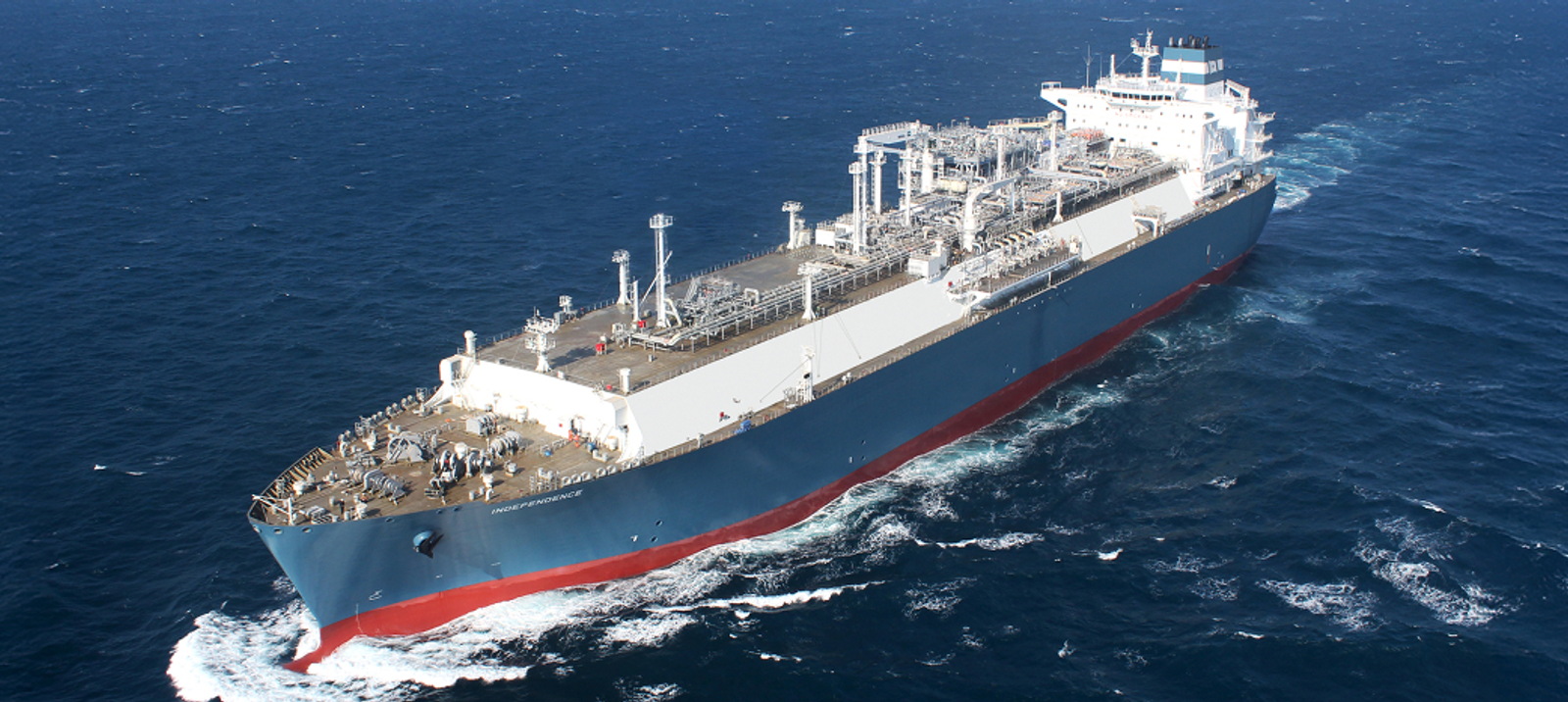
South Korea's shipbuilding industry has entered a long-term boom cycle that analysts expect to last at least until 2032, driven by a simultaneous surge in global liquefied natural gas (LNG) infrastructure investment and the accelerating retirement of obsolete vessels. A sector report published on 9th July 2026 by DS Investment Securities projects that, when capacity currently under construction is combined with projects expected to reach a final investment decision (FID) in 2026–27, annual newbuild demand for LNG carriers will average more than 90 vessels per year through the end of the decade.
Two engines of demand: new projects and fleet renewal
What distinguishes this cycle from previous upswings is that demand is being driven by two independent forces rather than one. The first is a rapid expansion of the global LNG project pipeline. Several large-scale developments are advancing through the front-end engineering and design (FEED) stage with target start-up dates between 2030 and 2032, including Coastal Bend LNG in the United States (22.5 million tonnes per annum, or MTPA), Monkey Island LNG (15.6 MTPA), Rovuma LNG in Mozambique (18 MTPA) and LNG Canada Phase 2 (14 MTPA). The combined shipping requirements of these projects alone run to hundreds of vessels.
The second engine is fleet replacement. Approximately 120 LNG carriers aged 20 years or more are still powered by steam-turbine propulsion systems, a technology now considered obsolete because of its poor fuel efficiency. According to data from Clarksons, the shipping research firm, every LNG carrier scrapped to date has been steam-turbine powered; cumulative scrapping is projected to reach 123 vessels by 2030, generating additional ordering demand of between 10 and 20 ships per year. Taken together, project-driven demand and replacement demand combine to produce an estimated 90 to 110 newbuild orders annually — a volume few industries could comfortably absorb.
A seller's market: Korea's structural dominance
Even more significant than the demand outlook is the supply-side constraint. Only two countries — South Korea and China — currently possess the capability to build large LNG carriers. Yet Chinese yards are already close to fully booked for delivery slots beyond 2029, a bottleneck that hands Korean builders considerable pricing power. The DS Investment Securities report states explicitly that, because Chinese yards have little remaining capacity for 2029 deliveries, Korean shipyards are well positioned to push contract prices progressively higher.
The numbers bear this out. In the first half of 2026 alone, South Korean yards secured orders for 36 LNG carriers, surpassing their full-year tally for 2025 in just six months. The country's three dominant shipbuilders — HD Hyundai (which operates Korea's largest shipbuilding group), Samsung Heavy Industries and Hanwha Ocean — are now signing contracts at between $252 million and $255 million per vessel. Measured in Korean won, prices have been on a steady upward trajectory since 2022.
A wave of American orders on the horizon
The second half of 2026 is expected to see a further surge in orders stemming from American LNG projects. Many US schemes currently in the FEED stage have yet to sign long-term sale-and-purchase agreements (SPAs) with buyers — a prerequisite for reaching FID. Coastal Bend LNG, for instance, needs 41 ships to service its output but has so far signed SPAs covering precisely zero of them. Gulf LNG (Phases 1 and 2), Port Fourchon LNG and Magnolia LNG are in a similar position. Once SPAs are finalised and FIDs are taken, the resulting orders could arrive in a concentrated burst numbering in the tens or even hundreds of vessels.
Qatar represents another potential catalyst. If delayed Qatari projects advance and SPA volumes tied to FEED-stage schemes globally are expanded, the current boom cycle could extend well beyond 2032, according to industry observers.
Risks that cannot be ignored
The prevailing optimism is not without qualification. FID delays are an ever-present hazard: LNG projects are acutely sensitive to natural-gas price volatility, shifts in national energy policy and changes in the interest-rate environment, and several American projects have already been postponed for years. A repeat of such delays would push order timelines to the right.
China's shipbuilding ambitions also warrant monitoring. Although Chinese yards lack spare capacity today, they are investing steadily in technology and facilities; if the quality gap with Korean builders narrows materially over the medium term, price competition could intensify. There is also a longer-run question about LNG demand itself. The global energy transition is accelerating, and while LNG is widely regarded as a bridge fuel between coal and renewables, the risk of demand erosion in the latter part of the 2030s cannot be entirely discounted.
Korea's big three: order books and profits both flashing green
Against this backdrop, the three major Korean shipbuilders — HD Korea Shipbuilding & Offshore Engineering (the listed holding entity of the HD Hyundai group), Samsung Heavy Industries and Hanwha Ocean — appear well placed to deliver both stable order backlogs and improving profitability over the next several years. LNG carriers account for more than 50% of revenue at each of these companies, meaning that a prolonged upcycle feeds directly and substantially into their bottom lines.
A sustained rise in won-denominated contract prices is providing an additional buffer: even where dollar-denominated prices have moved less dramatically, currency effects are amplifying earnings. Most analysts expect operating margins at the major Korean yards to improve further between 2026 and 2028 as these twin tailwinds — higher prices and a favourable exchange rate — work through existing order books.
As the world navigates the transition to lower-carbon energy, LNG is expected to retain its role as a bridge fuel for years to come. The Korean shipbuilders who build and maintain the infrastructure that moves it occupy a strategically critical position. For them, the next five years represent not merely a cyclical windfall but a chance to cement industrial dominance for a generation. Whether they fully capture that opportunity will depend, above all, on how deftly they manage the twin uncertainties of FID delays and an accelerating global energy transition.