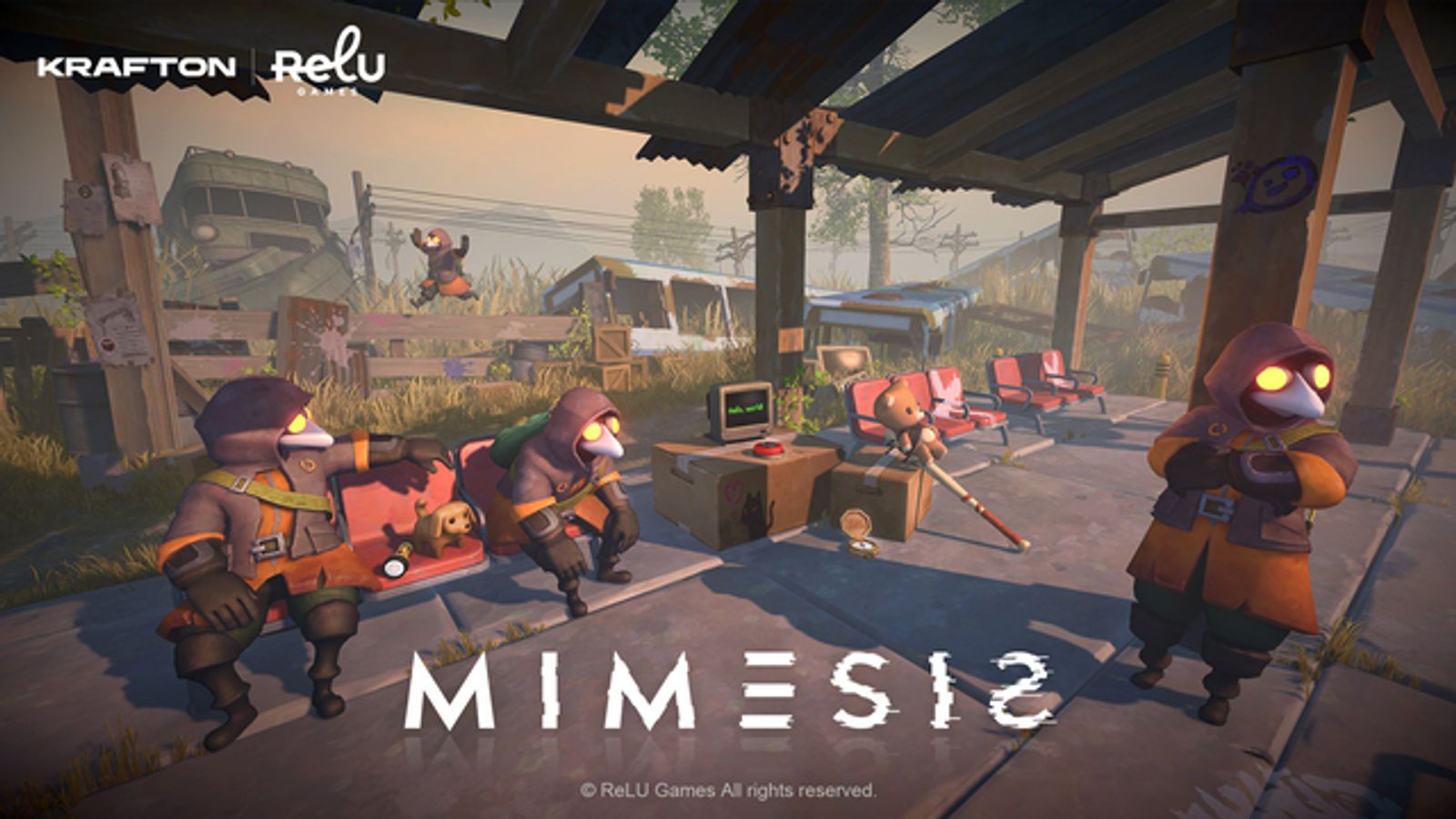
Krafton's newly released game Mymesis has surpassed 2m copies sold in global markets, a milestone that has drawn considerable attention across South Korea's gaming industry. The achievement matters less for its headline figure than for what it represents: the first meaningful proof that Krafton can generate a major intellectual property beyond Battlegrounds (PUBG).
The burden of a single franchise
Krafton burst onto the world stage in 2017 when PUBG became a global phenomenon. Yet the company has since been dogged by a structural vulnerability that analysts have flagged repeatedly: an excessive dependence on a single IP. For much of its post-PUBG history, PUBG-related revenue has accounted for more than 80% of Krafton's annual turnover, making portfolio diversification not merely desirable but urgent.
Against that backdrop, Mymesis crossing the 2m-copy threshold carries significance beyond raw sales figures. Industry analysts describe it as a credible first step in Krafton's pivot towards a multi-IP strategy. "For a new IP to sell more than 2m units in its early phase, a developer must simultaneously deliver on global marketing execution and on core gameplay quality," one analyst noted. "That is no trivial achievement."
What is Mymesis?
Mymesis is an original survival-horror title developed entirely in-house at Krafton. Its central mechanic is asymmetric multiplayer: players are divided between monsters and human survivors, each side operating under different rules and objectives. Analysts compare its genre-blurring creative design to Nexon's Dave the Diver — a game that similarly defied easy categorisation and found a wide audience as a result.
A deliberate multi-platform strategy also appears to have paid off. Launching simultaneously on Steam and console platforms, Mymesis quickly earned "Overwhelmingly Positive" ratings in major gaming communities, generating word-of-mouth momentum that amplified early sales.
A crowded and unforgiving market
The asymmetric horror multiplayer genre that Mymesis has entered is far from virgin territory. Behaviour Interactive's Dead by Daylight, released in 2016, has amassed more than 50m players worldwide and effectively set the genre's standards. Ilium Games' The Finals and Electronic Arts' Midnight Ghost Hunt compete for similar audiences. Selling 2m copies in this environment validates both Krafton's development capability and its marketing strategy — but it also sharpens the challenges ahead.
Live-service games, by their nature, demand as much from publishers after launch as before it. Sustained content updates, active community management, and a steady pipeline of new material are prerequisites for long-term viability. The genre's history offers cautionary examples: several asymmetric multiplayer titles launched to considerable fanfare only to haemorrhage users within months and eventually shut down.
Korean gaming's widening ambitions
Mymesis's debut fits into a broader shift in South Korea's games industry. According to the Korea Creative Content Agency, South Korean game exports reached approximately $9bn in 2023, cementing the country's position as the world's fourth-largest games market by export value, behind the United States, China, and Japan. Historically, Korean developers' global successes were concentrated in massively multiplayer online role-playing games (MMORPGs). That is changing. Nexon's Dave the Diver sold more than 3m copies on the strength of its indie sensibility; Shift Up's Stellar Blade earned strong reviews as a PlayStation exclusive. The range of genres in which Korean studios can compete internationally is broadening.
Whether Mymesis joins that list of enduring successes remains to be seen, but it has at minimum added a new data point to the argument.
The metrics that will matter most
Cautionary voices within the industry counsel against reading too much into launch-period sales alone. Market research firm Newzoo has noted that for live-service games, the retention rate of monthly active users (MAU) six months after launch is a more reliable indicator of commercial health than initial copy sales. The pattern is familiar: an attention-grabbing release, a spike in player numbers, then a steep decline that the publisher struggles to arrest.
Experts broadly agree that sustaining Mymesis over the long term will require a layered operational strategy — regular seasonal content drops, integration with esports competitions, and cultivation of a creator ecosystem around the game.
What comes next
Krafton is understood to have several additional new IP projects in development alongside Mymesis. The company is also investing in next-generation game mechanics underpinned by artificial intelligence, including AI-driven non-player characters, signalling an intent to differentiate through technology as much as through creative design.
The 2m-copy milestone hands Krafton two simultaneous tasks. The first is to use Mymesis as genuine leverage to reduce the group's structural dependence on PUBG — a rebalancing that investors have long demanded. The second is to accumulate further evidence, across genres and platforms, that Korean developers can compete at the top of global gaming in categories beyond the MMORPG.
South Korea's games industry will not graduate from being a high-volume exporter to a true global IP powerhouse without a repeating pattern of successes like Mymesis. Krafton's next moves carry weight that extends well beyond the company itself — they may help set the direction for an entire industry.