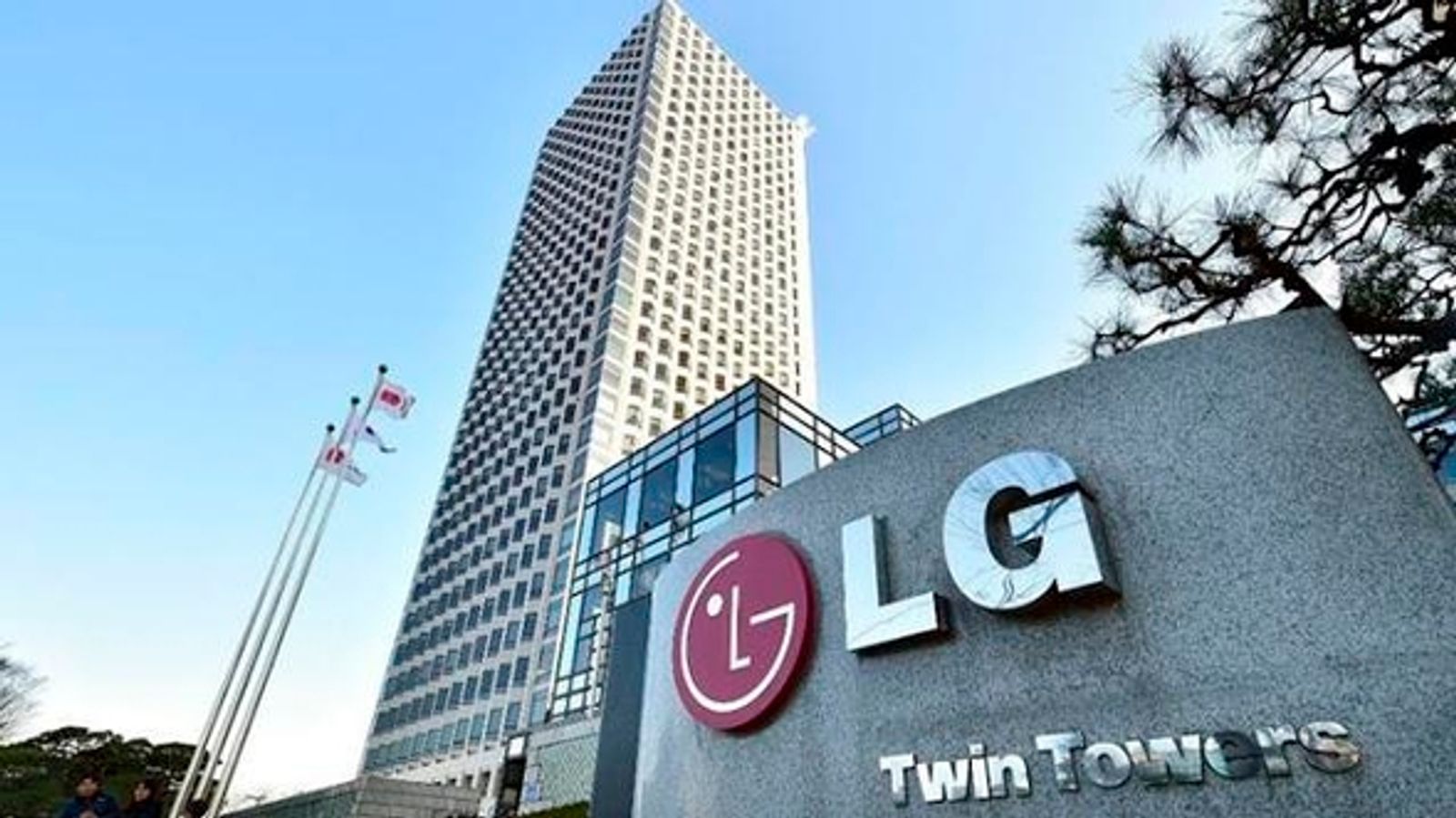
LG Electronics has placed physical AI at the centre of its next growth strategy, staking its claim in one of technology's most hotly contested arenas. The company believes that the motor and actuator know-how it has accumulated over decades through consumer appliances and automotive components gives it a distinctive edge. Whether that edge will prove decisive in a market crowded with global technology giants and nimble start-ups remains the industry's defining question.
What is physical AI?
Physical AI refers to systems that embed artificial intelligence within a tangible body, enabling autonomous action in the real world—as opposed to AI that operates purely in digital environments. Since Nvidia's chief executive Jensen Huang declared that "robotics is the next wave of AI," the sector has erupted. Tesla's Optimus, Boston Dynamics' Atlas and Figure AI are among dozens of competitors racing to commercialise the technology. Goldman Sachs forecasts the humanoid robot market could reach as much as $154bn by 2035.
LG's trump card: motors and drivetrains
LG Electronics' competitive advantage lies not in AI software but in the hardware that generates physical movement. The company has long designed and manufactured high-efficiency motors for its washing machines, air conditioners and vacuum cleaners, and has built substantial expertise in electric-vehicle drive motors through its automotive-components division. Because the actuators that form a robot's joints are, at their core, a combination of precision motors and reduction gearboxes, analysts argue that LG's existing capabilities translate directly into robot drivetrain technology.
According to the Korea Institute for Industrial Economics and Trade, drivetrains—comprising motors, gearboxes and joint modules—account for 30–40% of a robot's total cost. As software competition intensifies, the ability to develop these components in-house becomes a critical determinant of both cost competitiveness and supply-chain reliability. Tesla's decision to develop 100% of the actuators in its Optimus robot internally reflects precisely this logic.
Investments, acquisitions and partnerships
LG Electronics has been moving quickly to build out a robotics ecosystem. In 2024 it acquired a stake in Robotis and invested in Bear Robotics, a maker of food-service robots. The company has also been accumulating real-world operational data through its CLOi range of commercial service robots, which have already been deployed in thousands of units across restaurant chains, hotels and hospitals in South Korea. In 2025, LG is reported to have begun developing autonomous logistics robots in collaboration with a Canadian AI robotics start-up.
In parallel, the company is pursuing a "home ecosystem" strategy that would integrate its robots with its existing range of smart appliances—refrigerators, washing machines and robotic vacuum cleaners—under a single AI hub. Should that integration succeed, LG believes it can secure an early-mover advantage in the home service robot market.
A crowded and unforgiving competitive landscape
The outlook is not without serious complications. On the software front, Google DeepMind's RT-2 and Figure AI, which is collaborating with OpenAI, are already well ahead in developing large-language-model-based robot intelligence. On the hardware side, China's Unitree Robotics is aggressively undercutting rivals on price, making cost competitiveness an urgent priority.
The competitive pressure is equally acute at home. Samsung Electronics has folded Rainbow Robotics into its corporate family as a subsidiary, signalling a direct challenge in the sector. Hyundai Motor, through Boston Dynamics, is making its presence felt in both industrial and humanoid robotics. How swiftly LG can close the gap in AI and software capabilities relative to these rivals will be decisive.
Korean robotics experts caution that while LG's motor and drivetrain expertise is a genuine differentiator, it will not be sufficient on its own. "If LG fails to develop edge AI and multimodal learning capabilities simultaneously, it risks falling behind in the platform race," they warn. Developing proprietary AI models or forging strategic alliances with leading AI firms is, by most assessments, essential.
Lessons from overseas
The experience of established manufacturers that have successfully pivoted into robotics offers instructive parallels. Japan's Yaskawa Electric leveraged its position as the world's leading servo-motor maker to establish a formidable presence in industrial robotics. Germany's Siemens used its industrial automation expertise as a springboard into smart-factory robot platforms. Both companies transferred existing manufacturing strengths into robotics while compensating for software weaknesses through partnerships.
The cautionary tale cuts the other way too. Traditional manufacturers that relied on hardware prowess while neglecting software investment have often found market leadership snatched away with startling speed. For LG Electronics, the lesson is that hardware and AI software investment must advance together, not sequentially.
Prospects
LG Electronics' physical AI strategy represents an attempt to marry its deep manufacturing heritage with cutting-edge technology. The structural advantage of in-house drivetrain capabilities is real. But converting that advantage into market competitiveness requires solving two challenges simultaneously: strengthening AI software capabilities and constructing a viable ecosystem around them.
The policy environment is, for now, supportive. The South Korean government has designated robotics a national strategic industry and announced plans to invest more than 4 trillion won (roughly $3bn) in the sector by 2030.
If LG successfully transfers its manufacturing prowess in appliances and automotive components into robotics, it could open a new front for a consumer-electronics business that has struggled for growth—and emerge as a significant player in the global physical AI market. Failure, however, carries its own risks: in a rapidly accelerating competitive environment, the company could find itself relegated to a permanent second-tier position, or reduced to supplying components to the very rivals it hoped to outmanoeuvre. The next two to three years will determine which outcome prevails.