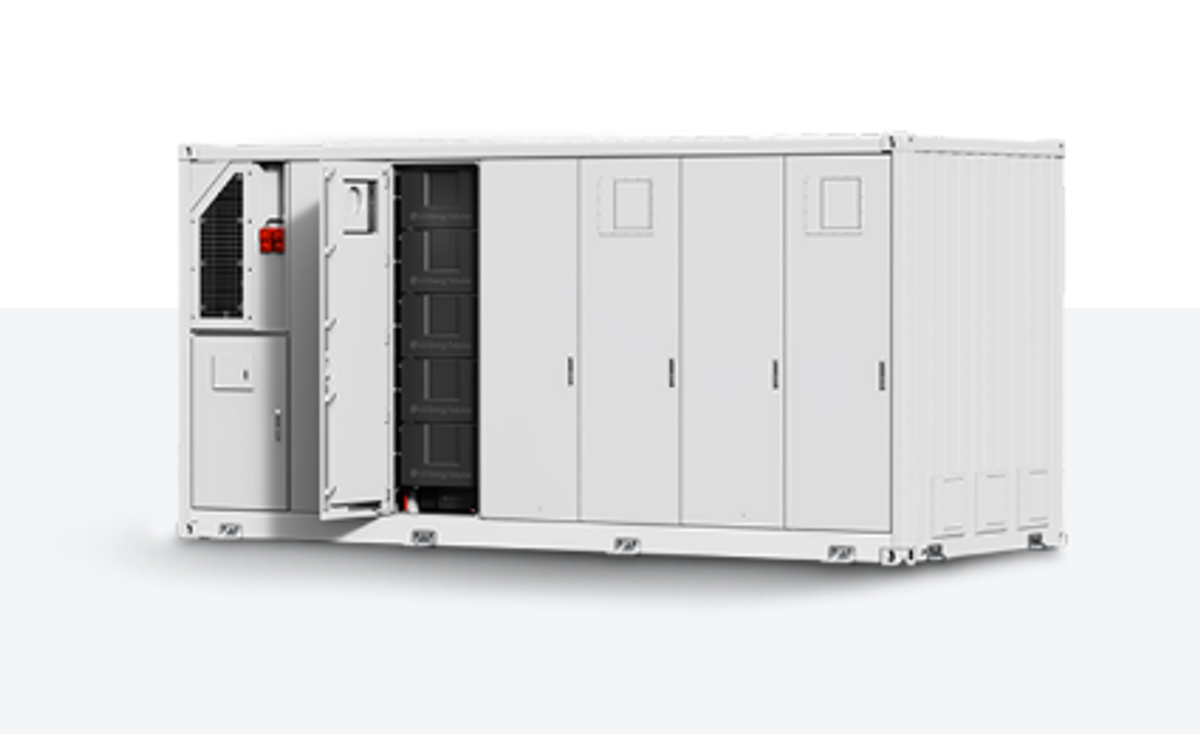
In a research note published on 21st September 2026, iM Securities forecast that LG Energy Solution (KOSPI: 373220) would beat market consensus on operating profit in the July-to-September quarter, despite headwinds from a weaker US dollar against the Korean won. The brokerage maintained its Buy rating and a target price of 550,000 won.
iM Securities estimates third-quarter revenue of 8.8 trillion won, up 45% year-on-year and 16% quarter-on-quarter, with operating profit of 369 billion won—a 39% decline from the same period a year earlier but a 226% jump from the previous quarter. The won's appreciation is expected to clip revenue slightly below consensus, but operating profit should come in ahead of expectations.
A subsidy-dependent profit machine
The critical figure in these results is the Advanced Manufacturing Production Credit (AMPC), a US federal tax incentive for domestic battery production. iM Securities estimates AMPC receipts will reach 379 billion won in the third quarter—up roughly 57% from the previous quarter—boosted by rising output at US energy storage system (ESS) facilities and the restart of the Ultium Cells joint venture with General Motors. The striking implication is that AMPC receipts of 379 billion won are virtually identical to total operating profit of 369 billion won. Strip out the subsidy, and the underlying operating profit is barely negative, at minus 900 million won. LG Energy Solution's core battery business, in other words, is still not profitable on its own.
There is also the possibility of additional one-off gains: potential tariff refunds stemming from a court ruling against US reciprocal tariffs, and compensation payments from automakers that have fallen short of minimum purchase commitments. Neither has been confirmed, and the timing of any such windfalls remains uncertain.
ESS becomes the engine of growth
By business segment, the ESS division is expected to carry the quarter. Shipments deferred from the previous quarter are now flowing through, pushing ESS revenue up an estimated 38% quarter-on-quarter to 3.34 trillion won. On an annual basis, the ESS business is forecast to surge from 3.14 trillion won in 2025 to 11.53 trillion won in 2026—a near-fourfold increase that would make ESS the company's dominant revenue source.
The electric vehicle (xEV) battery segment is expected to stage a stronger recovery from the third quarter onwards, as European demand rebounds and the Ultium Cells plant resumes operations. Lower fixed-cost pressures should also narrow losses. The small-format battery segment, which supplies Tesla among others, is expected to deliver steady volume growth and protect margins.
Fourth quarter: a make-or-break moment for ESS orders
iM Securities expects a concentration of large ESS orders in the fourth quarter. According to SNE Research, a market intelligence firm, global ESS battery shipments in the first half of 2026 totalled 461 gigawatt-hours (GWh), up 71% year-on-year. North American shipments alone reached 76 GWh, an 83% increase. Given the seasonal tendency for shipments to be weighted towards the second half of the year, iM Securities projects North American ESS battery volumes will reach 170–180 GWh for the full year, a roughly 70% increase over 2025.
LG Energy Solution's full-year ESS order target stands at approximately 90 GWh, yet only around 30 GWh has been secured so far—barely a third of the annual goal. Some market participants have questioned whether the target is achievable. iM Securities argues that bulk orders will materialise in the fourth quarter, partly because forthcoming supply-chain regulations tied to the US Investment Tax Credit (Section 48E) for qualified manufacturing facilities are expected to favour Korean battery makers over Chinese rivals. This remains one brokerage's assessment, however, and should not be taken as confirmed fact.
Reframing the investment case: from EV supplier to power infrastructure company
Perhaps the most significant shift in iM Securities' analysis is a change in how it values the company. The brokerage argues that LG Energy Solution should no longer be assessed as an electric vehicle components maker but as a power infrastructure business. Accordingly, it has applied an EV/EBITDA multiple of 12.1 times, derived from a peer group of global power equipment companies, to calculate its target price.
The reasoning reflects ESS's evolving role. Battery storage systems are increasingly critical not just for integrating renewable energy into power grids but as essential infrastructure for artificial intelligence data centres (AIDCs), which require highly stable electricity supplies. According to GGII, a Chinese industry research firm, global ESS battery shipments destined for AIDCs are projected to leap from 12 GWh in 2025 to 272 GWh by 2030—more than a 22-fold increase.
Risks investors should not ignore
The shares closed at 364,000 won on 18th September, implying upside of 51.1% to the target price of 550,000 won. Yet iM Securities' track record on target prices warrants scrutiny: the 620,000-won target set in May 2026 has proved over-optimistic, with the average share price running 39.3% below that level. The brokerage has repeatedly revised its targets downward.
On the earnings trajectory, iM Securities forecasts operating profit rising steeply from 824 billion won in 2026 to 3.38 trillion won in 2027 and 5.14 trillion won in 2028. Net profit attributable to shareholders, however, is still expected to be in the red in 2026, at minus 93 billion won, meaning investors may not feel the full benefit of the earnings recovery until 2027 at the earliest.
The entire outlook rests on two assumptions: that Chinese supply-chain restrictions remain in place, and that US policy towards domestic battery manufacturing stays supportive. Any shift in trade policy or a deterioration in global economic conditions could rapidly erode these projections.