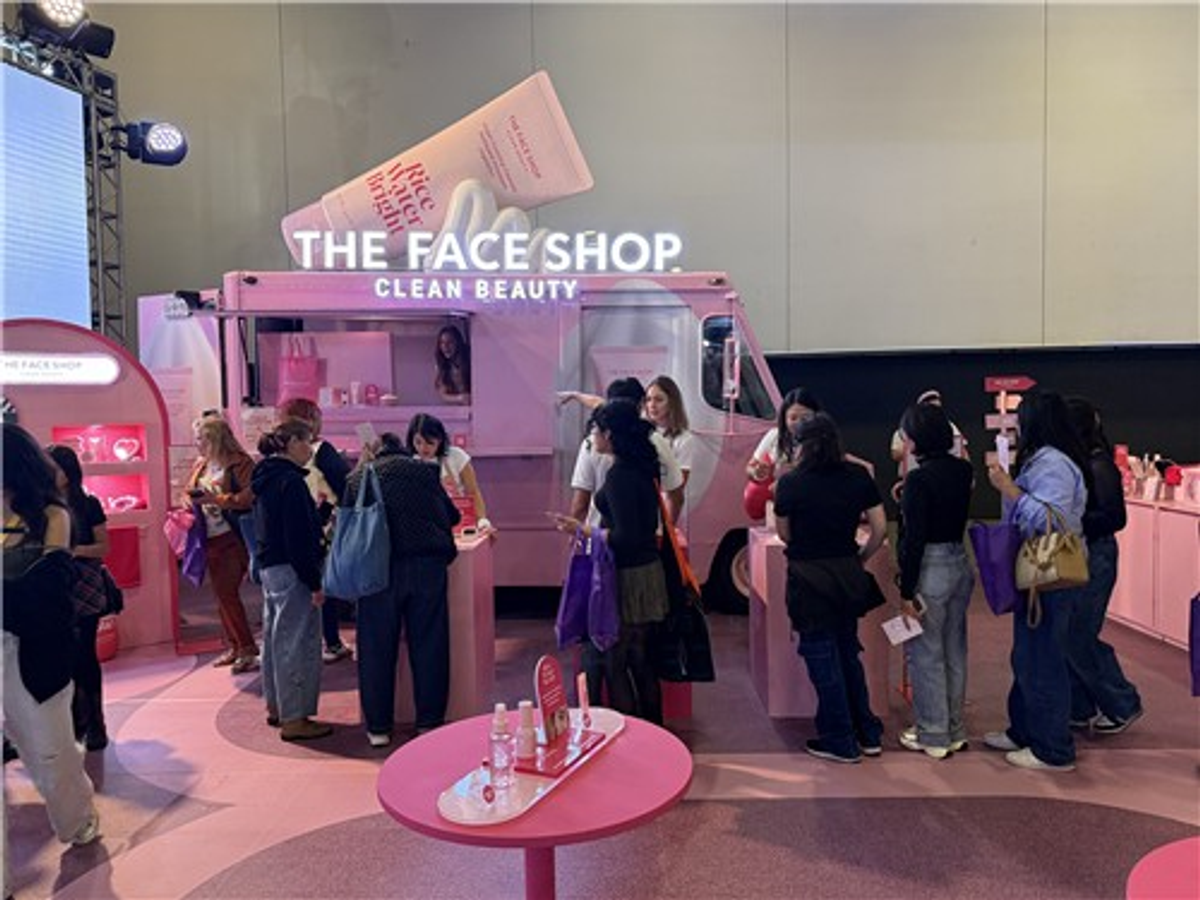
LG Household & Health Care (LG H&H) has officially launched two of its brands — Dr.Groot and The Face Shop — in Mexico, marking the company's most deliberate push yet into the Latin American beauty market. The move is being read across the industry as a signal that K-beauty's global expansion, which has hitherto been concentrated in North America and South-East Asia, is now pivoting southward.
Why Mexico, and why now
Mexico is one of Latin America's largest consumer markets. According to Euromonitor International, the country's beauty and personal-care sector was worth approximately $10bn in 2024 and has been expanding at an annual rate of 5–7%. Structural tailwinds are favourable: a surge of interest in skincare among younger consumers, and rapidly growing consumption of Korean content on social media, have together made Mexico increasingly receptive to K-beauty.
The middle-class consumer base in Mexico City and other major urban centres is expanding steadily. Mexico's geographical proximity to the United States also enables logistics efficiencies by tapping into existing North American distribution networks — an advantage that makes it a strategically attractive staging post for broader regional expansion. Market demand is already showing up in trade data: according to the Korea International Trade Association (KITA), South Korean cosmetics exports to Mexico grew by more than 20% year-on-year in 2023.
A calculated brand selection
LG H&H's choice of Dr.Groot and The Face Shop as its Mexican vanguard reflects clear market logic. Dr.Groot is a dermocosmetic brand specialising in scalp and hair care — a proposition well suited to Latin America's hot, humid climate, where scalp sensitivities are a common consumer concern. The Face Shop, meanwhile, has already built meaningful brand recognition in parts of South-East Asia and North America as an accessible, mid-range skincare label, making it a natural fit for Mexico's value-conscious middle-class shoppers.
"Latin American consumers are acutely sensitive to brand storytelling and ingredient transparency," said one industry analyst. "The combination of the dermocosmetic trend and K-beauty could be a powerful point of differentiation in the Mexican market."
Lessons from those who went before
LG H&H is not the first Korean beauty company to test its luck in Latin America. Amorepacific, South Korea's largest cosmetics group, entered Brazil in the early 2010s with Innisfree and Etude, but subsequently undertook what amounted to a near-full retreat, stymied by inadequate localisation and formidable logistics and regulatory barriers. By contrast, smaller K-beauty labels such as COSRX and ANUA have been growing rapidly in Mexico, Colombia and Chile by building organic fan communities on TikTok and Instagram. Their formula — digital-first strategy, influencer marketing, and niche ingredient-led messaging — has proved highly effective.
LG H&H has the advantage of a large company's financial resources and distribution muscle, but it will need to layer a digital-native localisation strategy on top of those assets. Amorepacific's earlier stumble is a reminder that Latin America is an independent ecosystem that cannot simply be approached with formulas borrowed from North America or South-East Asia.
Regulatory and distribution hurdles
No assessment of Latin American market entry would be complete without accounting for the regulatory environment. Mexico's health regulator, COFEPRIS (the Federal Commission for Protection against Sanitary Risks), is known for complex ingredient-registration procedures and exacting customs and labelling requirements. In some cases, active ingredients that are approved in South Korea fall under different standards in Mexico, necessitating product reformulation.
Distribution is equally complex. Mexico's beauty retail landscape is organised around three main pillars: large-format retailers such as Walmart and Liverpool; pharmacy chains such as Farmacias Similares; and the dominant online marketplace Mercado Libre. Entry strategies and margin structures differ significantly across these channels, and local experts are unanimous in warning against reliance on any single one.
The competitive landscape
McKinsey has identified the spread of ingredient-focused purchasing behaviour among digitally native consumers as a key growth driver for the Latin American beauty market from 2025 onwards — a trend that works in favour of functional K-beauty brands.
Yet the competitive field is daunting. Unilever, L'Oréal and Procter & Gamble already have a firm grip on the Mexican market, and local brands compete aggressively on price. To carve out a sustainable position, analysts broadly agree that LG H&H must maintain a consistent positioning around "Korean dermatological expertise" while simultaneously pursuing a dual-track strategy — digital marketing on one hand, physical retail experiences on the other.
The broader implications
LG H&H's Mexican entry is best understood not as an isolated market play, but as the first link in a chain intended to extend across Brazil, Colombia, Chile and Peru. The consumer and distribution data it accumulates in Mexico will serve as a reference model for any subsequent regional expansion.
On the policy front, a resumption of South Korea–Mexico free-trade agreement negotiations could reduce tariff burdens and sharpen K-beauty's price competitiveness further. At the industry level, a large-scale push by a company of LG H&H's scale could yield a knock-on benefit for smaller K-beauty brands by raising general awareness and helping to establish local distribution infrastructure ahead of their own entries.
Ultimately, success in Mexico will depend on how skilfully LG H&H can calibrate the tension between global standardisation and genuine localisation. As K-beauty attempts to graduate from being an Asian trend to a global standard, the company's Latin American experiment is a test case the entire industry will be watching closely.