*Editor's note: "One Track" is a series examining trends in the K-pop industry through the lens of individual songs. The tenth instalment looks at Twice's "TT" — a case study in how a single choreographic gesture spread far beyond its origins into wider popular culture.*
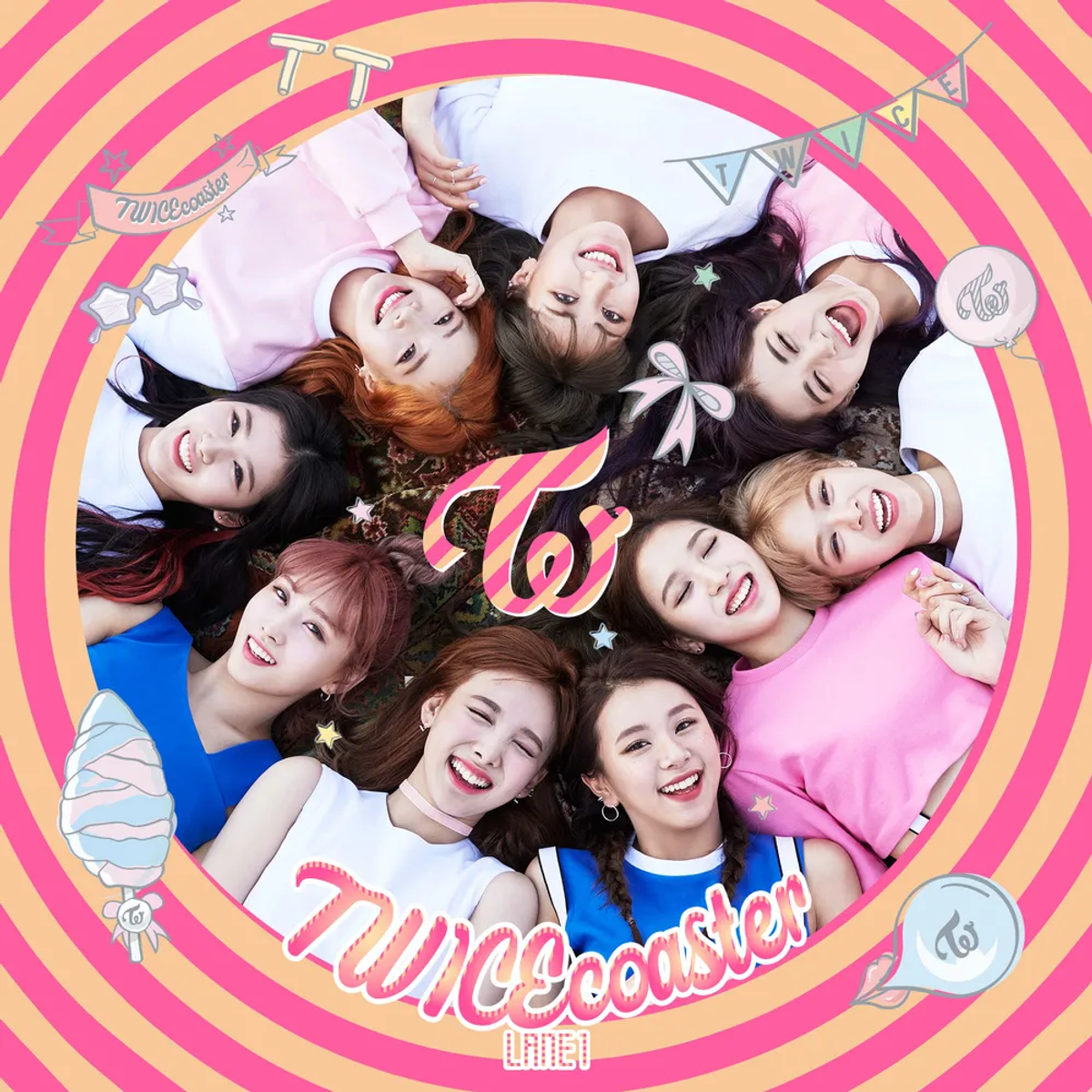
Released on 24th October 2016, "TT" is the title track of Twice's fifth mini-album, *TWICEcoaster: LANE 1*. The lyrics were written by Sam Lewis; composition and arrangement were handled by producing duo Black Eyed Pilseung (Rado). The title "TT" is borrowed from a weeping emoticon of the same shape.
Origins
Twice is a nine-member multinational girl group launched by JYP Entertainment — one of South Korea's three dominant talent agencies — on 20th October 2015. The group comprises five South Koreans, three Japanese and one Taiwanese member, and was formed through Mnet's survival competition programme *Sixteen*. The comeback was teased with a Halloween-themed trailer featuring boys and girls in costume, and the music video followed the same concept.
Critical reception to the song itself was mixed. Its musical polish drew praise, but some felt the lyrics sacrificed clarity — though some observers interpreted this as a deliberate choice by the composer, Black Eyed Pilseung.
The TT Pose — a hand gesture that conquered Japan
The song's true impact lay not in the music itself but in a specific move from its choreography. Mirroring the "TT" emoticon with both hands — index fingers pointing downward from the outer corners of the eyes — became known as the "TT pose," and it spread with particular intensity among middle- and high-school girls in Japan. The morning programme *ZIP!* on Nippon Television ranked it the third most popular pose for photographs; it subsequently featured on Abema News and several other morning shows. One broadcast compared its momentum to that of "PPAP" — the viral hand-gesture meme that had preceded it — billing the TT pose as the next big thing. The craze spread far enough that members of other Japanese female idol groups began posting the pose on social media.
Records and awards
The music video surpassed ten million views within 40 hours of release, setting what was then a record for the fastest K-pop group to reach that milestone. On 22nd December 2017 — 424 days after release — it became the first video by a K-pop girl group, and the fastest by any K-pop act, to reach 300 million views. By 23rd January 2020, roughly three years after release, it had passed 500 million views.
That momentum translated into a clean sweep of South Korea's major year-end music awards. Twice claimed the top digital prize at every major ceremony held in 2016 — the Melon Music Awards, Mnet Asian Music Awards (MAMA) and Golden Disc Awards — making them the first girl group in five years, and the first JYP Entertainment act in six years, to achieve such a grand slam. Producer Black Eyed Pilseung also took home the Best Producer award on the strength of the track.
Legacy — from dance floor to victory podium
Nearly a decade on, "TT" continues to find new audiences in unexpected places. At the 2025 Formula One Singapore Grand Prix, South Korean streaming platform Coupang Play — which holds domestic broadcasting rights — used the song as its closing theme. The reason was delightfully apt: George Russell, driving for Mercedes, had celebrated his victory with a T-shaped pose. Fans noted, too, that certain lines in the lyrics happened to resonate with Russell's story that day, adding another layer to the moment. A victory celebration in motor racing — a sport with no obvious connection to K-pop — had accidentally echoed the choreography of a girl-group song released eight years earlier, giving the meme an entirely new life.
Therein lies the deeper significance of "TT." A gesture embedded in a single song has recirculated across borders, generations and sporting codes in ways that no marketing campaign could have engineered. If BTS's "Dynamite" conquered the world through language and Psy's "Gangnam Style" through a viral gag, "TT" offers a different lesson: sometimes a hand gesture travels further, and lasts longer, than the song it came from.
In a sentence
"The song stopped in 2016. The hand gesture is still being used as a victory celebration somewhere, right now."