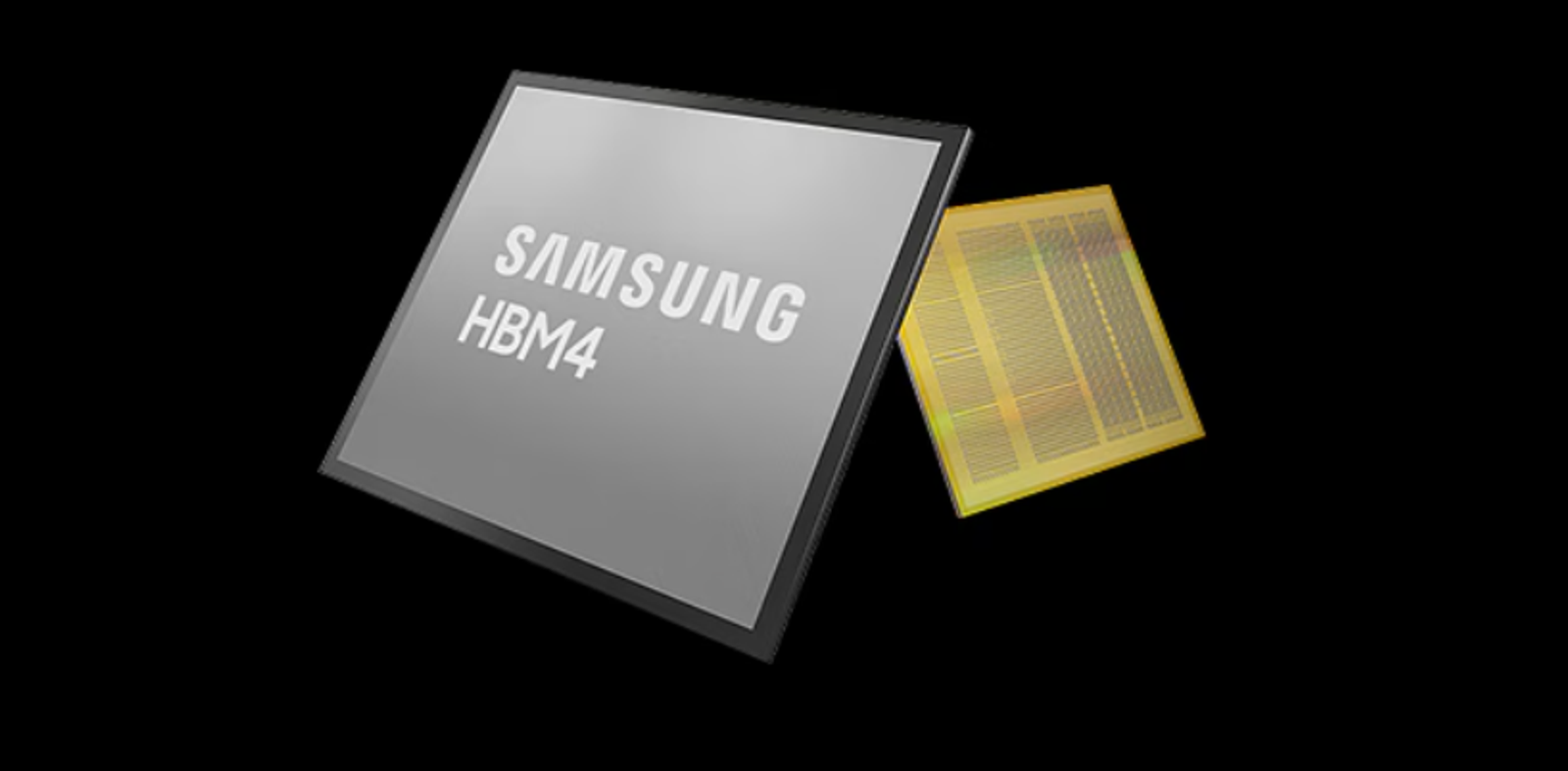
Samsung Electronics announced record annual operating profit of 107 trillion won and said its HBM memory chips for 2027 are already sold out—yet its shares fell more than 4%. SK Hynix, which the previous day had unveiled a roughly 100 trillion won shareholder-return plan, rose. What separated the two was not the semiconductor cycle but the specificity and timing of their return commitments.
The story in three lines
Samsung Electronics posted third-quarter operating profit of 107.4 trillion won, up 783% year on year, but its shares closed at 232,000 won, down 4.13%, after touching 249,000 won intraday. SK Hynix rose around 2%.
Analysts pointed to the timing of the return commitments. Of Samsung's guided 90–110 trillion won in returns for the year, only 35 trillion won has been formally resolved; the remaining 55–75 trillion won was deferred to a board meeting in late January. SK Hynix, by contrast, had already disclosed a roughly 100 trillion won plan and had resolved approximately 64 trillion won of it (by our reckoning).
Some market observers have speculated about a link between the January timing and the inheritance-tax valuation period for Lee Jae-yong, Samsung's chairman. That remains conjecture, however, and the January schedule was announced in August—before any gift transaction was announced.
What happened in the market
The KOSPI fell 74.78 points (1.24%) to 5,937.66 on the 29th, surrendering the 6,000 level after just one day. The index briefly cleared 6,100 at the open before turning lower around 10 a.m.; the intraday low was 5,817.92. Samsung Electronics led the decline. Its shares rose initially, then sold off sharply after the earnings release, closing at 232,000 won (−4.13%); preferred shares ended at 183,900 won (−3.26%). SK Hynix, having already surged 10.89% the previous day, added a further 2%-plus to close in the 1.52 million won range (exact closing prices varied slightly across sources).
Samsung's underlying results and industry commentary were, if anything, encouraging. Third-quarter revenue came in at 195.3 trillion won, with operating profit of 107.4 trillion won; the semiconductor (DS) division accounted for roughly 99% of the group total. On the earnings call, management said HBM supply for 2027 had been fully committed at "target-level pricing," and forecast a memory-supply deficit extending to 2028. HBM4 revenue more than tripled quarter on quarter and made up 60% of total HBM sales. The consensus estimate for Samsung's 2027 operating profit now stands at roughly 560 trillion won, up 3.55% over the past three months. It is hard to argue that investors were disappointed by the fundamentals.
The same question, two different answers
| SK Hynix | Samsung Electronics | |
|---|---|---|
| Q3 operating profit (margin) | 83.3338 trillion won (~79.7%) | 107.4 trillion won (55%) |
| Q3 dividend | 20,000 won per share, ~14 trillion won total (10,000 won performance-linked + 10,000 won Kioxia special dividend) | 4,601 won per share, ~30 trillion won total (376 won regular + additional). Record date: 30 Sep; payment date: 27 Nov |
| Full-year total return | ~100 trillion won (cash dividend 30+ trillion won, buybacks 60+ trillion won, excl. employee compensation) | 90–110 trillion won |
| Already resolved/executed | ~64 trillion won (40 trillion won buyback completed in August + 10 trillion won new cancellation + 14 trillion won Q3 dividend; our estimate) | 35 trillion won (breakdown not disclosed) |
| Share buybacks | 40 trillion won completed in August; new 20 trillion won resolved (10 trillion won to be cancelled, 10 trillion won for employee compensation) | Quantum and timing undecided |
| Remaining schedule | Share buyback decisions at each quarterly board meeting; special dividends if investment returns materialise | Residual plan and next policy to be confirmed at late-January 2027 board meeting |
| Net cash (end of Q3) | 98.7 trillion won | 197.6 trillion won |
| Share price on the 29th | +~2%, ~1.52 million won | −4.13%, 232,000 won |
The market's disappointment was not that Samsung's return programme is smaller or weaker than SK Hynix's. The third-quarter dividend alone amounts to 30 trillion won, and the CFO confirmed that the remaining 55–75 trillion won will be deployed in cash dividends and buybacks/cancellations, with a possible adjustment to the mix of preferred-share purchases. What changed was specificity and timing. SK Hynix has already resolved a defined sum with a clear schedule; Samsung has deferred the allocation of the remainder by three months.
What disappointed investors
Commentary was broadly consistent. Lee Young-gon, head of research at Toss Securities, said the absence of an immediate, concrete buyback plan to improve supply-demand dynamics in the stock triggered profit-taking. Kang Jin-hyeok at Shinhan Investment & Securities attributed the fall below the 200-day moving average to concern that aggressive returns would be delayed. Profit-taking after the previous day's jump of more than 9% compounded the pressure. Expectations had also risen sharply because net cash grew by roughly 30 trillion won in a single quarter to reach 197.6 trillion won—a pool that invited bold commitments.
The selloff therefore looks more like a mismatch between expectations and timing than a fundamental deterioration. The industry outlook and profit forecasts remain intact, the capital for returns is clearly there, and there is now a firm date—late January—for the execution plan. Even so, the roughly three-month signal vacuum ahead creates scope for additional volatility.
How the two companies' industry messages differ
Both companies emphasised forward visibility, but in different terms. Samsung said price negotiations for its 2027 HBM supply are complete; it has signed long-term supply agreements with ten major customers and is in talks with ten more, with a target of locking 60–70% of production capacity into long-term contracts by 2030. SK Hynix said long-term agreements with 14 key customers cover more than 50% of its 2027–28 capacity, and that when demand currently under negotiation is included, its DRAM and HBM output is effectively sold out through 2029. In short, Samsung emphasised pricing certainty through 2027; SK Hynix emphasised volume certainty over a longer horizon.
The gap in operating margins—55% for Samsung versus roughly 79.7% for SK Hynix—reflects the drag from Samsung's other divisions (consumer electronics, displays and foundry) and should not be read as a straightforward measure of semiconductor competitiveness.
A question some in the market are asking: January and inheritance tax
Some observers have connected the late-January timing to the inheritance-tax valuation period affecting Chairman Lee Jae-yong. Korea Economic TV ran a report framed as a question: "Why the final decision only in late January?—Is Lee Jae-yong's gift tax holding things back?" The argument runs as follows. Hong Ra-hee, Samsung's honorary curator, is scheduled to transfer 11,158,000 Samsung Electronics shares on 12 November; under Korean tax rules, inheritance tax is assessed on the average closing price over the four months centred on the transfer date (12 September to 12 January). Every 10,000-won rise in the average share price over that period adds roughly 65 billion won to the tax bill, by one published calculation—our own check, applying the 20% controlling-shareholder premium and the 50% top tax rate to 11,158,000 shares, produces a similar figure of approximately 67 billion won. The inference is that there is little incentive to boost the share price before that window closes.
No evidence supporting this interpretation has been confirmed. The report cited anonymous market sources and did not establish causation; nor has the company addressed the question directly. There are also reasonable grounds for scepticism. The late-January board schedule was announced on 21 August—before Chairman Lee's open-market purchase intention (9 September) or the gift agreement (12 October). The CFO framed the January meeting as the occasion to set both the residual return allocation and the next multi-year shareholder-return policy, which is a natural moment given that the current three-year policy expires this year. A sense of proportion also matters: a 10,000-won daily move shifts the roughly 80-trading-day average by around 125 won, affecting the tax bill by an estimated 800 million won (our calculation). It strains credulity to connect a 30-trillion-won dividend decision to a motivation of that scale.
The question is nonetheless worth noting. The controlling shareholder does have a personal financial interest in the average share price during the assessment period. Were the company to address this potential conflict of interest transparently, the speculation would likely dissipate. What should be avoided is asserting unproven intent, or treating 12 January as a predetermined inflection point for the share price.
Signals to watch
A late-January board resolution on the residual 55–75 trillion won that falls short of market expectations in terms of the mix between cancellations, dividends and preferred-share buybacks.
Sustained foreign selling between now and January in the absence of any interim return signals.
Downward revisions to consensus earnings estimates for Samsung Electronics.
Risks applying to both companies: a turn lower in commodity DRAM prices; renegotiation of long-term supply contracts; renewed scepticism about the return on AI-related capital investment.
Dates to watch
12 November: Execution and disclosure of Chairman Lee's share transfer. On 27 November, Samsung Electronics pays its third-quarter dividend.
Samsung Q4 earnings: Some analysts suggest operating profit could exceed 110 trillion won. This is a reported market view, not a confirmed consensus figure.
SK Hynix year-end dividend and cancellation: The remaining scale of the Kioxia special dividend and the timing of the cancellation of the 40-trillion-won August buyback.
Late January 2027: Samsung Electronics board meeting to resolve the residual return plan and set policy beyond 2027.
Foreign investor flows: Foreign investors were net buyers on the KOSPI on the 28th, but reports on the 29th are conflicting (some citing net buying, others net selling). Whether that trend holds will be critical.