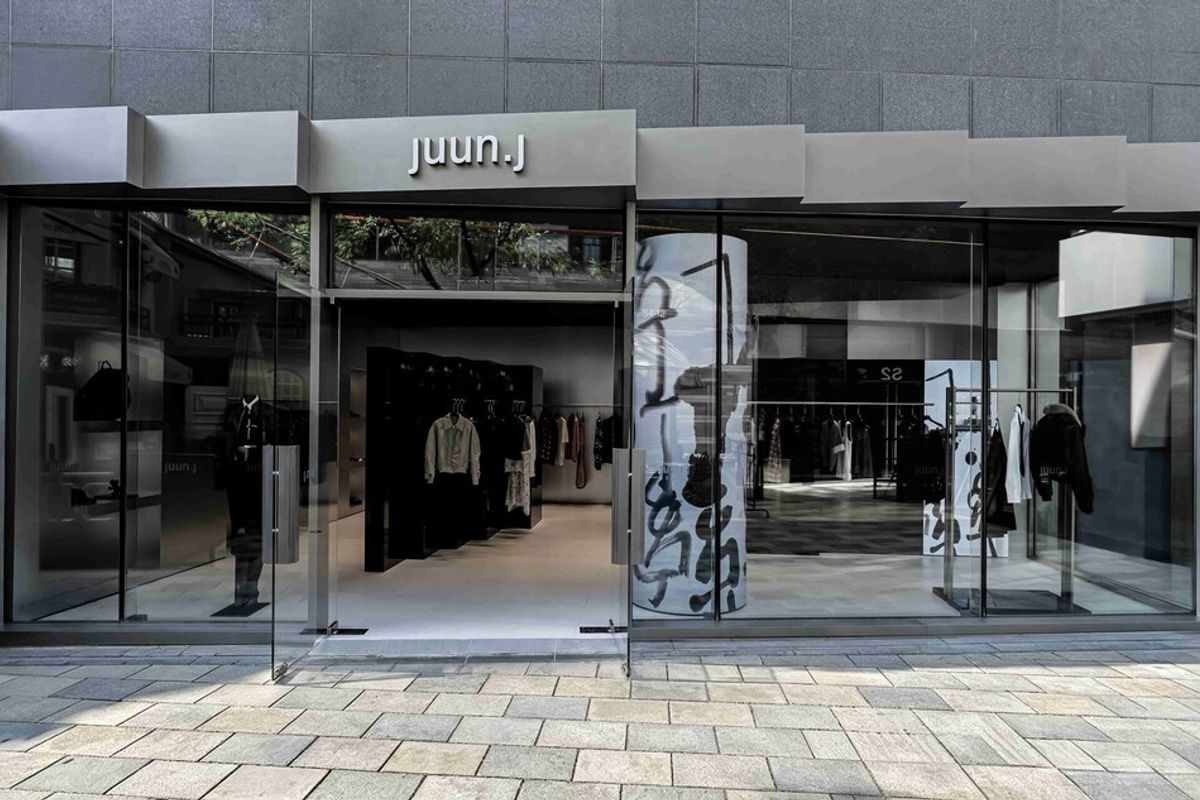
Samsung C&T's fashion division is making its most serious push yet into the Chinese luxury market, deploying its avant-garde menswear label JUUN.J as its standard-bearer. The division has formed a formal partnership with Misto Holdings, a Chinese retail group that specialises in luxury multi-brand boutiques. The move is being watched closely across the industry — not merely as another export drive, but as a test of whether a Korean contemporary luxury brand can carve out an independent identity in the world's largest market for premium goods.
Why China, and why now?
JUUN.J is the creation of designer Juun J. Jung, whose darkly sculptural aesthetic has earned the label a permanent place on the Paris Fashion Week calendar and a reputation for uncompromising artistic vision. Samsung C&T acquired the brand in 2009 and has since pushed its international profile steadily upward, but a direct assault on the Chinese mainland is, in practice, a first.
The timing is deliberately chosen. China's luxury market suffered a pronounced slowdown in 2023 and 2024, as consumer confidence weakened and global luxury conglomerates — including LVMH and Kering — warned of falling Chinese revenues. Yet that same disruption has opened gaps that did not previously exist. Affluent younger Chinese consumers, particularly those in their twenties and thirties, are shifting away from conspicuous logo consumption towards what the industry calls "quiet luxury" and avant-garde aesthetics — a preference for individuality and artistic credibility over brand recognition alone.
The long-term opportunity remains enormous. According to Bain & Company, China will account for 40% of global personal luxury spending by 2030. Even if the overall market remains turbulent, certain niche segments are already growing within it.
The partner: Misto Holdings
Misto Holdings is not a conventional distributor. The firm specialises in curated select-shops and luxury multi-brand retail in China, and has previously brought western avant-garde labels — including Rick Owens and Maison Margiela — successfully to Chinese consumers. That track record matters: both brands occupy aesthetic territory close to JUUN.J's own, which suggests Misto understands the particular sensibility the Korean label is trying to project.
Industry observers point to Misto's curation expertise as the partnership's greatest asset. Luxury consumers in China's tier-one and tier-two cities — Shanghai, Beijing, Chengdu and their peers — are acutely sensitive to brand narrative and scarcity. Misto can serve as more than a sales channel; it can provide the cultural context and storytelling that turns an unfamiliar foreign label into a coveted one.
A mixed history of Korean fashion in China
Samsung C&T's venture deserves to be seen against the broader, often unhappy, record of Korean fashion brands in China. That history divides roughly into two chapters.
In the first, mid-market and fast-fashion labels rode the Korean Wave — the global spread of Korean pop culture — to rapid expansion in China during the 2010s. Most subsequently retreated or shrank dramatically, undone by a failure to localise, the rise of competitive domestic Chinese brands, and the diplomatic fallout from South Korea's decision to host a US anti-missile system (known as THAAD) in 2017, which triggered a prolonged consumer backlash. E-Land China and LF Corporation both suffered heavily.
The second chapter, now being written, concerns the luxury end of the market. High-end brands are less exposed to geopolitical friction — their relationship with consumers rests on artistic merit and brand equity rather than mass appeal. The route JUUN.J is taking is considered lower-risk and better suited to building durable brand value over time.
"Past failures by Korean brands in China came from a strategic misjudgement — chasing volume too quickly," said one industry figure. "What JUUN.J is attempting is an entirely different game: protecting the brand's scarcity while cultivating a small, loyal customer base."
Samsung C&T's broader portfolio logic
The China move fits into a wider strategic framework at Samsung C&T's fashion division. The business runs a two-track model: volume brands — including Beanpole and 8 Seconds — for the domestic South Korean market, and premium lines — JUUN.J and the Galaxy label — intended to drive international growth. Raising the share of overseas revenues is one of the division's central medium-term objectives.
JUUN.J is the spearhead of that international ambition. The calculation is that credibility accumulated on the Paris and New York runways can be leveraged directly in China, where fashion-conscious consumers place considerable weight on endorsement from western fashion weeks. For JUUN.J, which has built its reputation precisely in those arenas, that is a structural advantage.
The risks
There is no shortage of challenges. China's luxury retail environment remains complex, with high barriers to entry and an intricate regulatory landscape. Counterfeiting, heavy platform dependency, and the volatile ecosystem of influencer ("wanghong") marketing all present operational hazards.
More structurally, the rise of Chinese domestic luxury brands — riding a wave of nationalist consumer sentiment known as "guochao", or national tide — poses a genuine competitive threat to foreign labels. Chinese consumers' appetite for homegrown prestige goods is growing, and government and cultural support amplifies it.
There is also a fundamental tension inherent in avant-garde fashion: its audience is, by definition, small. In a segment where preserving brand purity matters more than achieving scale, the greater challenge may be resisting the temptation to grow too fast rather than finding ways to grow at all.
A new equation for Korean luxury
JUUN.J's entry into China offers a model that the Korean fashion industry has not tried before. Rather than riding Korean pop-culture tailwinds, it combines genuine global fashion credibility with specialist local distribution — competing, in effect, on fashion's own terms rather than as an extension of the Korean Wave.
If the experiment succeeds, it could serve as a template for other Korean contemporary designers seeking to enter China and wider Asian luxury markets. How Samsung C&T manages this venture — the pace it sets, the compromises it accepts or refuses — will be a revealing test of whether a distinctly Korean luxury voice can establish itself in the market that will define global luxury for the next decade.