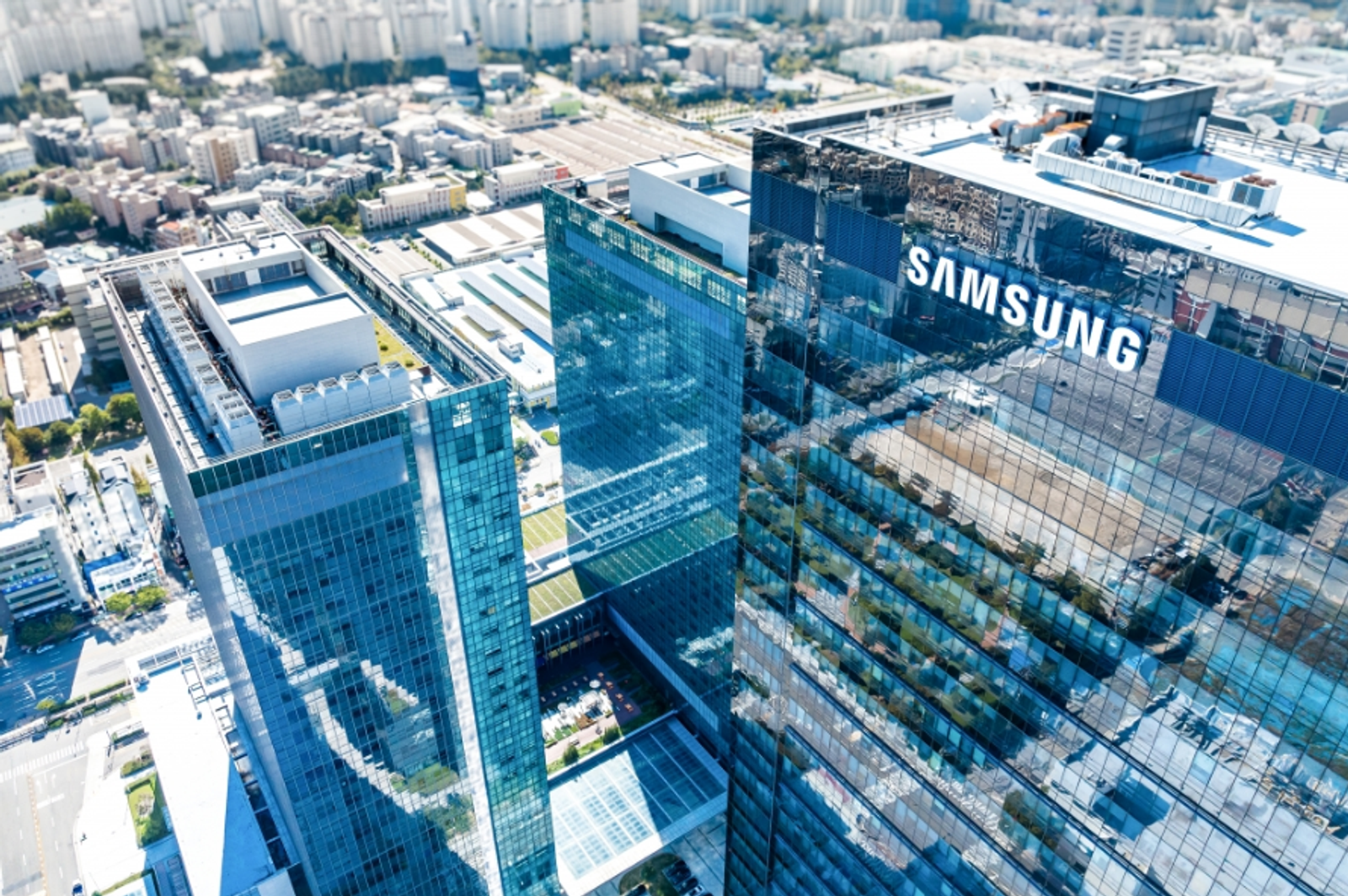
Samsung Electronics set out what it called a record-breaking capital return plan, pledging up to 110 trillion won in shareholder distributions by 2026 through a combination of dividends and share buybacks and cancellations. On paper, the announcement was spectacular. In practice, markets responded with indifference bordering on hostility. Shares came under selling pressure immediately after the news broke on the NXT market — a textbook "sell on the news" reaction. The question worth asking is whether investor expectations had simply run too far ahead of reality, or whether the policy itself contains structural weaknesses.
Behind the number: the conditions buried in the fine print
The 110 trillion won figure encompasses dividends alongside share buybacks and cancellations, and should be read as a medium-to-long-term cumulative target rather than a single-year commitment. What analysts immediately sought to establish was how much the implied annual payout exceeds Samsung's existing policy. The company has historically maintained annual dividends of roughly 9 trillion to 10 trillion won, supplemented by intermittent share cancellations. Spread across several years, the new pledge looks considerably less transformative than the immediate, large-scale return that many investors had anticipated.
Specialists broadly acknowledge that the aggregate figure is meaningful, but argue that the uncertainty surrounding its pace and conditions undermined confidence. In particular, critics note the absence of explicit commitments on whether repurchased shares will actually be cancelled, the precise criteria governing payout ratios, and whether returns will be formally linked to earnings performance. Without such provisions written in black and white, the credibility of any shareholder-friendly policy remains difficult to guarantee.
The anatomy of a sell-off: a failure of expectation management
Markets are governed by the old adage "buy the rumour, sell the news", and this episode followed that script faithfully. Expectations of a substantial shareholder return had already been priced into Samsung's shares before the announcement was made. When the actual details fell short of those expectations, profit-taking set in swiftly.
Among institutional investors, a common reaction was that the headline number — impressive as it sounds above the 100 trillion won threshold — does not translate into a meaningful improvement in per-share returns or dividend yield. Given that Samsung's market capitalisation stands at roughly 300 trillion won, the annual implied return would need to be considerably more aggressive to exert direct upward pressure on the share price. Foreign shareholders, who have long held more than 50% of Samsung's equity, are equally relevant here. It is natural that they should benchmark the company's capital return policy against global peers such as TSMC, Intel, and Qualcomm.
Global comparisons: where does Samsung stand?
Measuring Samsung against leading technology and semiconductor companies puts its position in sharp relief. Apple, since launching its capital return programme in 2012, has channelled cumulative trillions of dollars into buybacks and dividends, making shareholder returns a central pillar of its share price appreciation. TSMC has steadily raised its payout ratio while feeding the earnings growth driven by booming AI chip demand into progressively higher dividends. Nvidia, meanwhile, has deployed aggressive share cancellations to drive up earnings per share.
Samsung, by contrast, faces a structural dilemma: it must balance shareholder returns against heavy capital expenditure requirements and the inherent uncertainty of the semiconductor cycle. It is understandable that the company struggled to commit to large-scale distributions during the industry downturn of 2023 and 2024. Yet while rivals have strengthened their return programmes and earned premium valuations in return, the so-called "Korea discount" — the persistent gap between Korean companies' intrinsic value and their market price — remains stubbornly unresolved for Samsung.
Investor perspectives: short-term disappointment versus long-term opportunity
Short-term and long-term investors view the announcement very differently. In the near term, the sense that the package fell short of expectations threatens to weigh on the share price. Given that Samsung's stock had been recovering momentum in the run-up to the announcement, the exit of momentum-driven traders appears unavoidable.
Long-term value investors, however, may read the same announcement more charitably. The 110 trillion won commitment formally puts management's intentions on record, establishing a benchmark against which future performance can be measured. Should Samsung accelerate the pace of returns as earnings recover, some analysts see the potential for a meaningful re-rating of the stock.
One analyst at a domestic South Korean brokerage made the point plainly: "The fact that Samsung's price-to-book ratio has hovered around one times for an extended period tells you that markets are assessing this company on more than just earnings alone. Trust in the shareholder return policy has to be built up before the valuation discount can be closed."
The policy backdrop: alignment with the "Value-Up" agenda
The announcement arrives in the context of the Korea Exchange and financial regulators' "Corporate Value-Up Programme", a government initiative designed to tackle the Korea discount by encouraging listed companies to expand voluntary shareholder returns. As one of South Korea's dominant chaebol (family-controlled conglomerates) and the country's largest listed company, Samsung's behaviour sends a signal that reverberates across the entire market. If Samsung delivers meaningful, tangible results, it could galvanise other large listed companies to follow suit.
The reverse is equally true. If Samsung falls behind on its commitments, or executes them at a sluggish pace, the effect on broader market confidence could be damaging — not merely for the company itself but for South Korean capital markets as a whole. Regulators are expected to monitor progress closely.
Outlook: execution is everything
Ultimately, the value of Samsung's 110 trillion won pledge will be determined not by the announcement itself but by what follows it. Markets have already moved past the numbers and are demanding substance. Investor confidence can only be restored if Samsung backs its words with a concrete timetable for share cancellations, a clear roadmap for progressively raising the payout ratio, and transparent disclosure of the criteria linking returns to earnings.
If the semiconductor sector's recovery holds — powered by demand for AI-related chips — Samsung will have an opportunity to demonstrate the virtuous cycle of channelling rising profits back to shareholders. How it seizes that opportunity will be the decisive factor shaping the direction of its share price. Shareholders are no longer simply watching whether Samsung keeps its promise. They are testing whether Samsung takes them seriously at all.