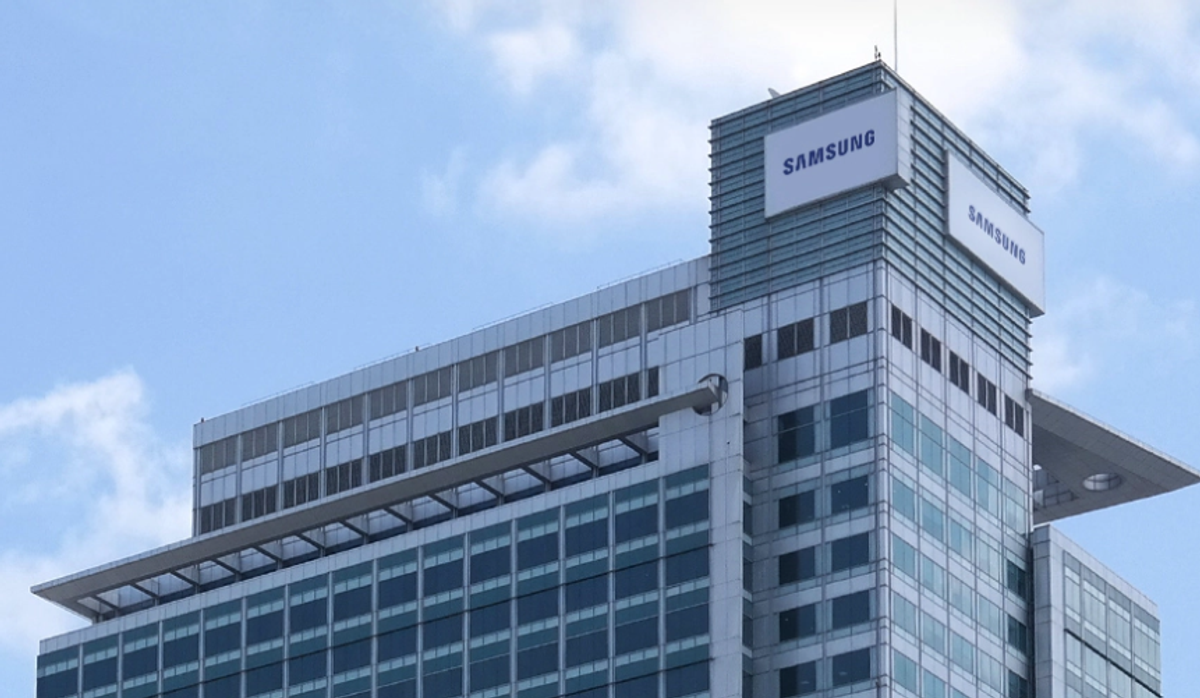
Samsung Electronics has announced the conclusion of long-term supply agreements with five of the world's leading data-centre operators. At a moment when demand for AI infrastructure is expanding at a remarkable pace, the news that Samsung has locked in a clutch of major customers has sharpened attention across the global semiconductor industry. What makes these deals significant — and what do they mean for Samsung's prospects?
Why data centres matter so much
A data centre is, in essence, a vast warehouse and factory for digital information. Every internet search, streamed video, and AI chatbot conversation depends on the processing power housed within these facilities. The explosive growth of AI services such as ChatGPT has driven a corresponding surge in the scale and number of data centres worldwide.
Running a data centre requires enormous quantities of semiconductors. Memory chips are among the most critical components. High-Bandwidth Memory (HBM) — which shuttles data at high speed to and from the GPUs that handle AI computations — is particularly prized. Samsung and its Korean rival SK Hynix are among the world's dominant producers of such memory.
Who are the "big five" customers?
Samsung has not disclosed the identities of the five data-centre companies with which it has signed long-term contracts. Industry observers, however, point to the usual suspects among the so-called hyperscalers — the handful of technology giants that operate cloud infrastructure at planetary scale: Microsoft, Google, Amazon Web Services, Meta, and Oracle. Together, these companies account for a substantial share of global data-centre investment.
Agreements with such customers represent far more than a large purchase order. A long-term supply contract is a commitment to deliver a specified volume of chips reliably over several years. The semiconductor industry is notoriously cyclical, with prices prone to sharp swings; long-term contracts act as a hedge against that volatility, providing a stable revenue base.
Why these deals were particularly urgent for Samsung
Samsung's semiconductor division has endured a difficult two to three years. The company has repeatedly been assessed as losing ground to SK Hynix in the HBM market. SK Hynix has come close to monopolising HBM supply to Nvidia, the dominant producer of AI processors, leaving Samsung widely criticised for failing to capture its full share of the AI semiconductor windfall.
Samsung has also struggled to close the gap with TSMC, the Taiwanese contract chipmaker, in its foundry (chip manufacturing-for-hire) business, eroding investor confidence further. Against that backdrop, securing multi-year contracts with five of the world's largest data-centre operators reads as a clear signal that Samsung is finally joining the main track of the AI semiconductor boom.
What exactly is being supplied?
The contracts are understood to cover a range of high-performance memory products, including HBM, server DRAM (DDR5), and enterprise solid-state drives (eSSD) based on NAND flash memory. HBM attracts the most attention: as the component that determines AI processing speeds, it commands the highest prices in today's memory market.
The timing is notable. Samsung's announcement coincides with the company completing customer qualification for its latest HBM3E products and beginning volume shipments. This gives Samsung an opportunity to dispel the anxiety that had built up in the market over repeated delays in its HBM technology validation.
What changes might follow for Samsung?
*How quickly will the financial benefits materialise?*
Long-term contracts typically see deliveries spread across multiple quarters. Rather than a dramatic improvement in near-term results, the more likely scenario is a gradual uplift in earnings from the second half of 2025 through 2026. That said, the boost to market sentiment — and by extension to Samsung's share price and reputation — may be felt more immediately.
*Can Samsung catch up with SK Hynix in HBM?*
Industry specialists tend to characterise Samsung's position not as a fundamental defeat but as a delay. Samsung's strengths lie in its unmatched scale of production capacity across all categories of memory, and in its cost competitiveness. Data-centre customers, for their part, have every reason to cultivate a second major supplier rather than depend entirely on SK Hynix — a concentration of supply that carries its own risks. The incentive to bring Samsung back into contention is real.
*What if the AI investment bubble deflates?*
This is a risk the entire industry carries. Yet Microsoft, Google, Amazon, and their peers have publicly committed to hundreds of trillions of Korean won in data-centre investment through 2026. The prevailing view in the market is that the structural growth in demand is more powerful than any near-term risk of a pull-back.
*What about the foundry business?*
These contracts relate primarily to memory chip supply. Samsung's separate challenge of restoring competitiveness in its foundry division — where it manufactures chips designed by other companies — remains an unresolved task. However, analysts note that building deep relationships with the world's largest data-centre operators could lay the groundwork for future orders in custom chip design and production.
Why this announcement matters
Three implications stand out.
First, Samsung has reaffirmed its place as an indispensable supplier in the AI semiconductor ecosystem. The market had grown nervous that Samsung might be left behind as the AI boom enriched its rivals; these contracts go some way to quieting that concern.
Second, the deals reinforce the case that investment in AI infrastructure represents a structural shift rather than a passing fashion. The fact that the world's largest technology companies are locking in multi-year supplies of memory chips is itself evidence of their conviction that AI demand will endure.
Third, the news carries positive implications for South Korea's semiconductor industry as a whole. If both Samsung and SK Hynix compete and grow together in the global AI chip market, South Korea's most important export engine becomes correspondingly more robust.
That said, the full terms and scale of the contracts have yet to be disclosed, making it premature to draw firm conclusions about the earnings impact. The coming quarters will be the real test of whether market optimism is justified by results.