Introduction
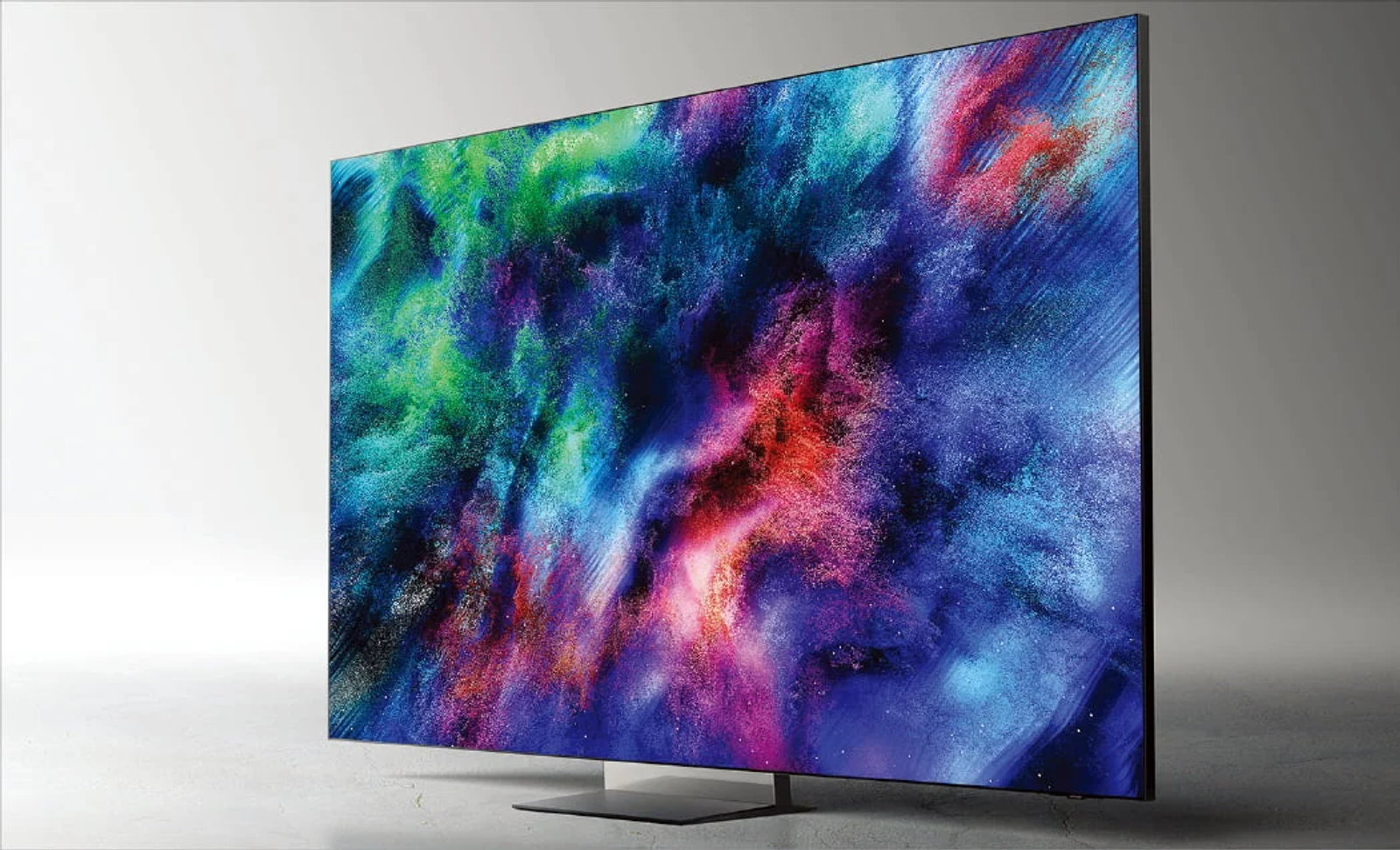
Samsung's Micro RGB is the South Korean electronics giant's highest-tier television category for its 2026 lineup. The technology uses RGB (red, green, blue) LEDs measuring less than 100 micrometres as the backlight itself — a fundamentally different approach from conventional Mini LED or QLED displays, which shine white backlights through colour filters. Rather than filtering colour in, Micro RGB produces it at the source. The range integrates picture, sound, and smart features around a unified AI platform called Vision AI Companion, and spans three series: the flagship RH95, followed by the RH9G and RH85.
Specifications
Micro RGB sets are available in four screen sizes — 100, 85, 75, and 65 inches. The top-tier RH95 series carries a manufacturer's suggested retail price of 9.29 million won (approximately $6,700) for the 85-inch model. The core innovation lies in the independent, precise control of each colour channel (R, G, and B), enabling fine-grained local dimming at the level of individual colour LEDs. Two AI-driven picture-processing features — Micro RGB Colour Booster Pro and Micro RGB HDR Pro — continuously adjust colour and contrast on a scene-by-scene basis. The sets have also received VDE certification for "Micro RGB Precision Color," verified against BT.2020, the International Telecommunication Union's colour standard for 4K Ultra HD.
AI functionality extends well beyond picture correction. The flagship RH95 is powered by a dedicated chip, the Micro RGB AI Engine Pro, which analyses scenes in real time, classifies colour tones automatically, and optimises both picture and sound accordingly. Samsung claims the processor is 67% faster in CPU performance, 4.2 times faster in GPU tasks, and twice as fast in neural processing compared with the AI 4K processor found in its 2026 Neo QLED 4K range.
The AI ecosystem strategy may be the most distinctive element of the lineup. Rather than relying on a single voice assistant, Samsung has built in three: its own Bixby, the AI search engine Perplexity, and Microsoft's Copilot. Users can call on whichever service best suits a given task — the practical underpinning of Samsung's marketing claim that this television represents "AI for the mainstream."
Display performance is equally competitive. The top two series (RH95 and RH9G) support refresh rates of up to 165Hz, and a UL-certified "Glare Free" panel minimises reflections under bright indoor lighting. Audio support includes Dolby Atmos for three-dimensional surround sound. Samsung has also introduced a new model-naming convention for 2026, with the "KMR" identifier designating the current flagship tier.
Strengths and Limitations
The case for Micro RGB rests on a simple proposition: producing colour at the backlight level eliminates the optical losses inherent in filter-based displays, making possible gains in contrast and colour accuracy that cannot be achieved through software alone. The multi-AI platform — combining Bixby, Perplexity, and Copilot — is a clear point of differentiation from rivals that rely on a single assistant. The 165Hz refresh rate and anti-glare technology make the set versatile for both gaming and cinematic viewing.
The principal limitation is price. At 9.29 million won for the 85-inch model, the RH95 sits above even Samsung's own flagship OLED for 2026 — the SH95, which retails at 7.19 million won in its 77-inch configuration — placing it firmly in ultra-premium territory. The barrier to entry for most consumers is steep. There is also a meaningful caveat within the Micro RGB lineup itself: the Micro RGB AI Engine Pro is exclusive to the RH95. Buyers considering the lower-tier RH9G or RH85 should verify which processor those models carry, as the AI performance differential could be significant.
Verdict
Micro RGB is less a spec upgrade than a statement of intent: Samsung is attempting to redefine how television picture quality is produced, not merely processed. By combining backlight-level hardware innovation with an AI processing engine and a multi-service AI ecosystem, it embodies the company's 2026 consumer electronics thesis — the hyper-personalised AI television. That ambition, however, carries an unambiguous price tag. This is a product engineered for the premium end of the market, not a mass-market proposition.
★★★★☆ (4.0/5.0)
In a sentence "Colour engineered from the backlight up, wrapped in a multi-AI ecosystem — the innovation is genuine, and so is the cost."