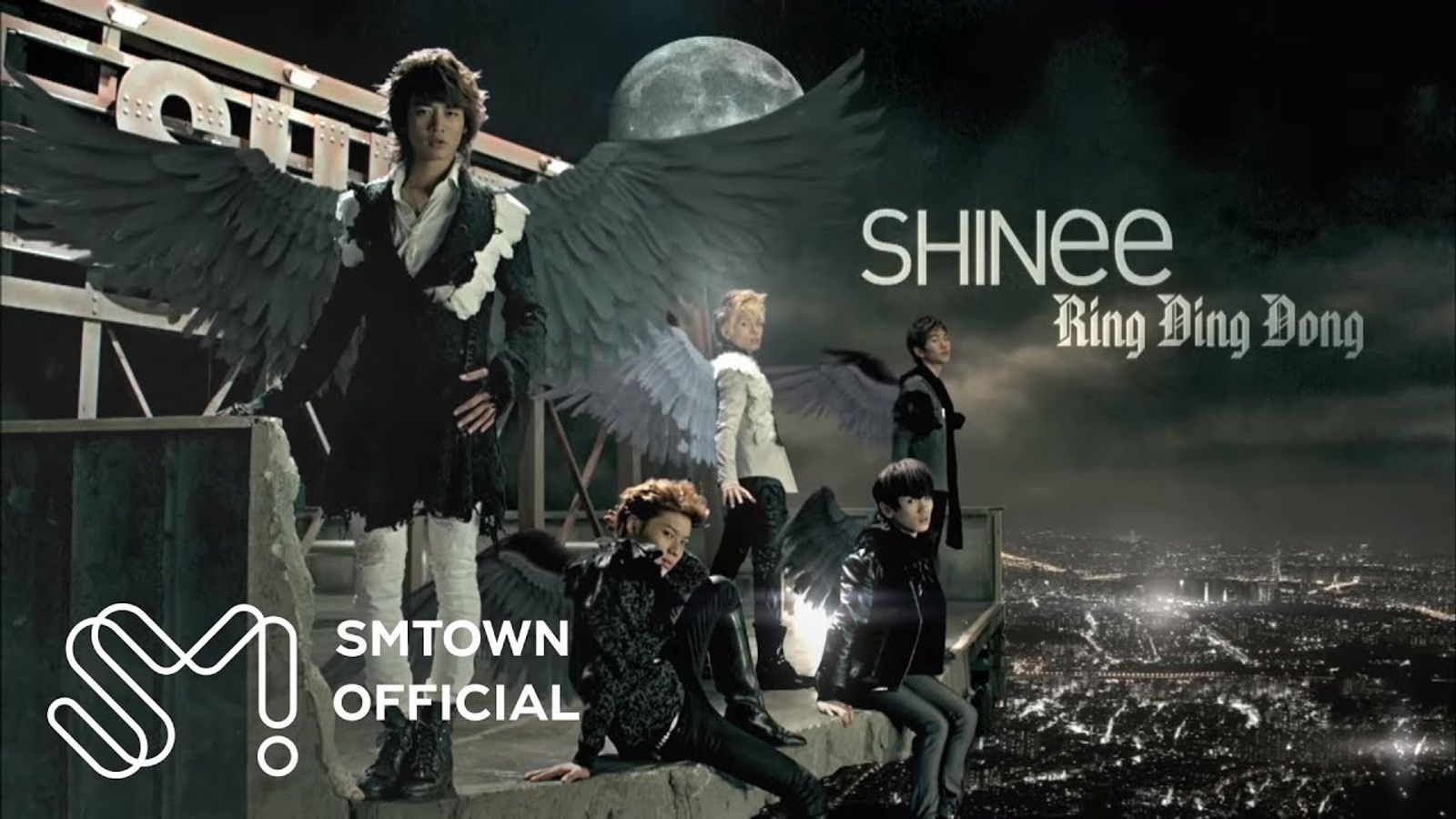
Editor's note: "One Track" is a series examining songs that have left a mark on K-pop history — exploring their origins, achievements and significance. The twentieth entry is SHINee's "Ring Ding Dong".
In the autumn of 2009, SHINee returned with a chorus that, once heard, proved nearly impossible to shake. The song was "Ring Ding Dong". The members who performed it would later admit on television that they had not wanted to record it — it felt too far removed from their wholesome, fresh-faced image. Yet the track swept to number one on South Korea's terrestrial music programmes, and seventeen years later it remains the byword for what Korean students call a "CSAT banned song": a tune so infectious it risks derailing concentration during the national university entrance examination.
Origins
SHINee, a five-member act that debuted in 2008, had built their reputation on contemporary R&B and a clean-cut boyish aesthetic. In October 2009 they released their third mini-album, *2009, Year of Us*, roughly five months after their second, *Romeo*. The album appeared on 19th October, though the lead single "Ring Ding Dong" was unveiled slightly ahead of it. Recording ran from August to October 2009, and the process was understood to be an attempt to showcase both a new direction and the members' vocal range.
The song was written, composed and arranged by Yoo Young-jin of SM Entertainment (SHINee's management company, one of South Korea's dominant talent agencies), with choreography by Misha Gabriel. The sound has been described as Afro-electro: African-inflected percussion layered with electronic synthesisers, heavy autotune and Euro-pop production, set to lyrics that cartoon-ishly dramatise the moment of falling in love. It was a sharp departure from SHINee's established R&B sensibility. Yoo Young-jin is reported to have acknowledged that he could not have imagined the group receiving a track of this kind.
The music video, directed by Jo Su-hyun, was filmed at a studio in Namyangju, Gyeonggi Province in early October 2009 and released on 16th October. SHINee performed it live for the first time the same day on KBS's *Music Bank*.
Performance and Records
The public response translated quickly into chart results. "Ring Ding Dong" topped *Music Bank* on 30th October and again on 6th November — two consecutive weeks at number one. On SBS's *Inkigayo*, it claimed the top "Mutizen Song" award for three straight weeks from 1st to 15th November. Combined with a number-one finish on Mnet's *M Countdown* on 5th November, the track accumulated five terrestrial music-show victories in total. Pre-orders for the album reached 60,000 copies, and the music video was the most-watched clip on YouTube Korea for the month of October 2009.
"Ring Ding Dong" has also ranked first in multiple polls identifying songs most likely to distract students sitting the university entrance examination — a backhanded tribute to the tenacity of its hook.
Even at the peak of its popularity, the promotional campaign was not without disruption. In November 2009, members Jonghyun, Onew and Taemin fell ill with swine flu in succession, leaving gaps in the schedule that were filled by Yesung and Leeteuk of fellow SM act Super Junior. At the KBS *Gayo Daechukje* year-end special on 30th December, Taemin's microphone failed during a remix performance; the members continued dancing and singing without visible alarm, and the microphone was restored by the following section.
The records have accumulated over time. On 27th August 2018 the music video surpassed 100 million views on YouTube. Internationally, the track reached a peak of number 16 on Billboard's World Digital Song Sales chart, dated 7th January 2012.
What Set It Apart
"Ring Ding Dong" marked a decisive break from SHINee's R&B origins. Its defining character lies in the combination of an irresistible chorus, conspicuous autotune and an unfamiliar percussive texture hitting the listener simultaneously. Critical opinion remains divided. Some point to the repetitive lyrics and the song's period-specific production as limitations; others have been more generous. American outlet Stereo Gum described it as an almost perfect introduction to K-pop for first-time listeners, while British magazine NME, acknowledging it as a product of its era, praised its experimental ambition.
Significance
The members themselves were unconvinced. On 25th May 2024, SHINee appeared on MBC's variety programme *Hangout with Yoo* and confessed: "We actually disliked 'Ring Ding Dong'. We had a fresh, innocent concept, and this felt like turning into someone else — someone who didn't feel like us." The host, comedian Yoo Jae-suk, introduced it as his personal favourite track. The transformation the members had resisted became, in the end, the song most associated with the group.
"Ring Ding Dong" also marks the point at which SHINee began to establish themselves as a group not defined by a single image. In 2015, Rolling Stone magazine included SHINee in its list of the 50 greatest boy-band songs of all time — the track cited was "Sherlock", released in 2012. That a group which began with a contemporary R&B identity came to be recognised as a performance-driven boy band is a trajectory that "Ring Ding Dong", in hindsight, set in motion.
In a Word
The song outlasted the members' reluctance — "Ring Ding Dong" lodged itself in the ear and never left.