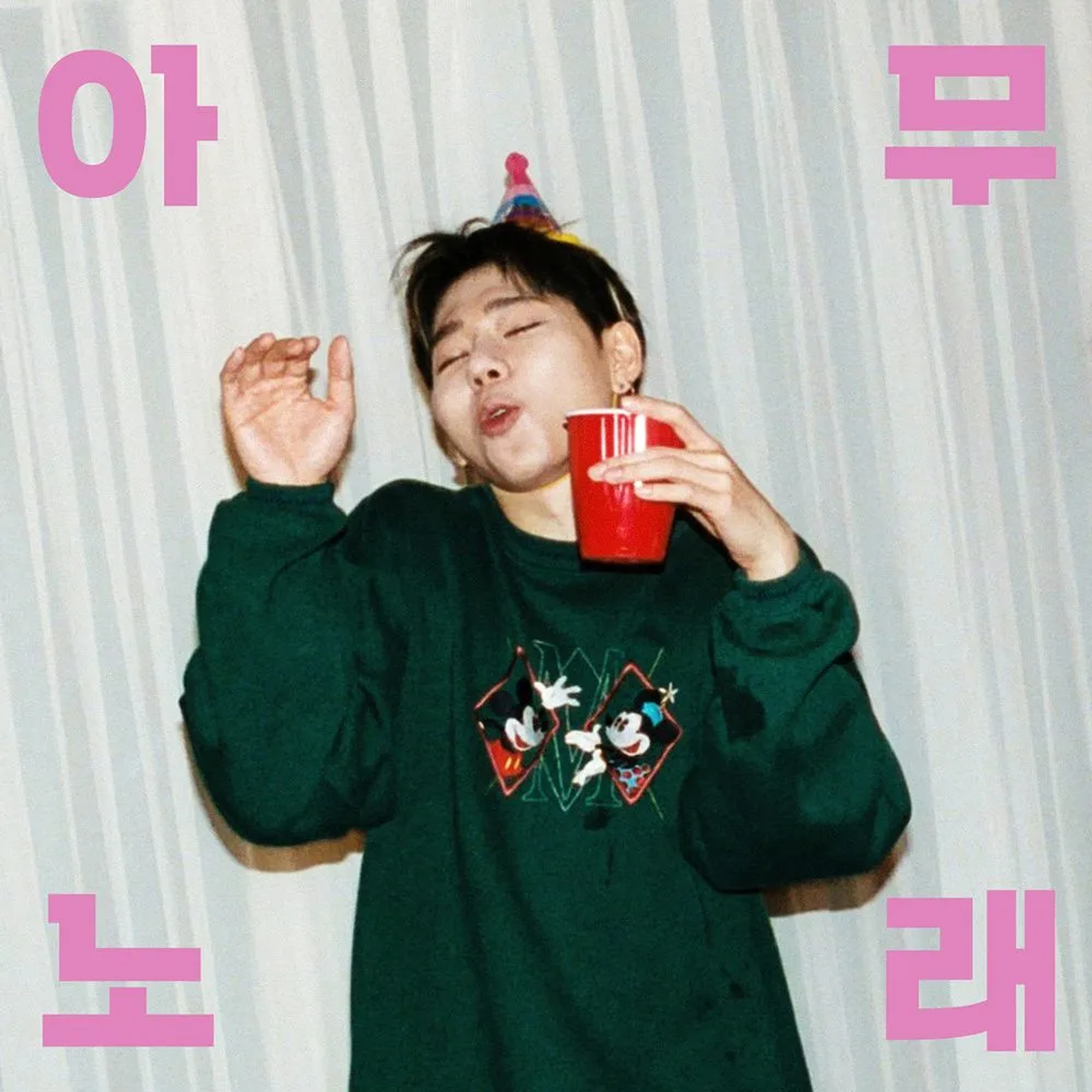
"It was originally made to create content we could enjoy with fans at an upcoming concert later that month." That was how a representative of KOZ Entertainment, Zico's management company, described the origins of "Any Song." There was no grand hit-making strategy — just a tune designed for a good time at a live show. Released on 13th January 2020, the song reshaped the Korean pop music landscape within weeks.
A light release after a heavy album
In 2019, Zico co-founded a management agency with his Block B bandmates and became its chief executive. That September and November, he released his debut full-length album *Thinking* in two parts — a serious, introspective work probing questions of identity and purpose. "Any Song" was a deliberate step back from that weight. Zico wrote, composed, and produced the track himself, layering raps and sung vocals over a dancehall rhythm. The lyrics wallow in the tedium and mild ennui of everyday life.
The music video strikes the same tone. Zico wanders through a party looking bored, waves away a birthday cake, and only cracks a smile when he slips away to run alone through the streets. One outlet read the scene as a portrait of a younger generation yearning to escape the pressures of social obligation.
Laying the groundwork in 15 seconds
TikTok did the heavy lifting. Zico posted a short dance clip, timed to a single verse of the song, alongside fellow K-pop artists Hwasa of Mamamoo and Chungha. Winner's Song Mino and veteran entertainer Lee Hyori followed. Television personalities Jang Sung-kyu and Ji Suk-jin, along with actress Park Shin-hye, joined in. Lee Hyori's clip drew exceptional attention online. Participants ranged from young children to teenagers and adults, and many chose to interpret the movement in their own way rather than replicate a fixed choreography precisely.
Earlier challenge campaigns by JYP Entertainment's Park Jin-young and singer HyunA had attempted something similar, but observers noted that "Any Song" succeeded where those efforts fell short: it was simply easier and more fun to imitate. By anchoring the challenge to a single short verse, Zico lowered the barrier to entry. Cultural critic Jung Duk-hyun argued that Zico had created a playground, and that celebrity participation then poured accelerant on the trend.
The response extended to China. On Douyin — the domestic Chinese version of TikTok — videos posted by pop stars Cai Xukun and Fan Chengcheng alone accumulated more than 23 million views.
The numbers climbed sharply. By 23rd January, some 100,000 posts had appeared on Douyin, tallying 106 million cumulative views. By 30th January, TikTok uploads had surpassed 1.3 million, with total views exceeding 400 million. By 11th February, reports put the figure above 700 million.
Number one without a single TV appearance
The song's commercial performance was equally striking. Within roughly two hours of release, "Any Song" topped every major domestic streaming chart simultaneously. On its eleventh day, it continued to hold the top spot across six platforms, including Melon, Genie, and Bugs. By its thirtieth day, it still led on Melon and FLO. Melon's real-time peak chart domination — colloquially called "jibungkick," or "roof kick," in Korean music industry parlance — stretched from 35 instances on day eleven to 51 on day thirty.
All of this occurred without Zico making a single appearance on any music broadcast programme — yet the song claimed first place on all three major terrestrial television music shows. On SBS's *Inkigayo*, it topped the chart for three consecutive weeks. In the United States, it reached fourth place on Billboard's World Digital Song Sales chart (dated 1st February), while American streaming figures doubled from 1.2 million in its first week to 2.4 million the following week. Billboard columnist Jeff Benjamin credited Zico with charting new territory through a shrewd challenge strategy. Critic Kim Heon-sik described the song's rise without any broadcast promotion as an unfamiliar and genuinely new phenomenon in Korean pop music.
An apology, four years later
The consequences of that success took years to arrive. In March 2024, on the web entertainment programme *Home Industry*, comedian Kwanghee remarked that idol artists were exhausted by the relentless demand for challenge content — and laid the blame squarely on Zico. Zico's response was candid: "I have nothing to say to that. I'm truly sorry." He then suggested that every management company and platform in South Korea should agree to pause challenges altogether for about a month. On the origins of the format, he reflected: "At some point, people stopped being satisfied with simply listening to music."
In brief
"Any Song" was engineered so that play could begin where the music ended. A lightweight track conceived as fan service for a concert tour quietly dismantled the established promotional model for the short-form era — and within four years, the very template it created had become an industry-wide burden heavy enough to warrant an apology from its inventor.