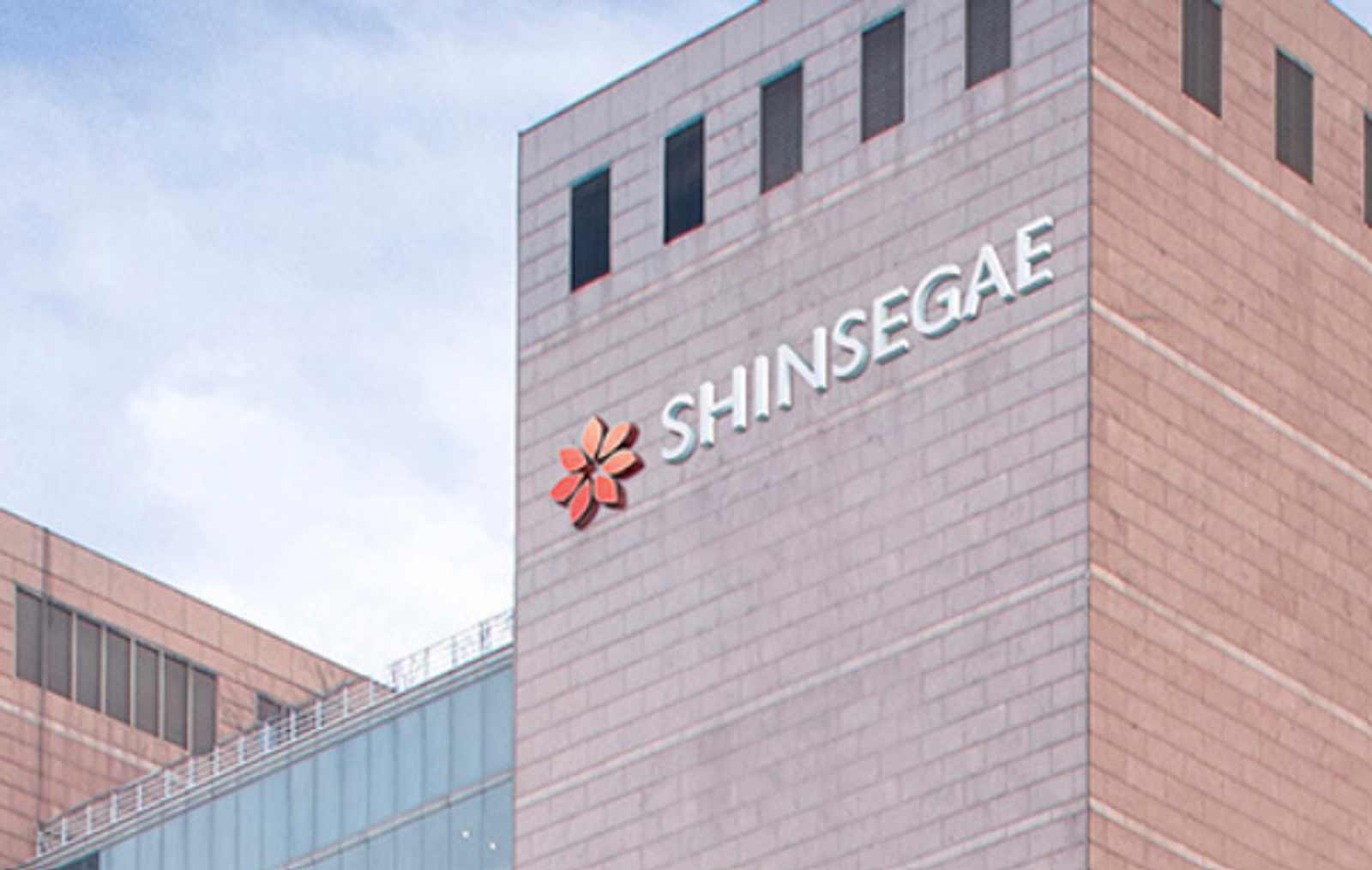
iM Securities initiated coverage of Shinsegae (KRX: 004170) on 8 September with a Buy recommendation and a target price of 680,000 won, implying 71.5% upside from the 7 September closing price of 396,500 won.
Forecasts: profits to surge
The brokerage projects Shinsegae's full-year 2026 revenue at 7.23tn won, up 4.4% year on year, with operating profit rising 71.3% to 822.1bn won. The operating margin is expected to widen sharply, from 6.9% to 11.4%. The department-store division is the engine of that growth: net department-store sales are forecast to climb 13.0% to 3.02tn won, with operating profit up 37.7% to 559.3bn won.
Myeongdong: Korea's tourist magnet
The centrepiece of iM Securities' investment case is Shinsegae's flagship store in Myeongdong, central Seoul. Monthly spending by foreign tourists visiting Korea averaged 2.1tn won in the second quarter of this year, a 59.6% jump from a year earlier. Tax-refund sales in Myeongdong totalled 326.5bn won in the first five months of 2025—more than the combined totals for the second-ranked Seongsu district (138.4bn won) and third-ranked Hongdae (130bn won). Myeongdong's district, Jung-gu, accounted for 38% of all tourist spending at large shopping malls nationwide in the second quarter.
Shinsegae completed a luxury refurbishment of its flagship in April. The main and annex buildings were reorganised into two distinct zones—"The Reserve," focused on luxury goods and accessories, and "The Estate," centred on fashion and dining. A dedicated luxury boutique hall, "The Heritage," was also added. The store now houses 13 boutiques from the so-called "big three" luxury houses—Hermès, Louis Vuitton and Chanel—the highest concentration in the country. Foreign-customer sales across Shinsegae's entire department-store network surged 149% year on year in the second quarter; in June alone, foreign shoppers accounted for 9% of total sales, a record high. iM Securities forecasts that foreign net sales at the flagship will rise 94.8% in full-year 2026.
Valuation: trading at a discount to Japan
To derive its target price, iM Securities applied a target price-to-earnings multiple of 14.1 times to a 12-month forward earnings-per-share estimate of 48,484 won. The multiple is benchmarked against the average forward PER of four major Japanese department-store operators—Isetan Mitsukoshi, Takashimaya, J. Front Retailing and H2O Retailing—since 2023. The logic is that the conditions now boosting Korean department stores—a weaker currency, a surge in foreign tourists and rising luxury consumption—closely mirror those that drove a re-rating of Japanese peers. Shinsegae's current 12-month forward PER of around 8.2 times represents a substantial discount to its Japanese counterparts.
Structural drivers: K-content and diversifying tourists
The inbound spending boom has structural underpinnings. The number of visitors to Korea in the first half of 2025 reached 10.71 million, up 21.0% year on year. The share of foreign tourists citing K-content—Korean television dramas, music and film—as their primary motivation for visiting rose from 32.1% in 2023 to 40.1% this year. The visitor base is also diversifying: China's share has fallen from 45.9% a decade ago to 29.3% today, while Japan (19.2%) and Taiwan (10.4%) have grown in importance. iM Securities forecasts inbound visitor numbers will rise 20.4% in 2026 and a further 14.0% in 2027—growth sufficient, it argues, to offset the drag from a projected modest strengthening of the won (–3.0% and –2.9% against the dollar in those two years, respectively).
The semiconductor bonus effect
A second growth driver is the spending power of South Korea's semiconductor workers. According to an issue note published on 31 July by the Bank of Korea, the combined pool of performance bonuses paid by SK Hynix and Samsung Electronics' semiconductor division amounts to some 62tn won in total; the immediately realisable after-tax portion is estimated at 21.9tn won—more than half of the roughly 40tn won in annual national department-store sales. The central bank found that consumer spending in areas with high concentrations of semiconductor employees ran up to 4 percentage points higher than elsewhere after bonus payments, with the uplift concentrated in big-ticket discretionary categories such as cars, electronics and department stores.
iM Securities identifies Shinsegae's South City branch in Suji, Yongin—close to both Samsung Electronics and SK Hynix campuses—as a key beneficiary of this bonus-fuelled demand. That the same satellite cities around Seoul's technology corridor have also posted some of the country's strongest residential property price gains this year—Hwaseong Dongtan up 17.3%, Yongin Suji up 13.9%, Seongnam Bundang up 12.8%—speaks to the wealth accumulating in these communities.
Risks
Several risks deserve attention. The weak won that has made Korea an attractive shopping destination could reverse; the brokerage's own assumptions already embed some won appreciation, to an average of 1,380 won per dollar in 2026 and 1,340 won in 2027. Shinsegae's duty-free business shrank following the operator's withdrawal from Incheon Airport's DF2 concession in April. Competition for foreign shoppers among Korea's big three department-store chains is also intensifying: The Hyundai Seoul recorded a 24% foreign-sales share in July, underscoring that Shinsegae's advantage in Myeongdong is not without challengers.
The investment case in brief
Shinsegae's shares have risen 133.4% in absolute terms over the past year but have retreated 39.0% in the past three months. Market capitalisation stands at 3.75tn won, with foreign investors holding 29.2% of the stock. The core of iM Securities' argument is straightforward: a company whose controlling-shareholder net profit was a mere 13.9bn won in 2025 is on track to earn 448.8bn won in 2026. If that forecast is realised, a forward PER in the low-to-mid single digits would be anomalously cheap by any international comparison—and the current valuation of around 8 times already looks undemanding.