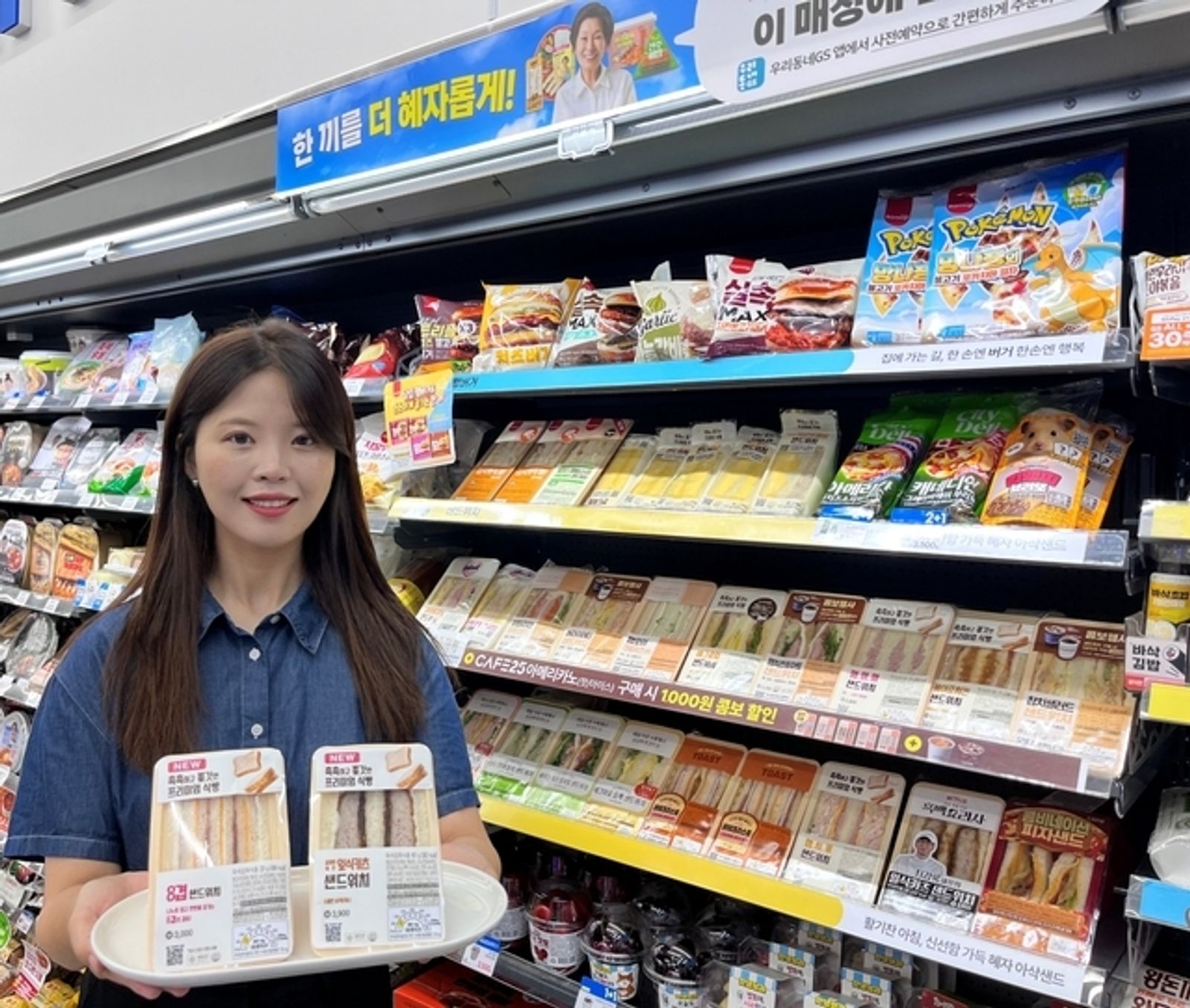
Past eleven o'clock on a weeknight, a GS25 outlet near Hongik University station in Seoul is packed to the walls. An American couple deliberates over triangular rice balls. A queue of Japanese tourists waits at the self-service instant-noodle counter. A Thai YouTuber films the refrigerated displays with a smartphone. None of them are at a five-star hotel restaurant or a celebrated local eatery. They are in an ordinary South Korean convenience store.
Korea's convenience stores are fast becoming essential stops on the tourist itinerary. Having evolved well beyond simple retail outlets into hubs for experiencing K-food, exploring popular culture, and producing social-media content, they now rank alongside Myeongdong and Gyeongbokgung Palace as genuine pieces of tourism infrastructure.
The numbers behind K-convenience-store tourism
According to the Korea Convenience Store Industry Association, South Korea had roughly 56,000 convenience stores as of 2024 — one of the highest ratios of outlets per 1,000 people in the world. Sheer density alone satisfies the most basic requirement of any tourism amenity: accessibility.
Foreign visitors' spending patterns confirm the trend. The Korea Tourism Organisation's 2023 survey of inbound tourists consistently placed convenience stores among the most-frequented shopping and dining venues during visits to the country. Among millennial and Generation Z travellers — who tend to explore independently rather than in package tours — stopping at a convenience store is now widely understood to be part of the itinerary itself.
"When we analyse foreign card-payment data, we find that in tourist-heavy areas, convenience stores where foreigners account for 30 to 40 per cent of total sales are not uncommon," said one retail-industry executive. "That is more than ten times the average for ordinary branches."
Three structural reasons why convenience stores win
Analysts point to three underlying factors that explain the phenomenon.
The first is the combination of value and experience. Staples such as triangle gimbap, cup noodles, and ready-to-eat tteokbokki (spicy rice cakes) typically sell for between 1,000 and 3,000 won (roughly 75 cents to $2.25), offering tourists a direct, affordable taste of K-food. Research by a team at Korea University's Department of Food and Resource Economics found that ready-made and processed foods topped the list of items purchased by foreign visitors at convenience stores, accounting for more than 60 per cent of all purchases.
The second factor is synergy with social media. Content tagged "Korean convenience store" on YouTube, TikTok, and Instagram has accumulated billions of views in aggregate. As influencers from the United States, Europe, and South-East Asia compete to produce mukbang-style videos — in which the presenter eats on camera — featuring Korean convenience-store fare, a pattern of "reverse tourism demand" has emerged: travellers plan their convenience-store visits before they ever board the plane. Tourism academics describe this as a textbook case of a "media-constructed destination image" translating directly into real-world visitor behaviour.
The third factor is round-the-clock operation and diminishing language barriers. Most Korean convenience stores are open 24 hours a day, and many have recently introduced signage in English, Chinese, and Japanese alongside multilingual self-service kiosks. For foreign visitors, the stores function as a "safe space for exploration" — somewhere to drop in at any hour without anxiety.
CU, GS25, and 7-Eleven shift into tourist mode
The industry is moving quickly to capitalise on the opportunity. BGF Retail, which operates the CU chain, has stationed dedicated foreign-language staff at outlets in tourist-heavy districts such as Myeongdong, Hongdae, and Itaewon, and has developed K-snack gift packages aimed squarely at international visitors. GS25 has expanded perks linked to the Korea Tourist Pass and has installed currency-exchange services and SIM-card counters in selected stores.
7-Eleven Korea is refurbishing outlets near key attractions such as Gyeongbokgung Palace and Namsan Mountain as "global flagship stores", extending their reach to include sales of hanbok (traditional costume) experience vouchers and sightseeing tickets. "Spending per visit at tourist-oriented stores runs about 1.5 to two times higher than at ordinary branches," said one industry executive. "Investment targeting this segment will keep rising."
How Korea differs from Japan and Taiwan
Japan and Taiwan — both celebrated as convenience-store nations — also leverage their stores as tourist assets, but Korea's offerings are widely regarded as distinctively compelling.
Japan's chains, such as Seven-Eleven Japan and FamilyMart, are renowned for quality and meticulous service, yet foreign visitors tend to perceive them as offering a relatively standardised experience with limited novelty for social-media purposes. Korean stores, by contrast, launch new products at a far faster pace and regularly release seasonal and trend-driven limited editions, creating a powerful incentive for repeat visits: there is always something new.
"Korean convenience stores have combined rapid product innovation with tie-in merchandise linked to K-pop, K-dramas, and other Hallyu content," said Wang Li, a professor of tourism at the City University of Hong Kong. "The result is that they have evolved from mere retail channels into spaces for cultural experience — a key source of sustainable competitive advantage as a tourist destination."
The downsides: overtourism and regional imbalance
The picture is not entirely rosy. As tourists concentrate in certain tourist-district stores, local residents are growing frustrated. In areas such as Hongdae and Myeongdong, late-night eating and drinking by foreign visitors outside convenience stores has generated noise and litter complaints. Resident grievances are mounting.
There is also a structural imbalance: the gulf in sales between stores in Seoul's prime tourist corridors and those elsewhere is widening. Some analysts warn that this could deepen a two-tier divide among franchise operators. "The more the benefits of convenience-store tourism concentrate in specific districts, the greater the sense of relative deprivation among franchisees who receive none of it," cautioned a researcher at the Small Business Institute.
Could convenience stores become official tourism infrastructure?
The Ministry of Culture, Sports and Tourism and the Korea Tourism Organisation are said to be exploring collaboration with the convenience-store industry, having recently taken notice of the sector's tourism potential. Discussions reportedly include targeted support policies for tourist-oriented stores, standardisation of exclusive membership benefits for foreign visitors, and mandatory multilingual services.
Experts argue that a formal policy shift is needed — one that recognises convenience stores not merely as retail outlets but as national tourism infrastructure. "The Korean convenience store is the only tourism resource in the country that simultaneously delivers accessibility, affordability, and cultural experience," said Park Jin-su, a researcher at the Korea Culture and Tourism Institute. "Cultivating it systematically could generate significant leverage for increasing inbound tourism spending."
Caught in the cultural gravitational field created by the Korean Wave, the convenience store is no longer simply the shop around the corner. For travellers from across the world, it has become a destination to dream about before the flight is even booked. One triangle gimbap, one cup of instant noodles: small experiences that are forming the new centrepiece of South Korea's tourism story.