Kiwoom Securities reaffirmed its "Buy" rating on SM Entertainment (KOSPI: 041510) on the 10th, maintaining a target price of 110,000 won — implying 45.5% upside from the closing price of 75,600 won on 7th August. The brokerage's conviction rests on a striking finding from SM's second-quarter results: fan communities built around veteran acts such as Super Junior and EXO, both with careers spanning more than two decades, are spending not merely on concert tickets but increasingly on merchandise and licensed goods.
Second-quarter results in line with expectations
SM Entertainment reported consolidated revenue of 349.6 billion won for the April-to-June quarter, up 15.4% year on year. Operating profit rose 11.0% to 52.9 billion won over the same period. On a sequential basis, revenue grew 25.3% and operating profit surged 36.9%, broadly meeting market consensus.
By business segment, merchandise and licensing revenue jumped 22.0% year on year to 77.9 billion won — the second-highest quarterly figure on record. The gains were driven by a pop-up event marking NCT's tenth anniversary and an expansion of album and concert tie-in events for aespa, RIIZE, and NCT WISH. Concert revenue rose 23.6% to 41.6 billion won, bolstered by a packed touring schedule: EXO performed 19 times, aespa and NCT WISH five times each, Super Junior three times, and TVXQ twice.
Recorded music revenue, however, declined 8.2% year on year to 90.9 billion won. Album sales for the quarter totalled 5.67 million units, slightly below the 6.03 million sold in the same period a year earlier. NCT WISH led with 1.91 million units, followed by RIIZE (1.40 million), aespa (1.06 million), and Hearts2Hearts (620,000). Newer artists cushioned the overall sales decline, but a higher proportion of revenue coming from live performances — which carry heavier costs — pushed the operating margin down 0.6 percentage points year on year to 15.1%.
Subsidiaries contributed evenly to growth. Combined revenue from SM's subsidiary companies reached 177.7 billion won, up 25.5% year on year, while operating profit climbed 61.2% to 13.0 billion won. Dream Maker's expanded domestic concert production and DearU's improved profitability following a shift to web-based payments were the main drivers.
The durability of veteran fandom
The most significant takeaway from these results is what they reveal about long-term fan behaviour. Conventional wisdom in the K-pop industry holds that an artist's commercial trajectory peaks within three to five years of debut, then gradually fades. SM Entertainment, which manages a larger roster of veteran acts than most rivals, appears to be defying that pattern.
Crucially, merchandise and licensing is a high-margin business with none of the venue and production costs associated with live performance. Sustained spending in this category by fans of legacy acts therefore translates directly into improved operating profitability — a structural advantage that distinguishes SM from its competitors.
Second-half caution
Near-term momentum, however, may soften. RIIZE and NCT WISH will focus their third-quarter activities primarily on Japan, while aespa's tour of Western markets is weighted towards building brand scale rather than maximising short-term returns. Western tours typically generate thinner margins than those in South Korea or Asia, owing to higher local operating costs and labour expenses. This explains why SM's full-year revenue forecast of 1.2813 trillion won — representing 9.1% growth — falls well short of the 18.7% expansion recorded in 2025.
2027 as the stronger horizon
A more compelling growth story may materialise in 2027, when an expanded concert cycle anchored by aespa, NCT WISH, and RIIZE is anticipated. Kiwoom Securities considers SM to have the clearest earnings visibility among the entertainment companies it covers for that year. The brokerage's 2027 operating profit forecast stands at 230.7 billion won, some 26% above its 2026 estimate of 182.9 billion won.
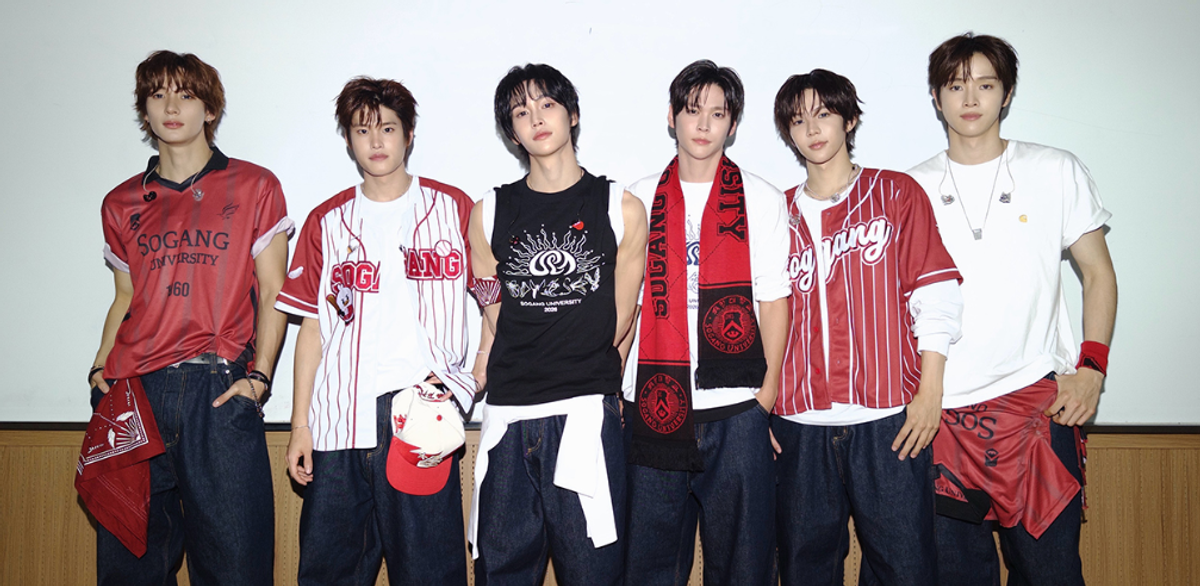
Attention is also turning to SMTR25, a new boy group expected to debut in the fourth quarter. The act has already begun cultivating a fanbase: its members appeared at SM Town's global tour as trainees, and participated in the variety programme *Eungdabhara High School*, produced in collaboration with Egg Is Coming. Looking further ahead, SM has outlined plans to debut localised groups in Thailand (2027), Japan (2027–28), and China (date unconfirmed), which are presented as medium-to-long-term growth catalysts.
Valuation
At the current price of 75,600 won, SM trades at roughly 12.6 times forecast 2026 earnings. Kiwoom Securities derived its 110,000 won target by applying an 18.3 times price-to-earnings multiple — the average forward P/E for the three years from 2023 to 2025. The stock currently sits 50.6% below its 52-week high of 153,000 won; the brokerage argues that fears of a weaker second half are already priced in.
Key variables to watch
Investors would do well to monitor several factors. Whether album sales can structurally recover, when aespa's Western tour begins generating meaningful profits, and how SMTR25 performs in its debut period will all have material bearing on fourth-quarter 2026 results and the credibility of 2027 forecasts. With foreign investors holding a 32.1% stake, the stock also remains sensitive to shifts in global risk appetite.