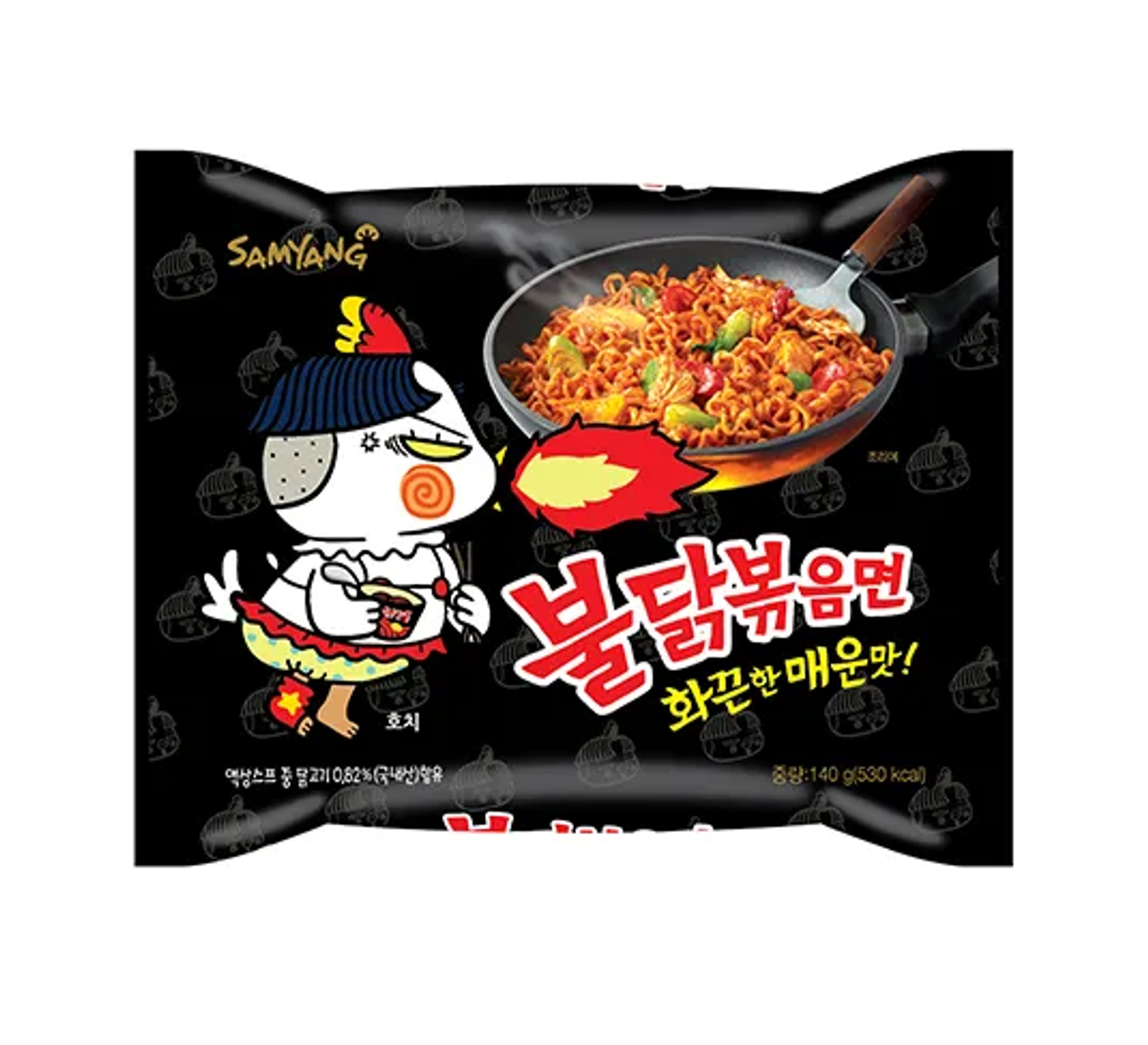
Samyang Foods is charging towards the most spectacular results in its history. Buoyed by surging overseas demand for its Buldak ("Fire Chicken") range of instant noodles, the company is within striking distance of an unprecedented milestone: annual revenues of 3 trillion won (roughly $2.2 billion). For a firm that spent decades as a perennial runner-up in South Korea's domestic noodle market, it amounts to a remarkable reversal of fortune.
Buldak's global march: more than a food fad
The international spread of Buldak noodles defies easy categorisation as a passing culinary trend. The "Fire Noodle Challenge," which swept across YouTube and TikTok, served as the initial spark. What followed was something more durable: a self-sustaining culture in which consumers around the world voluntarily film and share their own encounters with the product. Social media ceased to function merely as a marketing platform and became a distribution channel in its own right.
Overseas sales, which accounted for roughly half of Samyang's total revenues in the early 2020s, now exceed 70% of the group's turnover. Demand for the Buldak range is rising sharply not only across the United States, China and South-East Asia, but also in European and Middle Eastern markets. Listings at mass-market retailers—Costco and Walmart in America, Aldi in Germany—signal that the brand has moved well beyond the niche of ethnic grocery stores and into mainstream Western shopping baskets.
The "3 Trillion Club": significance beyond the numbers
Within South Korea's instant-noodle industry, annual revenues of 3 trillion won had previously been achieved by only one company: Nongshim, the maker of Shin Ramyun, which has dominated the domestic market for decades. Should Samyang breach that threshold, it would represent a seismic shift in the structure of the industry, not merely an improvement in quarterly results. Nongshim would suddenly face the dual challenge of defending its home-market share while scrambling to reinforce its international competitiveness.
Analysts at South Korean brokerages expect Samyang Foods to set new records for earnings in 2025, and talk of the 3-trillion-won mark being crossed by 2026 is increasingly treated as a realistic prospect rather than an aspiration. The company's operating margin has remained firmly in double digits, attesting to robust underlying profitability.
Structural strengths: a platform, not a one-hit wonder
The case for regarding Samyang's growth as more than a transient craze rests on the breadth of its product portfolio. What began with the original Buldak stir-fry noodle has since spawned a family of variants—carbonara Buldak, nuclear-hot Buldak, Buldak sauce as a standalone condiment—and has extended into snacks and beverages. Buldak has evolved from a single stock-keeping unit into a self-contained brand ecosystem.
The parallel with Orion's Choco Pie is instructive. That biscuit-and-marshmallow confection transcended its identity as a mere snack in China to become an icon of gift-giving culture. The key mechanism in both cases is the same: consumers are not simply buying a product; they are participating in a brand experience. That sense of belonging simultaneously commands a price premium and cultivates a loyal following.
Risks: questions about sustainability
The bull case is not without its caveats. Analysts who cover the food sector point to several structural vulnerabilities. First, the volatility of global consumer trends: brands that rise rapidly on the back of social media can fade just as quickly by the same route. Second, currency exposure: with exports accounting for the lion's share of revenues, fluctuations in the won-dollar exchange rate flow directly through to reported earnings. Third, intensifying local competition: having observed Samyang's success, noodle manufacturers in China and South-East Asia are piling into the "spicy" category, putting pressure on prices.
Samyang Foods appears conscious of these risks. Establishing local subsidiaries, diversifying its production base and ramping up research and development are among the countermeasures the company is said to be pursuing.
A roadmap from Japan: the Nissin precedent
Japan's Nissin Foods offers a useful reference point for Samyang's longer-term trajectory. The inventor of Cup Noodles grew from exporter to global producer by combining local manufacturing with careful brand localisation—moving well beyond simple shipments from its home market. Samyang, it is argued, is navigating a comparable transition: graduating from a first phase centred on exports to a second phase in which localisation and premiumisation run in parallel.
The cautionary tale, by contrast, comes from Thailand. MAMA noodles once commanded South-East Asian markets with something approaching total dominance, only to cede share to nimbler local rivals when the brand failed to renew itself. The implication for Samyang is clear: brand equity, left unrefreshed, is a depreciating asset.
Policy implications: industrialising K-food
Samyang's ascent carries implications that extend beyond a single company's profit-and-loss account. It holds up a mirror to the strategic potential of South Korea's food industry as a whole. The government has long cited growth in agricultural and food exports as a policy objective, but critics argue that practical support has been concentrated on smaller exporters, with little systematic linkage to the global branding strategies of larger companies.
The trajectory of K-pop content and K-beauty cosmetics suggests a template worth following. What K-food now requires is an industrial strategy that goes beyond raw export volumes and codifies the reasons why global consumers choose Korean food brands. Samyang's potential crossing of the 3-trillion-won threshold could, in that sense, serve as a benchmark for the entire Korean food industry.
Whether the spicy success formula that Buldak has pioneered proves enduring will ultimately depend on the company's capacity to renew its brand and adapt to shifting markets. Investors and competitors alike are already watching closely to see what Samyang does next.