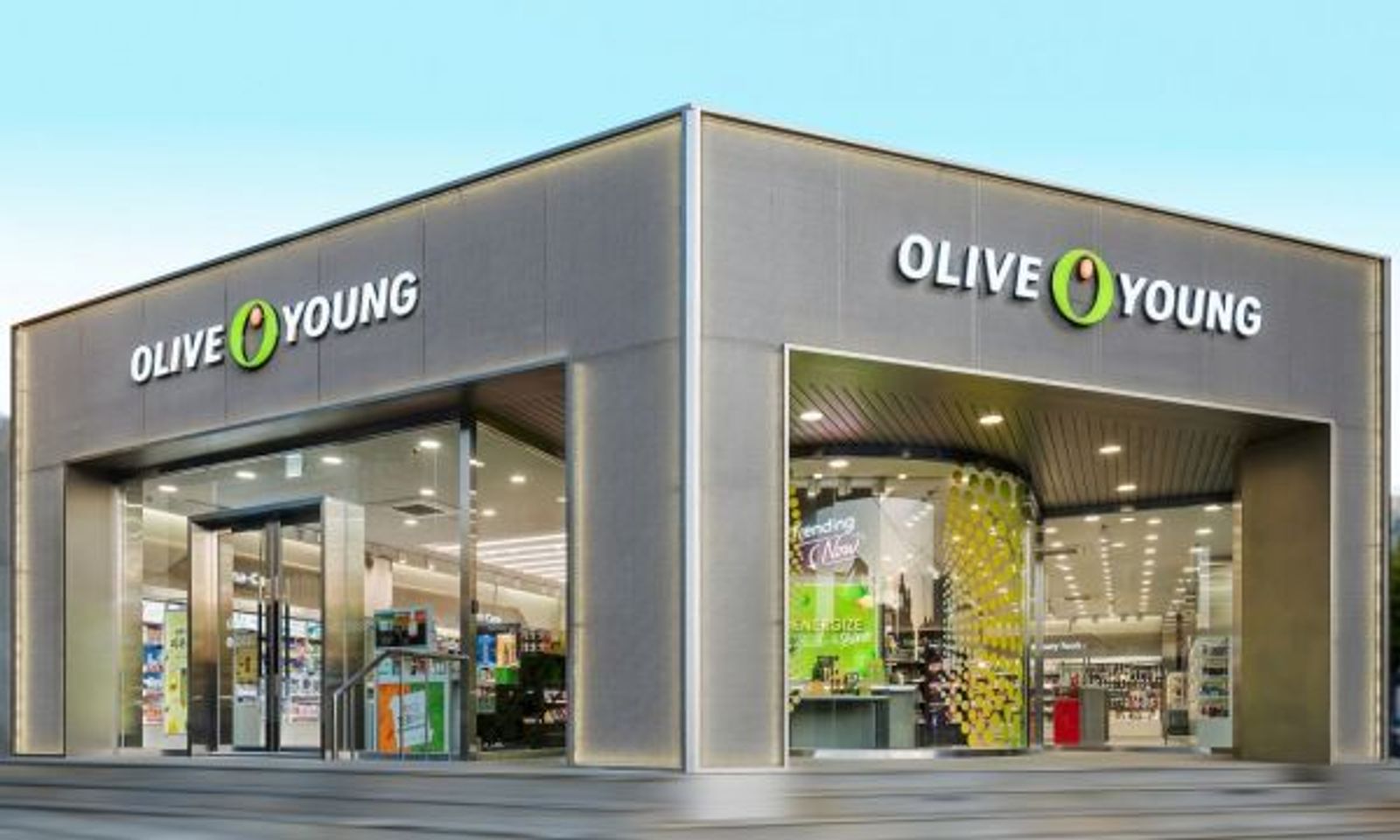
When foreign visitors to South Korea spent more than 1 trillion won (roughly $730m) at Olive Young — the country's dominant health-and-beauty retail chain — in a single year, it confirmed what many in the industry had suspected: one retailer had quietly rewritten the rules of tourist spending. More remarkable still, that spending was no longer confined to Seoul's Myeongdong shopping strip or the cafés of Hongdae. Olive Young's foreign-customer revenues are now rising briskly at branches in Gangneung and Sokcho on the east coast, and in the ancient city of Gyeongju in the south-east. K-beauty, turbo-charged by Korean pop culture, is reshaping not just what foreign tourists buy in Korea, but where they go.
The trillion-won milestone and what it means
Olive Young's 1 trillion won in foreign sales is more than a record; it signals a structural shift in how international visitors spend their money in South Korea. For years, the foreign-shopper circuit followed a well-worn path: duty-free stores at Incheon airport, then department stores in Myeongdong, then the wholesale fashion markets of Dongdaemun. Olive Young has broken that circuit by combining convenience, competitive pricing and sharp product curation.
A significant share of its foreign revenue now comes from repeat customers using Olive Young's app and loyalty programme. A clear behavioural pattern has emerged: tourists browse products on the app before they land in Korea, buy in store during their visit, and place additional orders online once home — a seamless "omni-channel beauty shopping" loop. An instant tax-refund service for foreign visitors, along with point-of-sale systems that operate in English, Chinese and Japanese, have further reduced the friction of purchasing.
From Seoul to the provinces
The geographic spread of Olive Young's foreign-customer base may be the most consequential development of all. Whereas international shoppers once clustered in Seoul's prime retail districts, branches in Gangwon province (Gangneung, Sokcho) and in the south-east (Gyeongju, Busan) are recording rapid growth in foreign sales. This mirrors a trend documented by the Korea Tourism Organisation: the proportion of inbound visitors travelling beyond Seoul has been rising steadily, and the two curves track each other closely.
In Gyeongju, traditional attractions — hanbok (Korean dress) experiences, the Bulguksa temple complex — are drawing younger foreign visitors, and Olive Young has become part of what tourists describe as an "everyday Korean experience". In Gangwon province, improved rail links to Seoul via the KTX and GTX networks have made day-trips and overnight stays more practical, and beauty shopping has slotted naturally into those itineraries. "Foreign visitors have started to see Olive Young not simply as a shop but as a space where they can experience Korean everyday life," said one tourism-industry executive.
Why K-beauty sells: price, ingredients and social media
Behind Olive Young's rise as the premier channel for foreign beauty spending lies the competitive strength of the products themselves. Mid-sized Korean brands stocked at Olive Young — among them d'Alba, Anua and Round Lab — have gone viral on TikTok and YouTube among consumers in Europe, America and South-East Asia, riding the "derma beauty" wave: skincare products grounded in dermatological science and positioned as affordable alternatives to prestige brands. Many of these labels have no presence in department stores; where they do, Olive Young is invariably cheaper.
The market-research firm Euromonitor notes that health-and-beauty specialist retailers are capturing a growing share of the Korean beauty market, a trend consistent with the global shift towards curated "edit" retail formats. The parallel with Japan's Matsumoto Kiyoshi or America's Sephora — both of which have become must-visit destinations for foreign tourists in their home markets — is instructive. But Olive Young goes further, developing its own private-label products and actively incubating smaller brands, giving it a proprietary depth that pure distributors lack.
Pressure on duty-free shops and department stores
Olive Young's ascent poses a direct challenge to duty-free retailers, which have long dominated foreign-visitor spending in Korea. That industry was already under strain — from post-pandemic discussions about adjusting duty-free allowances and from shifts in Chinese tourist spending patterns — before Olive Young began hoovering up beauty-category sales without offering any duty-free benefit at all, relying instead on its instant tax-refund service and everyday low prices. Industry observers have concluded that a new division of labour is hardening: duty-free shops are retreating towards alcohol, tobacco and luxury goods, while the beauty category is increasingly Olive Young's territory.
Concerns about market concentration have not been absent, however. South Korea's Fair Trade Commission has previously sanctioned Olive Young for unfair practices towards suppliers. Stockouts of popular products — driven by surging foreign demand — have irritated domestic shoppers. And smaller brands that depend heavily on Olive Young for distribution face a structural vulnerability: the more indispensable the chain becomes, the weaker their bargaining position.
International precedents
The Olive Young phenomenon has clear antecedents abroad. In Japan, drugstore chains such as Matsumoto Kiyoshi and Kokumin became essential stops on foreign tourists' itineraries from the mid-2010s onwards; the Japanese government reinforced the trend by streamlining duty-free procedures as part of a broader inbound-tourism strategy. Drugstore sales to foreign visitors subsequently grew into a material category within Japan's overall tourist-spending figures. Watson's in Thailand and Mannings in Hong Kong have played comparable roles in their respective markets.
What distinguishes Olive Young is its ambition to control the entire value chain: manufacturing ecosystem, distribution and digital platform. By identifying small brands and connecting them to global consumers, it functions not merely as a retailer but as the export gateway for the K-beauty industry as a whole.
The road ahead
One trillion won may prove to be a staging post rather than a destination. The figure was achieved while inbound visitor numbers remained below their pre-pandemic peak, which suggests the headroom for further growth is considerable. Should the Korea Tourism Organisation's push to disperse visitors across the regions align with Olive Young's own strategy of expanding its provincial store network, the knock-on benefits for smaller regional economies could be significant.
Several risks cloud the outlook, however. Currency volatility, uncertainty over the pace of recovery in Chinese tourist arrivals, and the growing willingness of global beauty platforms to distribute K-beauty products directly all represent potential headwinds. The most immediate operational challenge is managing the tension between foreign and domestic customers: as international shoppers crowd into stores and clear shelves, the experience for Korean regulars deteriorates. The deeper challenge is structural. For the 1 trillion won figure to represent genuine, broad-based success rather than a windfall concentrated in a single retail giant, the rewards of K-beauty's globalisation must flow through to the small manufacturers that create the products and the regional communities that are only now beginning to benefit.