Five years listed, not a penny in dividends: where is the original "double-listing phobia" case now?
LG Energy Solution set a record as South Korea's largest-ever IPO in January 2022. Since then it has paid no dividends whatsoever, while its parent, LG Chem, has begun returning cash to shareholders by selling down its stake in the battery-maker.
In a sentence: LG Energy Solution is the original case study in Korea's "double-listing phobia", and one of the companies furthest removed from the shareholder returns that the government's Value-Up programme demands. As the company struggles to restore profitability amid an electric-vehicle slowdown and American tariff shocks, there is a structural irony at work: it is LG Chem—the parent selling its stake—that is acting as the agent of shareholder returns, not the subsidiary itself.
Three things to know
LG Energy Solution has paid no dividend at any point since its January 2022 listing. It is among 17 companies in South Korea's top 100 by market capitalisation that have returned nothing to shareholders.
An EV demand slump and American tariff pressures mean that, by the first half of 2026, the company's operating profit depends almost entirely on North American production subsidies under the Inflation Reduction Act (IRA). Strip those subsidies out, and the operating margin in the third quarter of 2026 falls to just 3.7%.
In October 2026, LG Chem sold a 2.8-percentage-point stake in LG Energy Solution for 2.5 trillion won (roughly $1.8bn), reducing its holding from 79.38% to 76.59%. It earmarked roughly 400 billion won of the proceeds for share buybacks and cancellations and for a dividend to its own shareholders. The parent is thus returning cash by monetising its stake in the subsidiary—a paradox that encapsulates the group's dilemma.
Company overview
LG Energy Solution is South Korea's largest battery manufacturer, producing lithium-ion cells and packs for electric vehicles and energy-storage systems (ESS). It was carved out of LG Chem through a physical spin-off in 2020 and listed on the KOSPI in January 2022. The IPO price was 300,000 won per share, valuing the company at roughly 70 trillion won—the largest public offering in South Korean history.
LG Chem remains the controlling shareholder, holding 79.38% before the October 2026 stake sale. The company is headquartered in Yeongdeungpo, Seoul, and operates production facilities in South Korea (Ochang and Cheongju), the United States (Michigan, Ohio, Arizona and Georgia), Poland and China. Its customers include GM, Hyundai Motor, Stellantis and Honda.
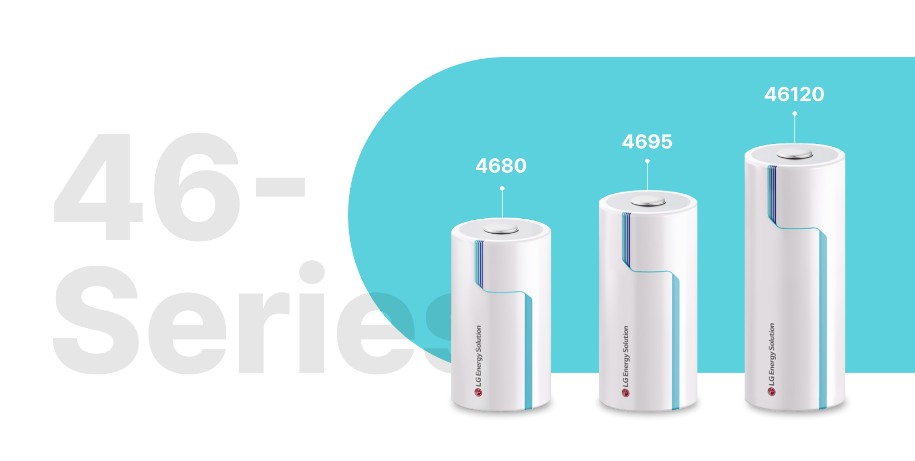
Its core products as of the third quarter of 2026 are EV batteries (small cylindrical, pouch and prismatic formats) and ESS batteries. ESS revenues have been growing rapidly and by the first half of 2026 accounted for a share approaching 30% of total sales.
Business fundamentals and financial performance
The EV slump, the profit collapse and subsidy dependence
LG Energy Solution bore the full brunt of a slowdown in EV demand between 2023 and 2025. Its share price reflected that pain. After listing at 300,000 won in January 2022 and briefly touching roughly 550,000 won in mid-2023, the stock slid throughout 2024 and 2025 as the EV slowdown deepened. By May 2025 it had fallen to between 260,000 and 280,000 won—below the IPO price for the first time since listing. The logic was blunt: no EV sales, no battery orders.
Earnings followed the same trajectory. Operating profit peaked at 2.16 trillion won in 2023, then collapsed to around 600 billion won in 2024. In the first quarter of 2026 the company slipped into an operating loss of 207.8 billion won. As EV sales growth stalled, order volumes shrank, factory utilisation fell and fixed costs became an ever-heavier burden.
The profit lifeline in this environment has been the American IRA's advanced manufacturing production credit—the so-called 45X tax credit, commonly referred to as the AMPC. In the second quarter of 2026, LG Energy Solution reported operating profit of 113.3 billion won, but received 241 billion won in AMPC credits. Without those credits, it would have recorded an operating loss of around 127.7 billion won. By the third quarter, a recovery in ESS demand and improved EV volumes pushed operating profit back up to 756 billion won—yet stripped of subsidies, the operating margin was still only 3.7%.
American tariffs have added a further complication. Duties on battery cells and modules exported from South Korea to the United States have made the company's American factories strategically more valuable. But building and expanding those factories requires enormous capital expenditure, which delays the point at which improving profits translate into positive free cash flow (FCF).
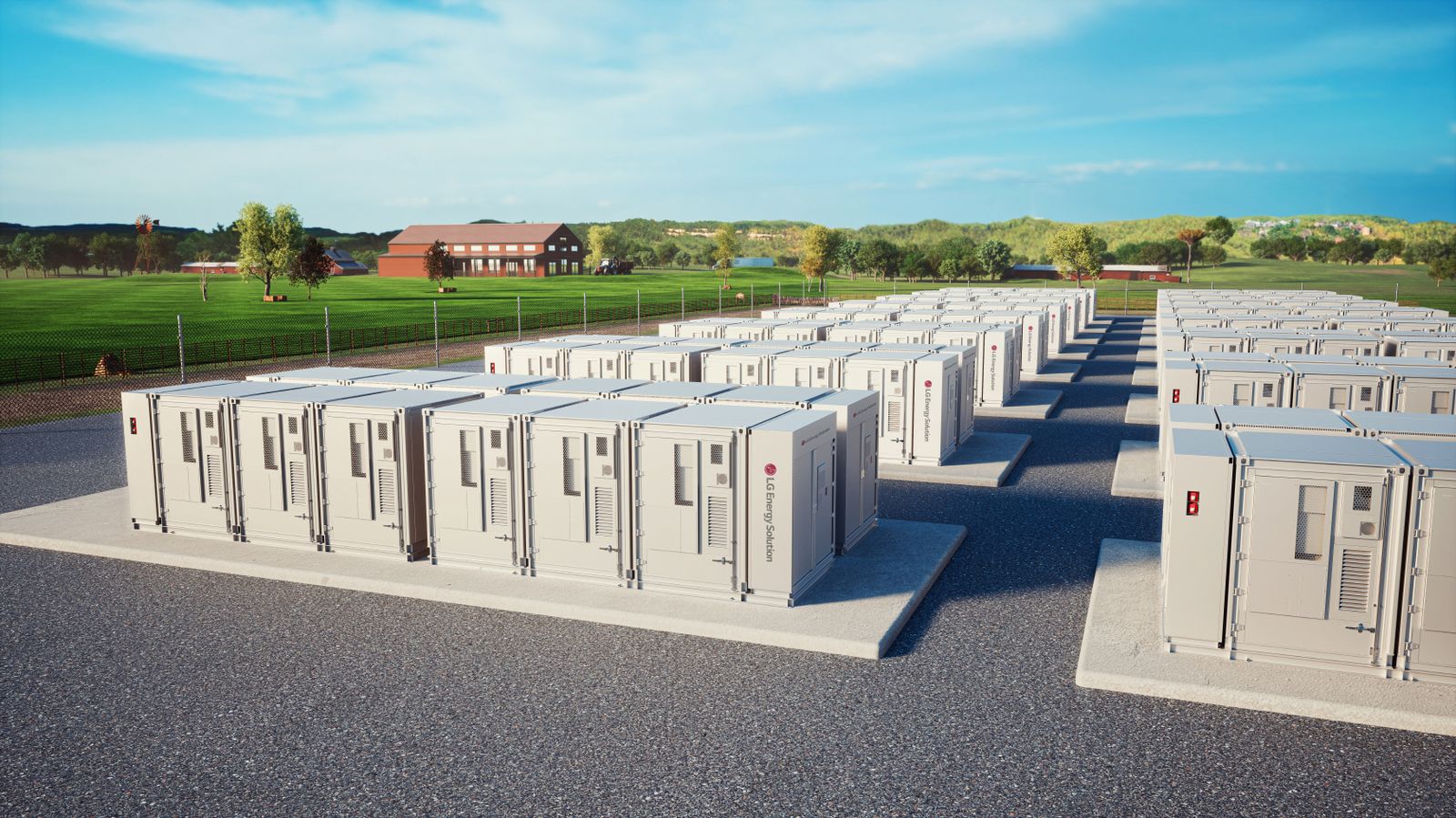
ESS: filling the gap left by EVs
What lifted the share price out of its 2025–26 trough was not a recovery in EV demand but surging orders for energy-storage systems. As artificial intelligence data centres proliferated and power-grid bottlenecks intensified in 2026, demand for large-scale ESS installations took off. Big-tech companies, including Oracle, sharply increased investment in their own power infrastructure; LG Energy Solution secured more than 3 trillion won in new ESS orders in the first half of 2026 alone. Orders from energy companies, including BMW's energy arm and DTE Energy, added further momentum, prompting some analysts to describe the pipeline as a "12 trillion won jackpot".
The share price moved first. After falling back to around 290,000 won in late July 2026, it jumped 41% in roughly two months to around 410,000 won, driven by ESS order momentum and a record quarterly revenue figure in the third quarter. EV sales data had not materially improved, but the market embraced the narrative that ESS could offset the EV slowdown.
The company set itself the goal of turning a profit in its ESS business in the fourth quarter of 2026 without relying on IRA subsidies. If its five North American factories stabilise operations and ESS volumes in the second half of the year exceed those of the first half by more than double, that would represent the first genuine evidence of underlying profitability independent of government support—and, some analysts argue, would justify a rerating of the stock.
ESS carries structural advantages over EVs: it is more profitable and demand is less volatile. The challenge is that Chinese battery-makers—CATL and BYD above all—are intensifying price competition in both markets, making it harder to defend margins over the medium term.
Financial summary
| Metric | 2022 | 2023 | 2024 | 2025 | 2026 (Q1–Q3) |
|---|---|---|---|---|---|
| Revenue (trn won) | 19.4 | 33.7 | 31.8 | ~24.4 | 23.8 |
| Operating profit (trn won) | 0.8 | 2.2 | 0.6 | ~1.5 | 0.66 |
| Operating margin | 4.0% | 6.5% | 1.8% | ~6.2% | 2.8% |
| Dividend | None | None | None | None | None |
*Based on third-quarter 2026 preliminary results. Operating margin excluding subsidies in Q3 2026: 3.7%. Annual figures based on company disclosures and broker estimates.*
Value-Up: key issues
LG Energy Solution: conspicuously absent from Value-Up
LG Energy Solution has in practice not participated in the South Korean government's Value-Up programme, which encourages listed companies to improve shareholder returns and narrow the valuation gap between South Korean stocks and international peers. An August 2025 analysis by CEO Score Daily found it among 17 companies in the top 100 by market capitalisation that have returned nothing to shareholders.
The company's position has been consistent: "Given the nature of the battery industry, large up-front investment is unavoidable. We will consider shareholder returns once stable free cash flow is established." The arithmetic reinforces the point. A dividend of even 1,000 won per share would cost roughly 234 billion won a year—a significant sum when the company is spending trillions annually on capital investment. Most observers expect any dividend to be deferred beyond 2027.
LG Chem: returning cash by selling the crown jewel
It is LG Chem, the parent, that is acting as the effective agent of shareholder returns. Early in 2026 it announced a plan to reduce its stake in LG Energy Solution to roughly 70% over five years. On 28th October 2026 its board approved the sale of approximately 6.53 million LG Energy Solution shares—a 2.8-percentage-point stake—for 2.5 trillion won, at 382,500 won per share (the previous day's closing price).
Around 400 billion won, or approximately 20% of the proceeds, was earmarked for shareholder returns: a 300 billion won buyback-and-cancellation programme (to be executed between December 2026 and May 2027) and a year-end cash dividend. The move is partly an attempt to close LG Chem's "parent discount"—a structural anomaly in which the market capitalisation of LG Chem itself (roughly 20.5 trillion won) is only about one-quarter of the market value of its LG Energy Solution stake (roughly 83 trillion won).
Contested questions and structural limits
The original "double-listing phobia" case: LG Chem started the fire and must now put it out
The January 2022 listing of LG Energy Solution was the event that brought South Korea's "double-listing phobia" into the mainstream. The concept—that when a subsidiary is separately listed after being spun off from its parent, the parent's existing shareholders are left behind—gained wide currency for the first time. In the year surrounding the listing, LG Chem's share price collapsed from around 700,000 won to around 200,000 won. The accusation was pointed: a prized asset had been hived off and listed while parent shareholders were ignored.
Four years later, LG Chem is trying to answer that criticism by selling its stake and distributing the proceeds. Whether this constitutes a genuine solution or simply another form of dilution depends on one's vantage point. Since the LG Energy Solution stake is LG Chem's most valuable asset, any reduction in that holding also diminishes the parent's exposure to future growth.
The issue resonates beyond this one company. When SK Hynix's planned IPO of its subsidiary Solidigm was deferred in October 2026 partly because of double-listing concerns, it demonstrated how thoroughly the LG Energy Solution precedent has shaped market behaviour: the assumption that double-listing disadvantages parent shareholders now exerts pre-emptive downward pressure on parent share prices whenever a similar transaction is contemplated.
No subsidies, no profit: the vulnerability of IRA dependence
The most glaring feature of LG Energy Solution's earnings is its reliance on American production subsidies. In the second quarter of 2026 the company would have recorded an operating loss had it not received 241 billion won in IRA tax credits. Even in the stronger third quarter, the underlying operating margin excluding those credits was only 3.7%.
The political risk is real. The IRA's EV-related provisions are vulnerable to changes in American policy, whether through executive action or congressional legislation. Under the Trump administration, discussions about amending or scaling back the IRA have continued without resolution. If subsidies were reduced or eliminated, the company's current profit structure would be fundamentally undermined.
The capital-expenditure dilemma: invest and you have no cash; hold back and you lose the race
There is a deeper reason why Value-Up is structurally difficult for a company like LG Energy Solution. Its business model requires building factories in advance of—and in proportion to—the orders it wins from carmakers. Rising orders mean rising capital spending. Even when profits improve, cash is consumed by construction, and free cash flow remains stubbornly negative. The company's repeated pledge to "consider shareholder returns once stable FCF is established" is an honest description of this constraint rather than a deflection.
The alternative—cutting capital expenditure—risks falling behind CATL, BYD and other Chinese rivals on cost and technology. It is a genuine dilemma with no easy exit.
Assessment
LG Energy Solution illustrates a blind spot in South Korea's Value-Up framework. The government's programme encourages shareholder returns, but that standard is difficult to apply to companies in capital-intensive industries where heavy investment is a competitive necessity. The realistic starting point for any genuine Value-Up at LG Energy Solution is the moment when the EV market recovers, the American manufacturing base stabilises and free cash flow turns meaningfully positive—a point that most analysts now place no earlier than 2027 or 2028.
LG Chem's stake sales are filling that gap from the outside. But as long as the subsidiary itself does not return value directly to its own shareholders, the arrangement falls short of a complete answer.
What to watch
The fate of IRA subsidies. Changes in American policy remain the single most important external variable for LG Energy Solution's underlying profitability. Any reduction in the 45X production credit would materially alter the earnings picture.
When free cash flow turns positive. If, as current projections suggest, ongoing American factory investments wind down in 2027–28 and FCF turns positive, the debate about a first dividend will begin in earnest.
LG Chem's stake-sale timetable. The parent plans to reduce its holding to around 70% over five years. The timing and scale of further disposals will directly affect LG Energy Solution's share price and the volume of cash that LG Chem can return to its own shareholders.
Legislative action on double-listings. Accumulated precedents—LG Energy Solution, the Solidigm controversy—have put the regulation of double-listings on the parliamentary agenda. The direction of any legislation would have wide implications for the capital strategies of large South Korean conglomerates with separately listed subsidiaries in batteries, semiconductors and beyond.
Key statistics at a glance
| Metric | 2022 | 2023 | 2024 | 2025 | 2026 (Q1–Q3) |
|---|---|---|---|---|---|
| Revenue (trn won) | 19.4 | 33.7 | 31.8 | ~24.4 | 23.8 |
| Operating profit (trn won) | 0.8 | 2.2 | 0.6 | ~1.5 | 0.66 |
| Operating margin | 4.0% | 6.5% | 1.8% | ~6.2% | 2.8% |
| Dividend | None | None | None | None | None |
| LG Chem stake | 81.8% | 81.8% | 81.8% | ~79.4% | 76.6% (post Oct. sale) |
| Share price (won) | IPO: 300,000 | ~550,000 (peak) | ~370,000 | 260,000–280,000 (May trough) | 290,000 (Jul. trough) → 410,000 (Oct.) |