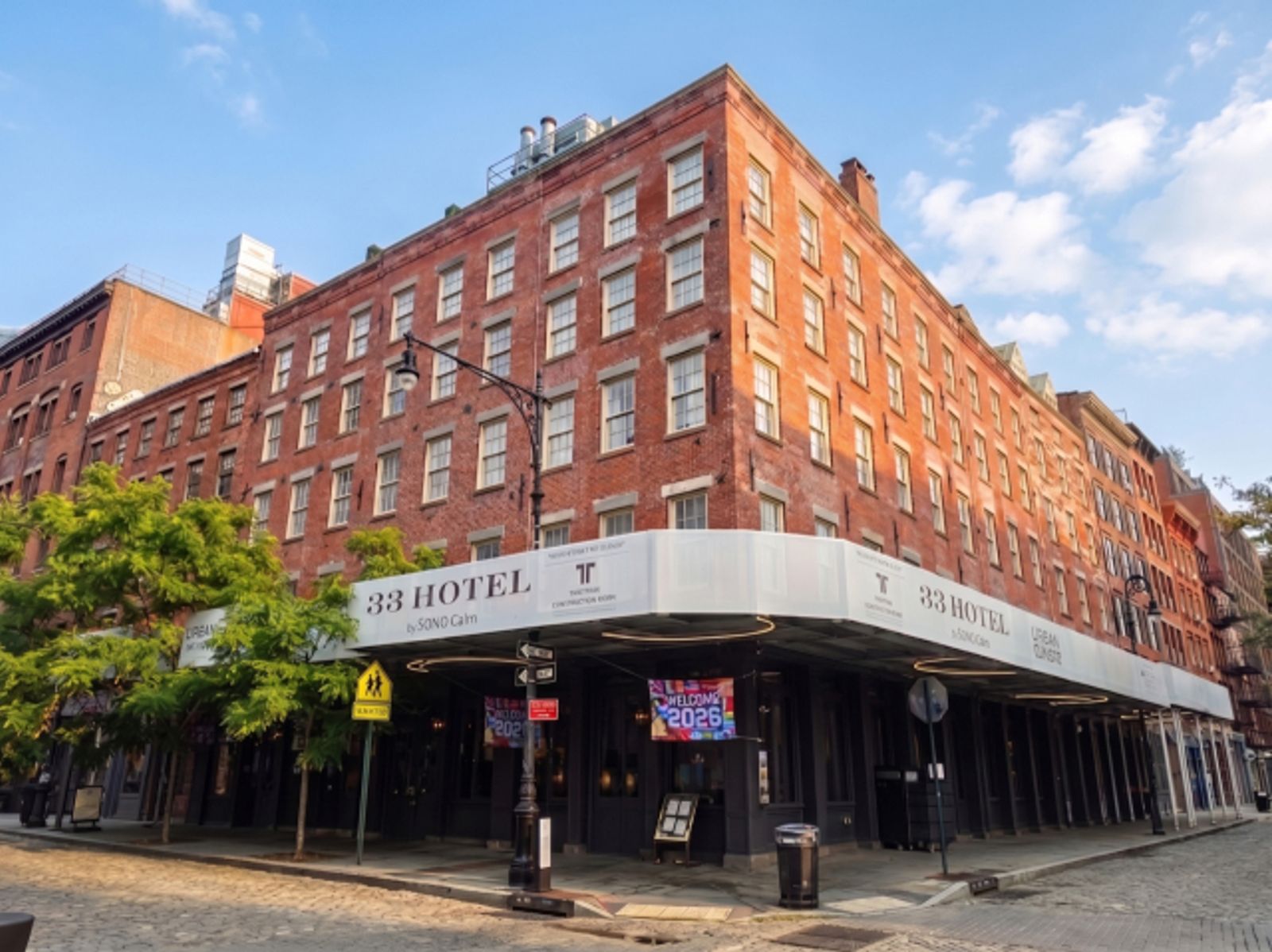
Sono International, a South Korean resort and hotel conglomerate, has struck a partnership with Hotel 33 in New York City, offering what its backers hope will be a new template for exporting Korean culture as a commercial enterprise. The venture — which plans to fuse BTS-related archives and merchandise with interior design and cultural programmes inspired by *arirang*, a traditional Korean folk song — is more than a branding exercise. It marks a strategic inflection point for South Korea's tourism and hospitality industry, one that seeks to take the Korean Wave abroad rather than simply riding it at home.
Why now?
The economic logic is straightforward, even if the execution is not. According to the Korea Tourism Organisation, the spending generated by foreign visitors attracted to South Korea by K-pop and other Korean Wave content amounted to roughly 25 trillion won (approximately $19 billion) in 2023. Yet almost all of that value was captured domestically. Sono International's New York venture is an attempt to reverse the flow: instead of waiting for K-culture fans to book flights to Seoul, a Korean company is taking the experience to them.
Hotel 33, a boutique hotel in Midtown Manhattan, occupies a location well suited to attracting young international travellers and K-pop fans. Sono International reportedly plans to install BTS-related archives and merchandise displays alongside *arirang*-themed interiors and cultural experience programmes. The strategy has two distinct targets: the global K-pop fandom and admirers of traditional Korean heritage, with BTS serving as the gateway to the latter.
A proven formula elsewhere
The marriage of cultural intellectual property and hospitality is well-established globally. Nintendo has linked its "Mario" franchise to hotels near Universal Studios Japan in Osaka, drawing millions of visitors annually. In Britain, hotels near the Warner Bros. Studio Tour outside London — which trades on the Harry Potter franchise — have successfully priced premium packages at 40–60% above comparable local rates.
BTS offers a comparable asset. The group's fanbase, known as ARMY, numbers in the tens of millions worldwide, and their spending loyalty is well above the consumer norm. According to analysis by Hana Financial Management Research Institute, the average ARMY member spends between 1.6 million and 2 million won (roughly $1,200–$1,500) per year on related merchandise and experiences. Connecting that enthusiasm to a premium hospitality product could meaningfully lift room yields.
**The strategic logic of *arirang***
The more intriguing element of the partnership is its pairing of BTS — a thoroughly contemporary cultural phenomenon — with *arirang*, a folk melody recognised by UNESCO as an Intangible Cultural Heritage of Humanity. *Arirang* is a cornerstone of Korean national identity, but it is largely unfamiliar to younger overseas consumers. If Sono International has designed the experience so that K-pop serves as the entry point and traditional culture as the destination, it is effectively enacting a national branding strategy: converting fans into deeper students of Korean heritage.
South Korea's Ministry of Culture, Sports and Tourism has articulated precisely this ambition in its recently published "Korean Wave 3.0" strategy, which designates "deep culture tourism" — linking popular K-culture to traditional Korean heritage — as a central policy objective. Sono International's venture can be read as a private-sector anticipation of that agenda.
Grounds for caution
Industry observers are divided. Hotel management specialists note that Midtown Manhattan is among the world's most fiercely competitive lodging markets. K-culture theming may differentiate the property, but heavy-handed execution risks alienating mainstream guests who have no particular interest in Korean pop music.
Korean Wave marketing researchers counter that New York's symbolic weight justifies the risk. A credible foothold there — where global media and cultural trends converge — could serve as the launchpad for subsequent moves into Los Angeles, London and Paris. Sono International is said to be pursuing broader overseas expansion as a medium-to-long-term priority, with this partnership as the opening move.
Consumer sentiment, too, is mixed. Some BTS fans are already treating Hotel 33 as a potential pilgrimage destination. Others, more sceptical of the commercial packaging of K-culture, are less enthusiastic. Should the terms of any IP licensing arrangement — including revenue-sharing and the formal scope of permission to use BTS-related material — remain opaque, the risk of a backlash within fan communities cannot be dismissed.
The bigger picture
The partnership illustrates a broader shift in how South Korean hotel companies are approaching international expansion: away from capital-heavy direct investment and towards content-led collaboration with local partners. This asset-light model — exporting a branded experience without owning the underlying property — reduces upfront risk while allowing rapid market validation.
The Korea Culture and Tourism Institute projects that the overseas hospitality market linked to K-culture content will grow at an average annual rate of more than 12% through to 2030. If Sono International's New York experiment succeeds, it will offer a replicable blueprint for the wider South Korean hotel and resort industry. The question is whether the soft power that K-culture has accumulated over two decades can now be converted into durable commercial infrastructure abroad. The answer may lie behind the doors of a boutique hotel on a Midtown Manhattan side street.