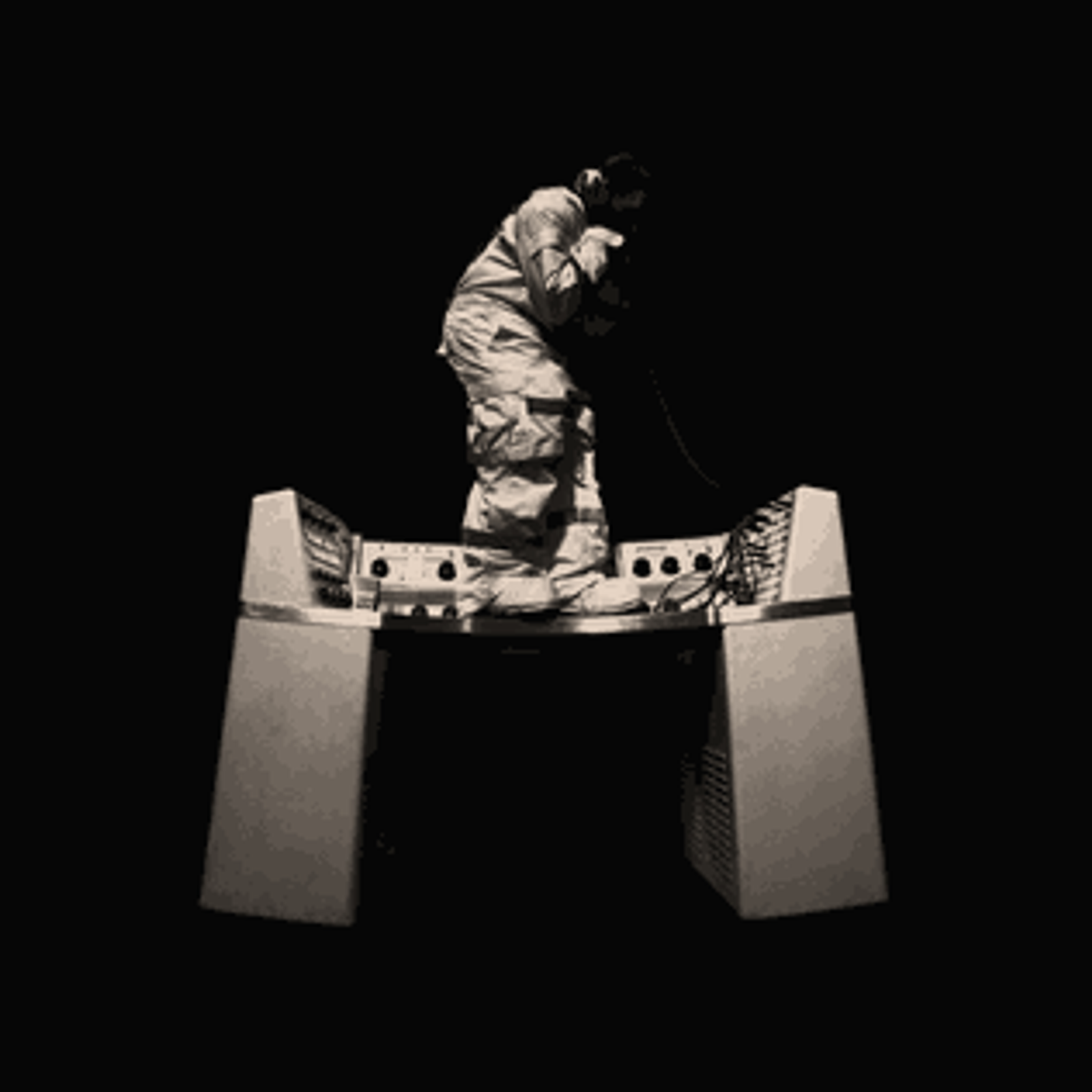
**Don Toliver — *OCTANE* (2026, Donnway & Co / Cactus Jack / Atlantic)**
Since singing rap cemented itself as the dominant sound in mainstream hip-hop, the genre has splintered and recombined in every direction — rage, hyperpop, digicore — spawning new subgenres at a relentless pace. Don Toliver has refused to follow any of them. Instead, he has spent his career sharpening what he already does well. Releasing albums on a steady one-to-two-year cycle since 2020, he arrives with *OCTANE* and makes the case, convincingly, that he remains one of the most complete artists working in the scene today.
*OCTANE* has no singular message. And yet all 18 tracks, played straight through in sequence, feel entirely natural together — as though you were watching a headline set at a sold-out concert. Toliver's presence acts as the glue, binding trap, R&B, and Afropop into something coherent rather than merely eclectic.
The lights come on immediately. "E85" is the moment the stage opens before an audience that has been waiting for over an hour. A guitar theme that feels like a motorway sprint, reversed drums that lock perfectly into place, and Toliver's own voice chopped into staccato samples — it is a near-ideal warm-up sequence. "Body" then turns up the heat at once. Sampling Justin Timberlake and weaving the word "body" through his rhyme schemes, Toliver demonstrates exactly why he always carried himself with confidence when labelled simply a "rapper." Between 808s, synth bass, and fractured hi-hats, he misses nothing.
The guest appearances arrive at precisely the right moments. "Rendezvous" opens with Yeat's voice — a shrewdly chosen persona to front a hymn to excess and desire, a piece of sequencing that feels almost eerily clever. On "Secondhand," he extracts the essence of Afropop alongside Rema. He knows when to invite a guest in, and he never surrenders the stage.
Then the microphone is his alone again. "Tiramisu" balances nineties-style synths against modern drums, with Toliver sliding between falsetto and full voice. Built on a foundation laid by Cardo and Polo Boy Shawty, it stands as one of the album's finest moments — and Toliver's alone. "ATM" offers the opposite texture: a simple, ringtone-like melodic theme, an irresistibly hooky chorus, a sound that manages to feel both euphoric and tender. It is a track Toliver co-produced himself alongside Honorable C.N.O.T.E. That these two pre-release singles appear back-to-back on the album and still generate no fatigue speaks to something meaningful. This is a different beast from records that simply stack bangers and call it a tracklist.
"Long Way to Calabasas" then lets the atmosphere drop, before Travis Scott arrives on "Rosary" — so seamlessly that you almost miss the join. It carries the old-school pleasure of trading bars, transplanted into modern R&B trap: familiar and fresh at the same time. On "All The Signs," longtime collaborator Teezo Touchdown flips a mellow, lyrical stretch on its head with sustained notes and elegiac chords. He preserves the emotion while lifting the rhythm — and this is where Toliver's instincts as a producer reveal themselves most clearly. "Call Back" and "Tuition" return to solo territory. Here, even the simplest melodic idea becomes more than enough: the 808 hits harder, the hi-hats seem to dance on their own. Melancholic, stretching, or turned-up — when Toliver sings it, it becomes his.
The album's second half does revisit familiar patterns. But the sense of repetition feels less like fatigue than an encore — the kind an audience demands rather than endures. The arrangement, mixing, and finish are all beyond reproach, and the record gives listeners who do not want it to end precisely as much time as they need. Through "Pleasure's Mine" and "Sweet Home," the album closes. The performance over "Sweet Home"'s nostalgic synths is a graceful exit: an artist taking his final bow and signalling, without words, that there will be a next time.
Since *HARDSTONE PSYCHO*, Toliver has brought his album artwork, beat selection, and sound engineering into a single, unified aesthetic. *OCTANE* advances that project another step. The sensibility of a craftsman assembling genres as if in a laboratory, the iconic monochrome artwork, and the command that holds it all together — even the detail that parts of the record were made at the Mount Wilson Observatory feels, somehow, like a natural extension of the vision. Nothing here jars.
When the lights go out, the audience does not move. *OCTANE* is not merely an album. It is a stage Toliver has built for himself.
Rating: ★★★★☆ (4.0/5.0)
In a sentence: "You do not need to invent a genre to stand above them all — this is a polymath in full bloom."