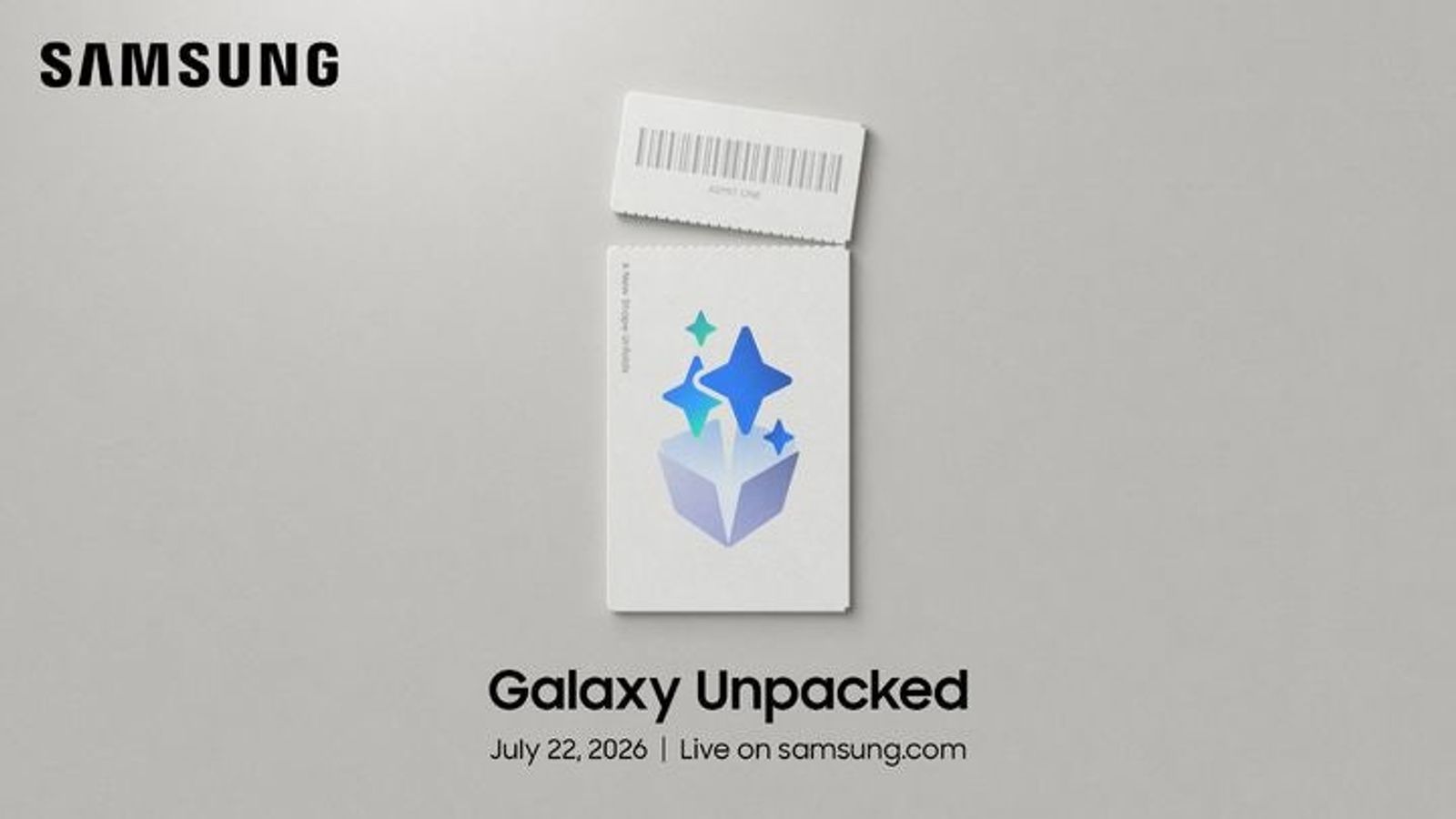
Samsung has once again raised the ceiling on premium smartphone pricing, setting the starting price of its next-generation Galaxy Z Fold 8 Ultra at $2,099—equivalent to roughly 3 million Korean won. Should domestic pricing in South Korea follow suit, exchange rates and taxes could push the actual cost even higher. The prospect of a single smartphone carrying a price tag in that bracket has intensified debate over whether such figures represent a fair reward for technological progress or an industry indulging in gratuitous premiumisation.
A brief but steep history of foldable price inflation
The foldable phone's pricing trajectory is short but sharply upward. When Samsung launched the original Galaxy Z Fold in 2019, it was priced at around $1,980. Successive generations—the Fold 2, 3, and 4—appeared to stabilise near $1,799, before the Fold 5 resumed the upward trend. The Fold 8 Ultra takes a more deliberate approach, establishing an entirely new "Ultra" tier that sits several hundred dollars above the standard Fold line. The strategy echoes Apple's playbook with the iPhone Pro Max: carve out a premium sub-brand, then extract maximum margin from it.
According to IDC, global foldable smartphone shipments grew from roughly 15.9 million units in 2023 to an estimated 30 million in 2025. The growth is real, but foldables still account for only 2–3% of the total smartphone market. The category remains, by any measure, a niche product for the few.
Why Samsung created an Ultra tier
Samsung's decision to introduce an Ultra grade for the Fold 8 reflects several layers of business logic. First, there is the straightforward matter of cost. Foldable displays are widely understood within the industry to cost two to three times as much to manufacture as conventional flat OLED panels. Add the hinge mechanism, reinforced materials, and the engineering required to maintain a slim form factor, and the cost burden becomes substantial.
But this is also a positioning exercise. By differentiating clearly from rivals such as Apple's iPhone Pro Max and Google's Pixel Fold, Samsung is attempting to cement a "premium of premiums" brand identity. The Galaxy S Ultra line offers a useful precedent: according to Samsung's own investor relations materials, the Galaxy S24 Ultra achieved the highest revenue contribution within the flagship lineup shortly after launch.
A market divided: "worth every penny" versus "utterly unjustifiable"
Consumer opinion is sharply polarised. Early adopters and technology enthusiasts argue that a foldable device effectively replaces both a smartphone and a tablet, making the combined cost of the two devices a reasonable benchmark. By that logic, separately purchasing a Galaxy Tab S9 Ultra (around 1.1 million won) and a Galaxy S24 Ultra (around 1.7 million won) would cost 2.8 million won—comparable to the Fold 8 Ultra.
Most consumers are less easily persuaded. A 2024 Gallup Korea survey on smartphone purchasing intentions found that 68% of respondents considered 1 million won (roughly $750) to be the appropriate ceiling for a handset. Only 7% regarded a price above 2 million won as reasonable. A 3-million-won foldable phone clears the psychological resistance threshold of the vast majority of consumers by a considerable margin.
Analysts have taken note of this disconnect. Research from Counterpoint Research suggests that around 70% of foldable phone buyers fall within the top 20% of earners. Repeat purchase rates, meanwhile, are lower than for conventional smartphones—evidence that initial curiosity is failing to convert into sustained loyalty.
The Chinese challenge
The most direct threat to Samsung's high-price logic comes from Chinese manufacturers. Huawei, OPPO, Vivo, and OnePlus have all released foldable devices in the $800–$1,200 range, eroding the assumption that foldable necessarily means expensive. The Huawei Mate X5 reclaimed top position in China's foldable market by offering comparable specifications to Samsung's Fold series at a lower price. Motorola's Razr line, in clamshell form, has held the $700 range, further lowering the entry point.
The risk for Samsung is that while it pushes the Fold 8 Ultra upmarket, competitors colonise the middle and lower segments—leaving Samsung in the awkward position of having pioneered and expanded a market whose growth increasingly benefits its rivals.
Durability and usability: the unresolved questions
Justifying a $2,099 price tag requires durability and user experience to match. Critics point to persistent concerns: the crease in foldable displays, comparatively limited water resistance, and long-term reliability of the hinge mechanism. Consumer complaint platforms routinely carry reports of display replacement costs running to hundreds of thousands of won.
Samsung has made genuine progress on these fronts. From the Fold 7 onwards, it strengthened hinge durability and revised the panel structure to reduce screen creasing. The Fold 8 Ultra is reported to feature new materials and an improved IPX8 water-resistance rating. Whether those improvements hold up in long-term real-world use is a question only time will answer.
International context
Viewed globally, $2,099 is not without precedent in the premium electronics market. Apple's Vision Pro headset launched at $3,499; Sony's flagship WH-1000XM headphones exceed $400. Premium pricing at the frontier of consumer technology is a recurring pattern. Early DVD players, plasma televisions, and first-generation smartphones were all initially priced beyond the reach of ordinary buyers before production scale and maturing technology brought costs down.
In European markets, monthly instalment plans have softened the psychological impact of high device prices. In the United States, carrier trade-in promotions frequently reduce the net cost to less than half the retail price. South Korea's own carrier subsidy and public support payment systems serve a similar cushioning function.
The road to mass-market adoption remains long
Analysts broadly agree that genuine mass-market adoption of foldable phones requires prices to fall into the low-$1,000 range. A diversification of display supply chains, the entry of Chinese panel makers, and continued manufacturing maturation could, on some projections, bring mainstream foldables into the $800–$900 bracket by 2027 or 2028.
For Samsung, the prevailing analysis points to a two-track strategy: maximise margins at the top with the Ultra line while simultaneously reinforcing a more affordable foldable offering. The Galaxy Z Flip series has already played that democratising role, reaching buyers priced out of the Fold range.
The arrival of a $2,099 foldable phone marks a technological high-water mark for the smartphone industry. It also revives an enduring question about the gap between price and value. If the benefits of innovation remain concentrated among a small cohort of early adopters and high earners, foldable phones risk becoming symbols of wealth rather than tools that reshape everyday life. The principle that technological progress should be broadly accessible has not lost its force—and the industry's obligation to honour it has rarely been more pointed.